
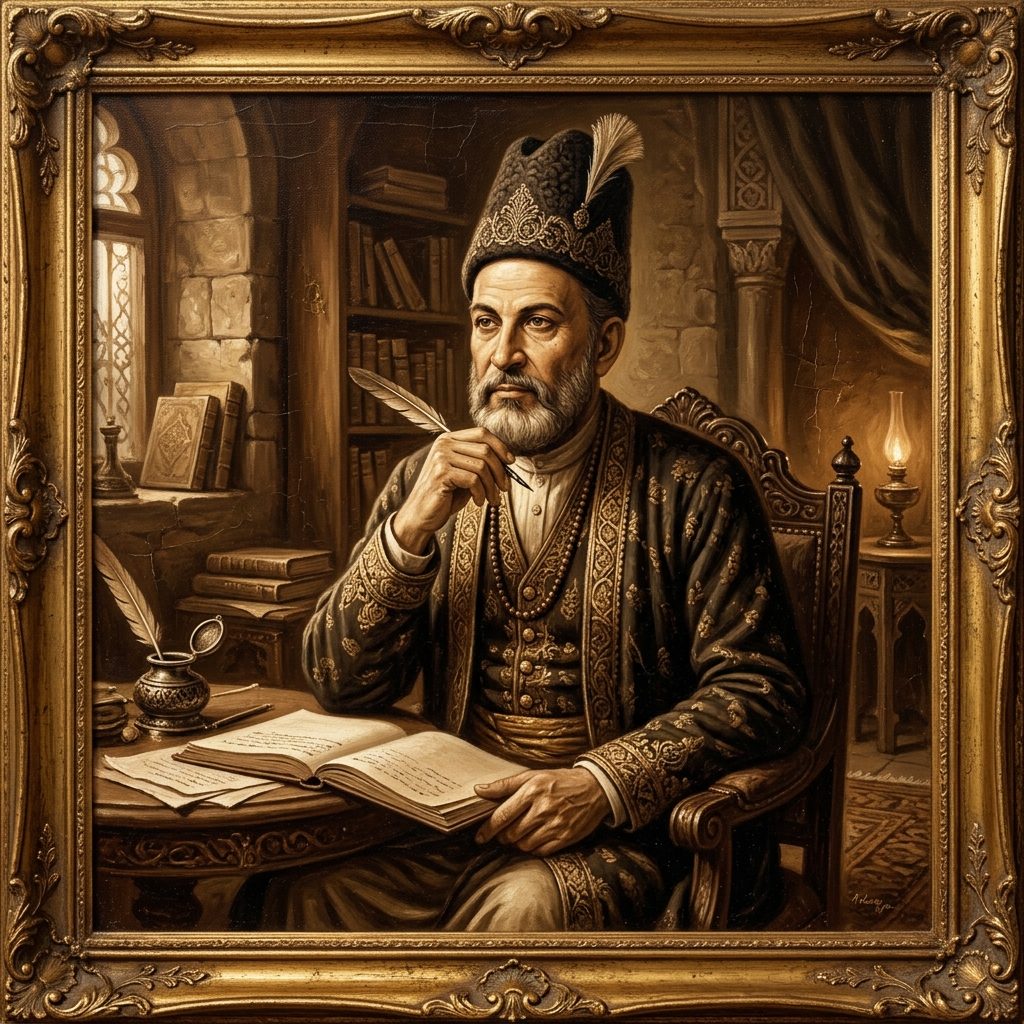
Abdul Ghafoor Nassakh
Bengal's keeper of Urdu poetry — the tazkira-writer of Sukhan-e-Shoara and the poet who found love life-giving behind death's face. Abdul Ghafoor Nassakh (1834–1889), born Abu Muhammad Abdul Ghafur, was the Bengali civil servant who became the keeper of Urdu poetry's memory — the tazkira-writer whose Sukhan-e-Shoara (1874) set down the lives of the Urdu and Persian poets. He was born in 1834 into the Qazi family of Rajapur in Faridpur, Bengal — the family home was Rajapur, though one account of his own life places his birth in Calcutta. His father, Qazi Faqir Muhammad, was a lawyer at the Calcutta civil court and a Persian author; his elder brother was Nawab Abdul Latif, the educationist and reformer, and two younger brothers were poets as well. He entered government service as a deputy magistrate and served as deputy collector across Bengal, in Dhaka and Backergunge, from 1860 to 1888, and wherever he was posted he held mushairas and drew young Urdu poets of Bengal around him. He wrote poetry in Urdu and Persian, and knew Bengali, English, Arabic and Hindi besides. His Daftar-e-Bemisal (1869) won praise from Ghalib, and his books of verse came steadily through his life — Ashar-e-Nassakh (1866), Ganj-e-Tawarikh (1873), Armugan (1875), Kanz-e-Tawarikh (1877), Armugani (1884) and the Persian Mazhab-e-Muamma (1888) — alongside his prose: a Urdu rendering of Attar's Pand Nama as Chashma-e-Faez (1874), a critique of the marsiya masters Anis and Dabeer, Intikhab-e-Nakam (1879), and his own life-story, written by his own hand. He died in Calcutta on 14 June 1889, aged 55.
Follow Abdul Ghafoor Nassakh
0 FollowersReceive instant email alerts whenever new Ghazals, Nazms, or Couplets by Abdul Ghafoor Nassakh are published.