
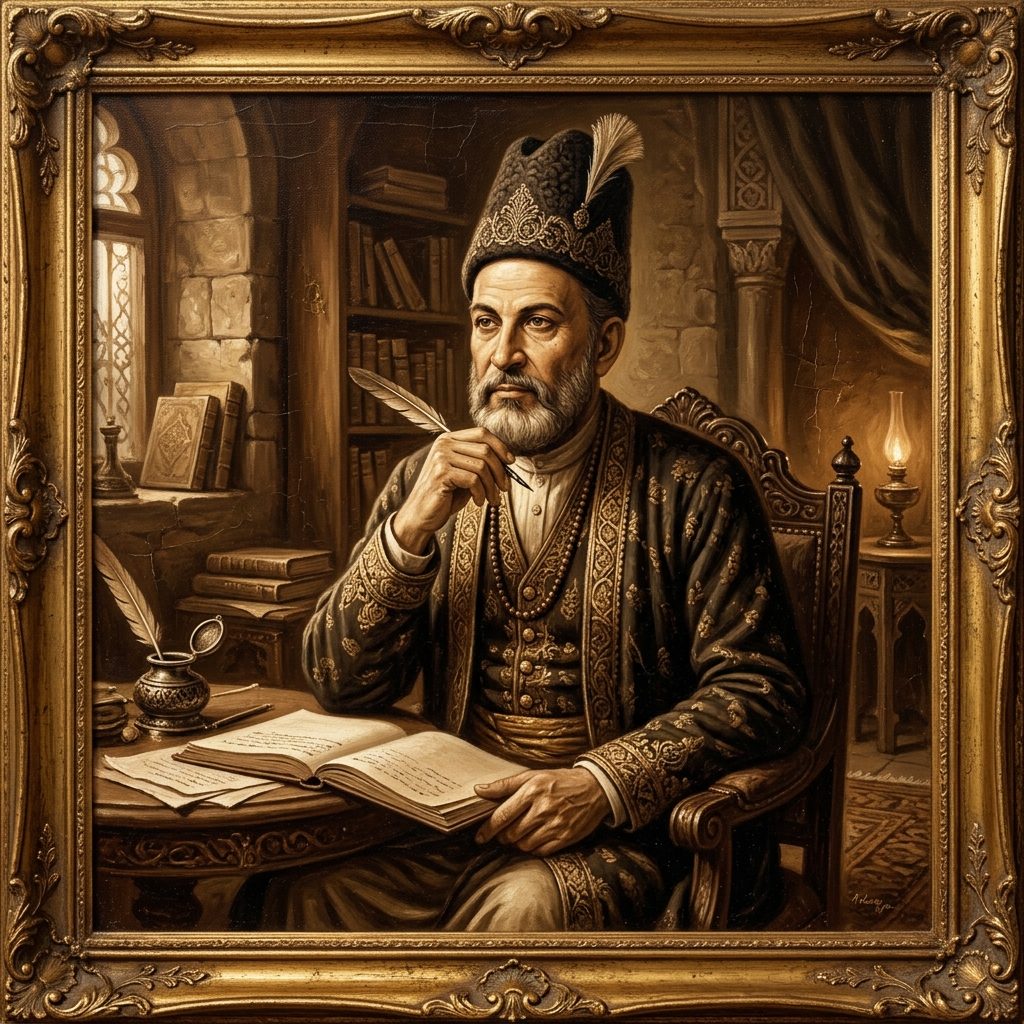
Abdur Rahman Bijnori
The critic who set Ghalib beside Goethe — gone at thirty-three. Abdur Rahman Bijnori (1885–1918), born on 10 June 1885 at Seohara in Bijnor district, was an Indian Urdu scholar, critic and poet whose short life remade how Ghalib is read. From an aristocratic and learned family — his father held the title of Khan Bahadur — he was schooled in Balochistan and at Quetta, took his BA and LLB at Aligarh, then read law at Lincoln's Inn in London and a doctorate at Freiburg in Germany. He wrote in Urdu and English for the journals of his day, and travelled widely in Europe, spending two months in Turkey on his way home and writing letters to his father on the Ottoman decline and the rise of Europe that later readers found prophetic. He served as a magistrate at Bijnor and Moradabad. His name rests on Mahasin-e-Kalam-e-Ghalib, the introduction he wrote to Ghalib's Diwan after finding a manuscript of unpublished Ghalib verse in the old library at Bhopal: in it he set Ghalib beside the world's great poets, finding his only parallel in Goethe of Germany, and called the Diwan, with the sacred Vedas, one of the two inspired books of India. His essays, poems and letters from Europe were gathered in Maqalat-i-Bijnori. His criticism of Iqbal's Asrar-e-Khudi was so searching that Iqbal answered it with the sequel, Rumuz-e-Bekhudi. At his death he was serving as educational adviser in Bhopal, planning a world-class university there, and had been chosen as the first vice-chancellor of Osmania University. He died on 7 November 1918, aged thirty-three, in the Spanish flu pandemic.
Follow Abdur Rahman Bijnori
0 FollowersReceive instant email alerts whenever new Ghazals, Nazms, or Couplets by Abdur Rahman Bijnori are published.