
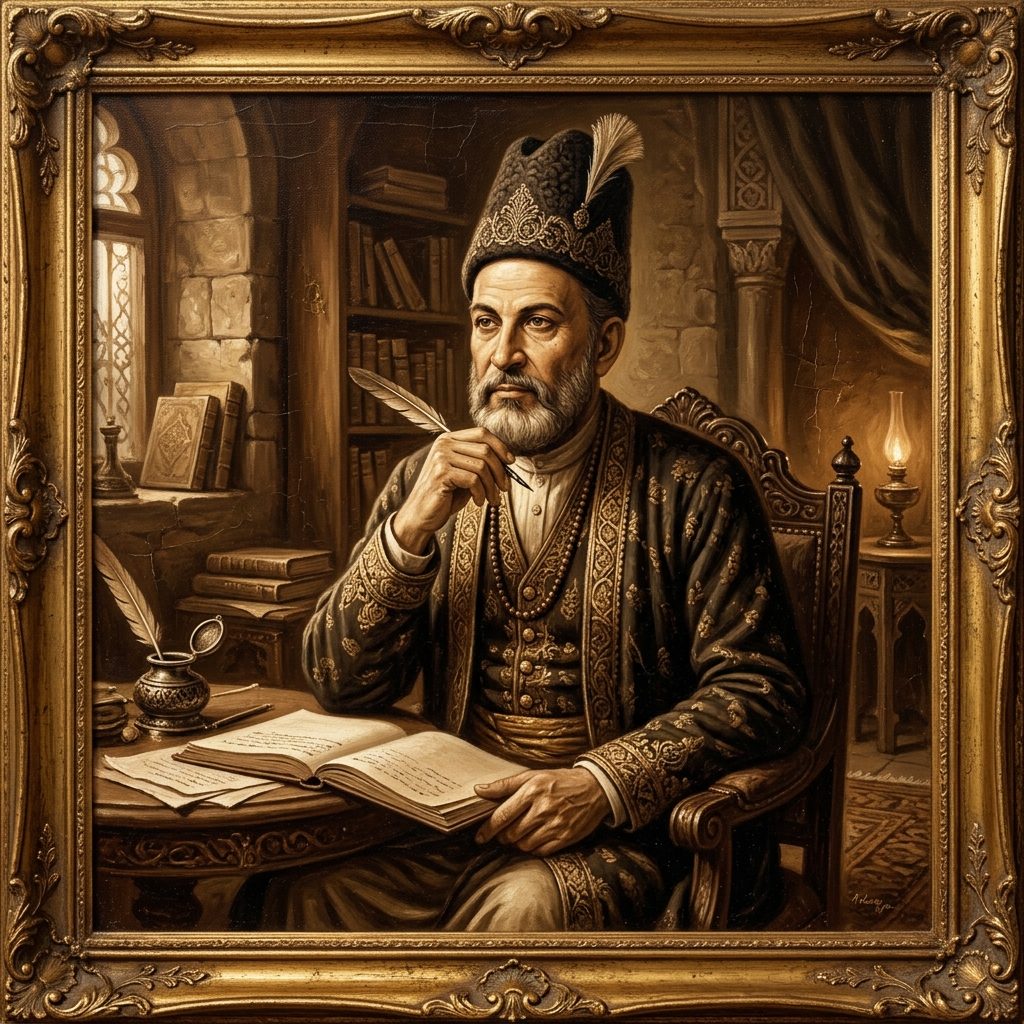
Anwar Dehlvi
Delhi's later classical voice — the dust of her lane, the sweat on her brow, and a bargain struck with the heart's pain. Anwar Dehlvi (1847–1885), born Sayyad Shujauddin — also styled Umrao Mirza — in Delhi, was one of the last prominent poets of the classical Delhi school, counted among the Delhi poets who came after Ghalib, Zauq and Momin. He was the younger brother of Zaheer Dehlvi, whose memoir of 1857 stands as an eyewitness account of the fall of Delhi. Anwar learned his craft first as a disciple of Zauq and then of Ghalib, and his ghazals carry the Delhi manner in its plainest, most musical form — love and separation, the beloved's lane, wine and the tavern, and the pain of the heart, taken as a bargain. The devastation of 1857 ruined him along with the city: he left Delhi and took refuge with the Raja of Jaipur, where he spent his last years and died in 1885. His verse survives chiefly in his Diwan-e-Anwar, also known as Nazm-e-Dilfroz, with Nazm-e-Dilfareb among his other books; and a handful of his couplets — the sweat on the beloved's brow, the dust of her lane, the secret one guards without knowing it — are still on people's lips today.
Follow Anwar Dehlvi
0 FollowersReceive instant email alerts whenever new Ghazals, Nazms, or Couplets by Anwar Dehlvi are published.