
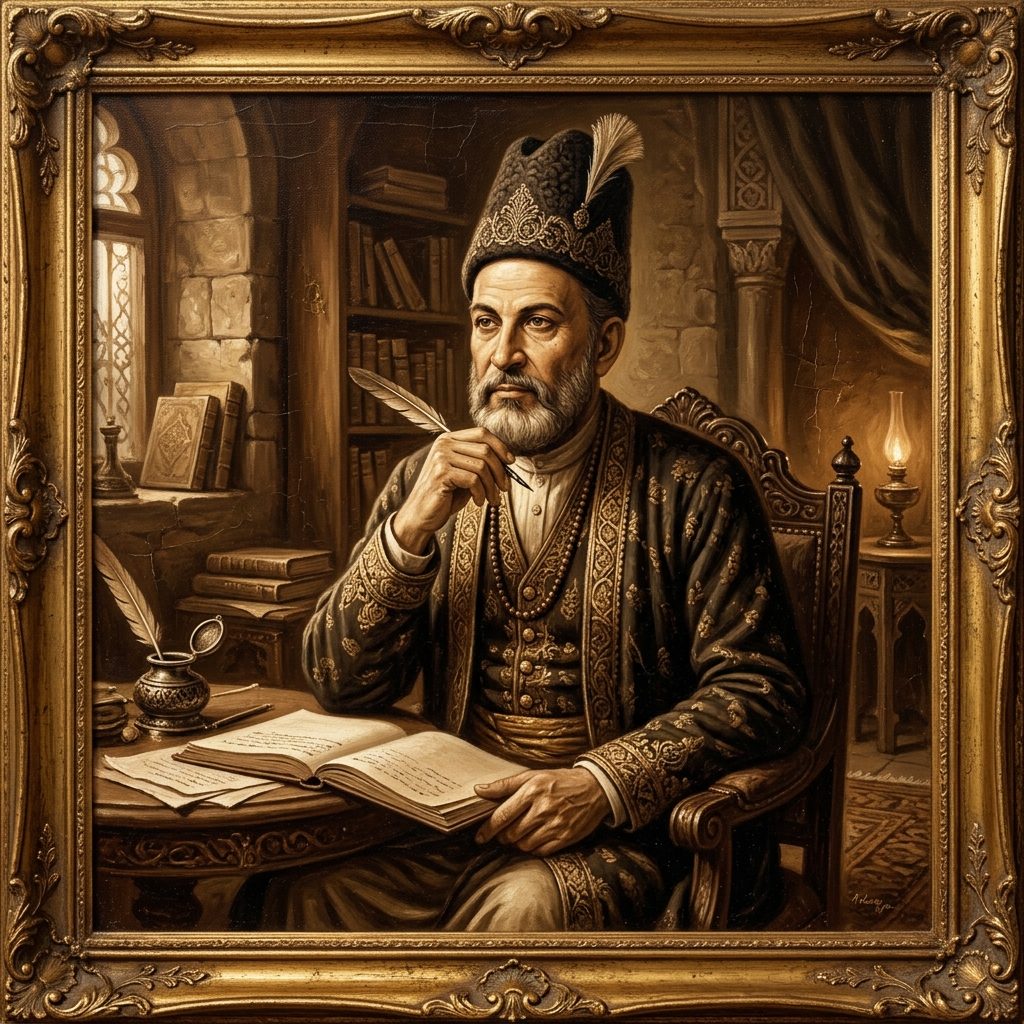
Baba Farid
Baba Farid (1173–1266), born Fariduddin Masud, was the first great voice of Punjabi poetry and one of the founding saints of the Chishti order in India. He was born in 1173 at Kothewal, a village near Multan, to Jamal-ud-din Sulaiman and Maryam Bibi; the family traced its line to Kabul, and tradition says the child was named after the Persian poet Fariduddin Attar. He learned first from his mother and his father, then sought the path of the Sufis, becoming the disciple of Qutbuddin Bakhtiar Kaki in Delhi. When his master died in 1235, Farid became his spiritual successor — but instead of taking the seat in Delhi, he left the capital, set up a centre of devotion at Hansi, and then settled at Ajodhan, the town that took a new name from him: Pakpattan, the Holy Ferry. There he lived simply and austerely, teaching all who came, and there the young Nizamuddin Auliya came to him and became his disciple and successor. Farid wrote in the people's own tongue. His short Punjabi verses — plain, severe, and tender at once — speak of the body as a guest-house that must one day be emptied, of the grave waiting at the road's end, and of a love that asks for nothing. They were carried by singers for three centuries before they were gathered into the Guru Granth Sahib, where they are still read and sung today. "Ganjshakar", treasury of sugar, was the name the people gave him, for the sweetness of his speech. He died at Pakpattan on 7 May 1266, and his shrine there is still one of Punjab's great places of pilgrimage, visited by Muslims, Sikhs and Hindus alike.
Follow Baba Farid
0 FollowersReceive instant email alerts whenever new Ghazals, Nazms, or Couplets by Baba Farid are published.