Faez Dehlvi
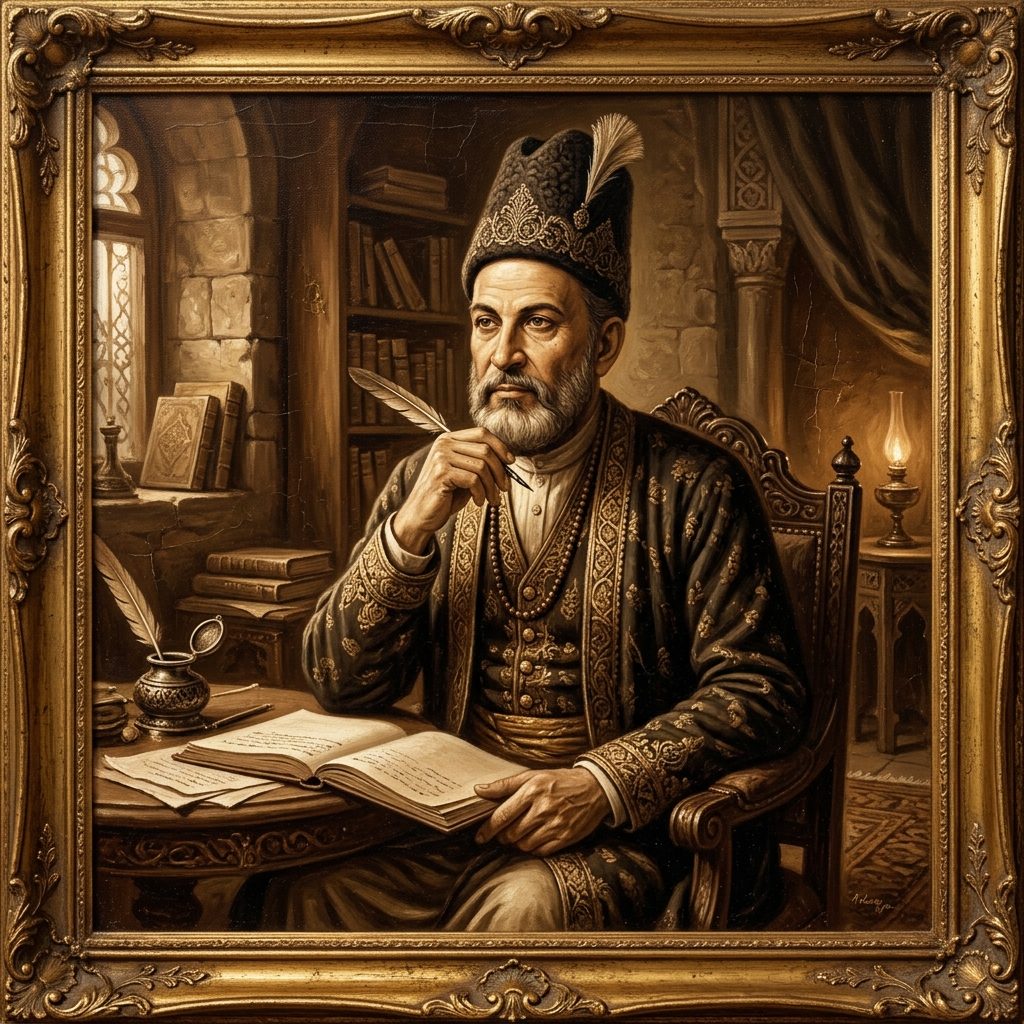
Delhi's first voice in Urdu — the founder who gave the ghazal the language of the bazaar. Faez Dehlvi (1690–1738), born Nawab Sadruddin Mohammad Khan in Delhi, was one of the earliest poets of northern India to leave behind a complete divan in Urdu, and a founder of Delhi's Urdu poetry before Mir. His forefathers had come from Iran and settled in Delhi, and his father, Mohammad Khalil Zabardast Khan, was a Mughal noble of high rank who served as a judge in Jaunpur and as an administrator in Awadh. Faez was brought up in a disciplined and cultured household, educated under his father's eye and by accomplished teachers, and learned Arabic and Persian alongside the living speech of Delhi's streets and bazaars. He wrote about nineteen thousand verses in Persian and some five hundred in Urdu — ghazals, masnavis and other poems — and in the Urdu verse he took the people's tongue, still new to poetry, and gave it the full ghazal: Persian compounds, similes and metaphors set beside plain dialect words, in a style praised for its simplicity and clarity. His ghazals sing mostly of love — divine love and the beauty of the beloved — and his Holi verses show a poet at home in the festivals and colours of India. His last years were shadowed by money troubles and by a troubled mind; he withdrew into seclusion and stopped meeting people. He died in Delhi in 1738 and was buried there. Only a part of his Persian work survives, but the five hundred Urdu verses that remain mark the moment when Delhi began to speak its poetry in its own tongue.
Follow Faez Dehlvi
0 FollowersReceive instant email alerts whenever new Ghazals, Nazms, or Couplets by Faez Dehlvi are published.