
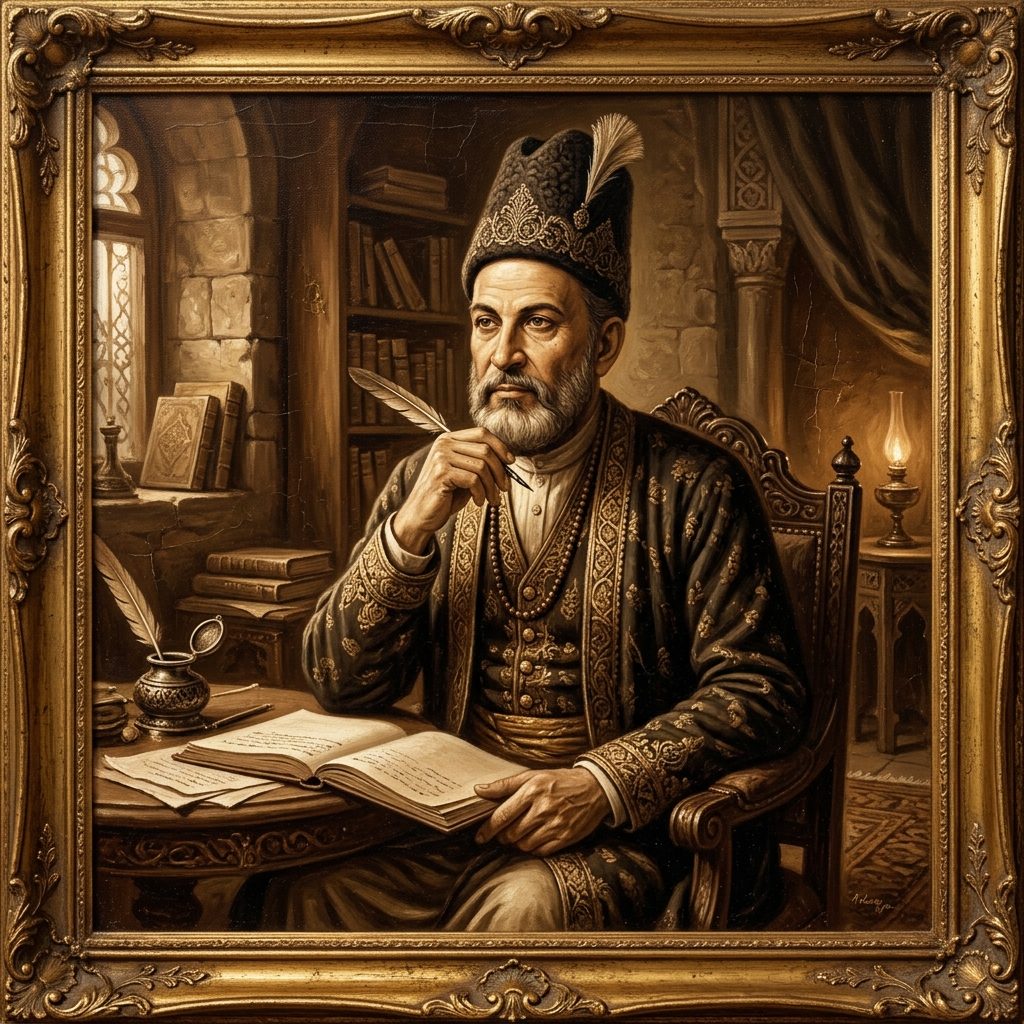
Kabir
The weaver of Varanasi who sang one God in two-line truths. Kabir (c. 1440–1518), known also as Kabir Das, was a weaver, poet and saint of Varanasi whose short, plain-spoken couplets — dohas, songs and sayings — made him one of the most loved voices of India's devotional age, honoured by Hindus, Muslims and Sikhs alike. The facts of his birth are wrapped in legend: one telling has him found as an infant on a lotus leaf at Lahartara near Varanasi and raised by Niru and Nima, a Muslim weaver couple, and he worked at the loom all his life, in the weaver's quarter of Kabir Chaura. He is held to have been a disciple of the devotional teacher Ramananda of Varanasi. His teaching was simple and fearless: one God, called Ram and Allah alike, found within the heart, not in temple or mosque, pilgrimage or ritual; he mocked priest and mullah, caste pride and empty ceremony with equal bite, and set devotion, honest work and a clean heart above all outward show. He never wrote his verse down — his songs and couplets were sung, remembered and passed from mouth to mouth for two hundred years before they were gathered into collections such as the Bijak and the Kabir Granthavali, and hundreds of his verses found a home in the Sikh scripture, the Guru Granth Sahib, the largest share by any voice outside the Sikh tradition. He died at Maghar in 1518, a place of ill omen in the telling of his day — and the legend says Hindus and Muslims quarrelled over his body, only to find flowers beneath the shroud. His followers, the Kabir Panth, keep his way alive still, and his dohas are quoted across India to this day.
Follow Kabir
0 FollowersReceive instant email alerts whenever new Ghazals, Nazms, or Couplets by Kabir are published.