
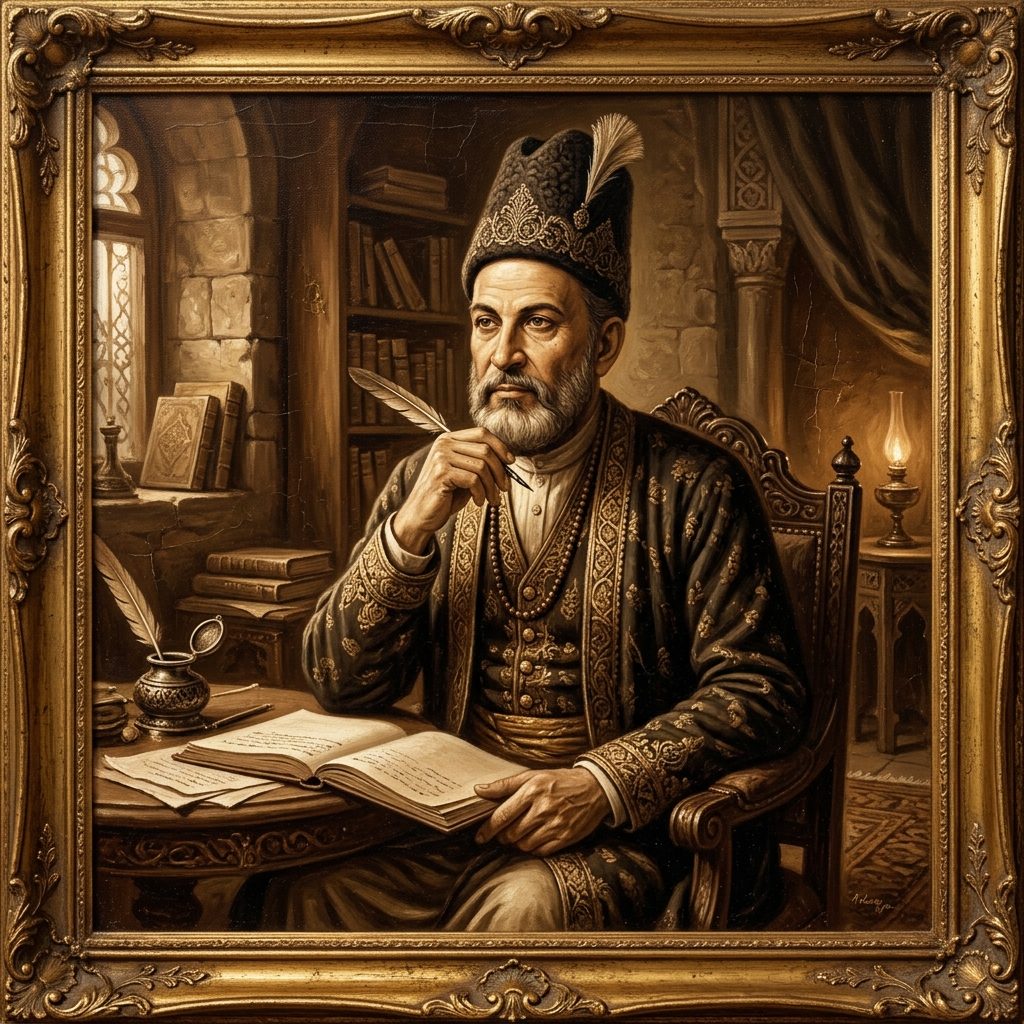
Khwaja Ahmad Abbas
Khwaja Ahmad Abbas (1914–1987), known as K. A. Abbas, was the Urdu writer, journalist and filmmaker who carried one pen across three languages and three arts — fiction, the newspaper column and the cinema. He was born on 7 June 1914 at Panipat, into the family of the poet Altaf Hussain Hali. His first article appeared when he was eleven, in a children's magazine from Lahore, and he took his BA in English literature in 1933 and his law degree in 1935 from Aligarh Muslim University, where he had started a students' weekly. He began his working life as a journalist, joining the Bombay Chronicle in 1935 as a political correspondent and film critic, and his weekly column "Last Page" — begun in the Chronicle in 1935 and carried on in Blitz after the Chronicle closed — ran until his death, one of the longest-running columns in Indian journalism. In films he was a pioneer of realistic cinema: he wrote Naya Sansar (1941), Dharti Ke Lal (1946), which he also directed, and the screenplay of Neecha Nagar (1946), which won the highest prize at the Cannes Film Festival, and later Jagte Raho (1956) and Saat Hindustani (1969); he also wrote Raj Kapoor's Awaara (1951), Shree 420 (1955), Mera Naam Joker (1970), Bobby (1973) and Henna (1991). In his lifetime he wrote 74 books in Urdu, Hindi and English, some ninety short stories and more than three thousand journalistic pieces; his best-known novel is Inquilab. He was a founder-member of the Progressive Writers' Association, won four National Film Awards, and received the Padma Shri in 1969. He died at Bombay on 1 June 1987, aged seventy-two, still writing to his last days.
Follow Khwaja Ahmad Abbas
0 FollowersReceive instant email alerts whenever new Ghazals, Nazms, or Couplets by Khwaja Ahmad Abbas are published.