
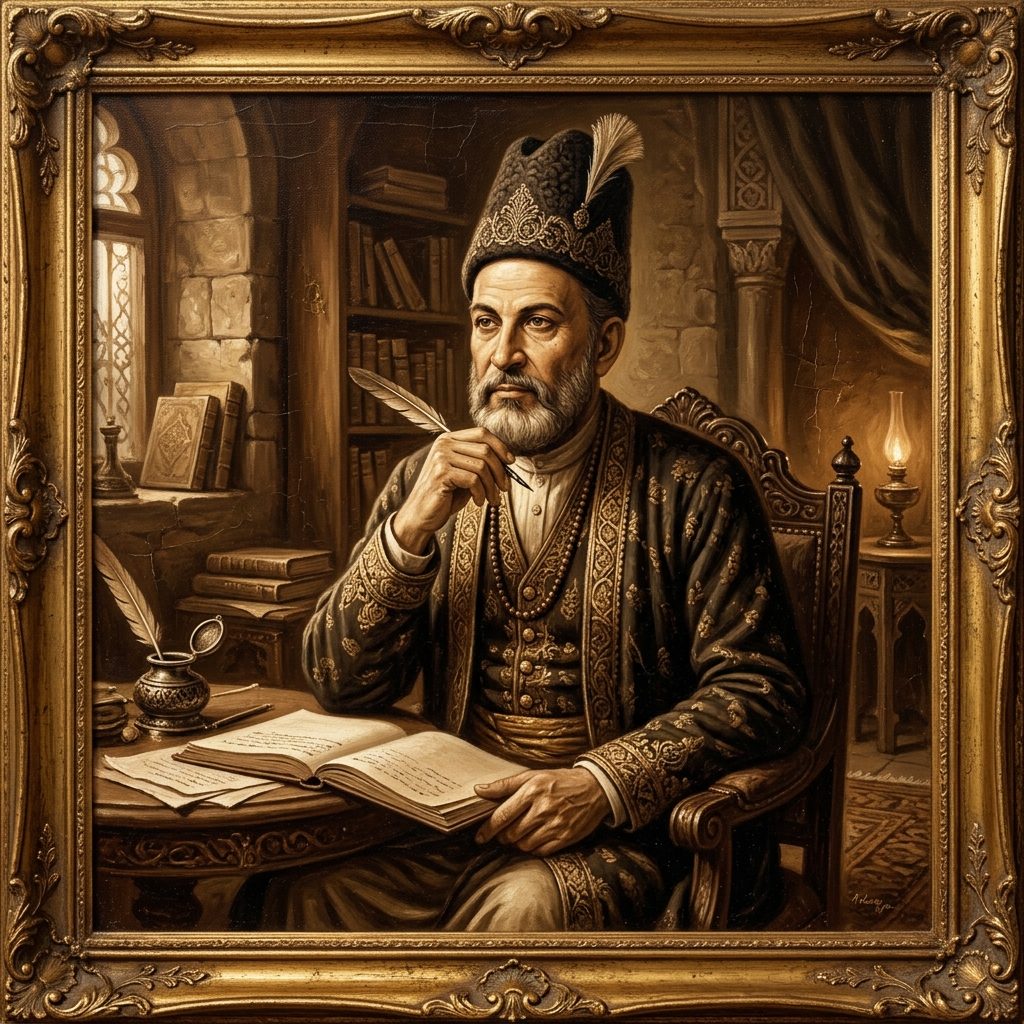
Mirza Kazim Ali Jawan
Delhi's exile who gave Calcutta its Shakuntala — the Fort William munshi who carried the Quran into Urdu print. Mir Kazim Ali Jawan (birth year unknown – 1816) was a Delhi-born man of letters who became one of the founders of Urdu prose. His real name was Mir Kazim Ali; Jawan — "the young one" — was the name he wrote under. When ruin gripped Delhi he left the city, as so many did, and after wandering through several places he reached Lucknow, where he spent long years and came to be counted among its famous poets. He knew Brij Bhasha as well as Arabic and Persian, and the Resident at Lucknow, Colonel Scott, was so impressed by his abilities that he recommended him to Fort William College in Calcutta. There Jawan spent the rest of his life in writing and compiling, among the munshis who were giving Urdu prose its first plain, workable shape. Three books of his survive: his Urdu rendering of Kalidasa's Shakuntala, the Shakuntala Natak of 1801; Barah Masa, also called Dastoor-e-Hind, on the festivals of India through the year; and Singhasan Battisi. He also carried the Quran into Urdu in 1802, one of the earliest landmarks in the printed Urdu Quran. He died in 1816, in Calcutta, the city that had become his home.
Follow Mirza Kazim Ali Jawan
0 FollowersReceive instant email alerts whenever new Ghazals, Nazms, or Couplets by Mirza Kazim Ali Jawan are published.