
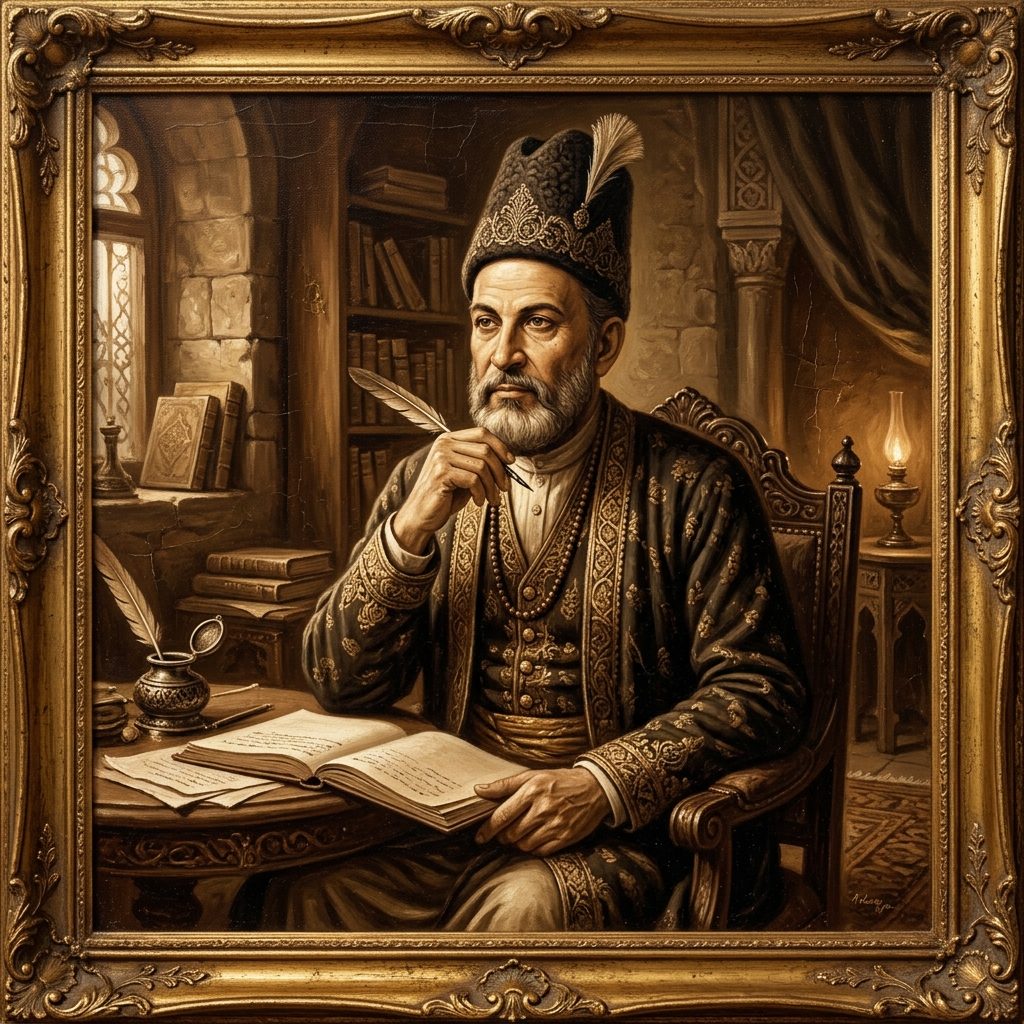
Muhammad Abdul-Hayy Siddiqui, Bekhud Badayuni
Muhammad Abdul-Hayy Siddiqui, known as Bekhud Badayuni (17 September 1857 – 10 November 1912), was a leading late-19th- and early-20th-century poet of Badayun, from a prominent Siddiqui family of Islamic scholarship, Sufism and literature, claiming descent from Abu Bakr. Trained as a lawyer — he practised in Moradabad and Shahjahanpur — he later became a high official in the states of Sirohi and Jodhpur. His poetic masters mark his place in the tradition: he was first a disciple of Maulana Altaf Hussain Hali, Ghalib's protégé, who gave him the pen name Bekhud; around 1879, as Hali turned away from traditional forms, he left Hali and became a disciple of Nawab Mirza Khan Daagh Dehlvi. He stayed aloof from the squabble over Daagh's successor, though Daagh is reported to have answered "Bekhud-ain" — the two Bekhuds — when asked: Badayuni and Dehlvi. He published late: his diwan appeared only in 1910, two years before his death, partly to combat the plagiarism and misattribution of verse that had circulated orally for decades — the very confusion that still mixes his work with Bekhud Dehlvi's. His books include Hosh-o-Khirad ki Dukaan (1889), Sabr-o-Shakeeb ki Loot (1889), Marraat-ul-Khayal — Mirror of Thoughts — (1910) and Afsaanah-e-Bekhud. His subjects are love, philosophy, mysticism and Islam.
Follow Muhammad Abdul-Hayy Siddiqui, Bekhud Badayuni
0 FollowersReceive instant email alerts whenever new Ghazals, Nazms, or Couplets by Muhammad Abdul-Hayy Siddiqui, Bekhud Badayuni are published.