
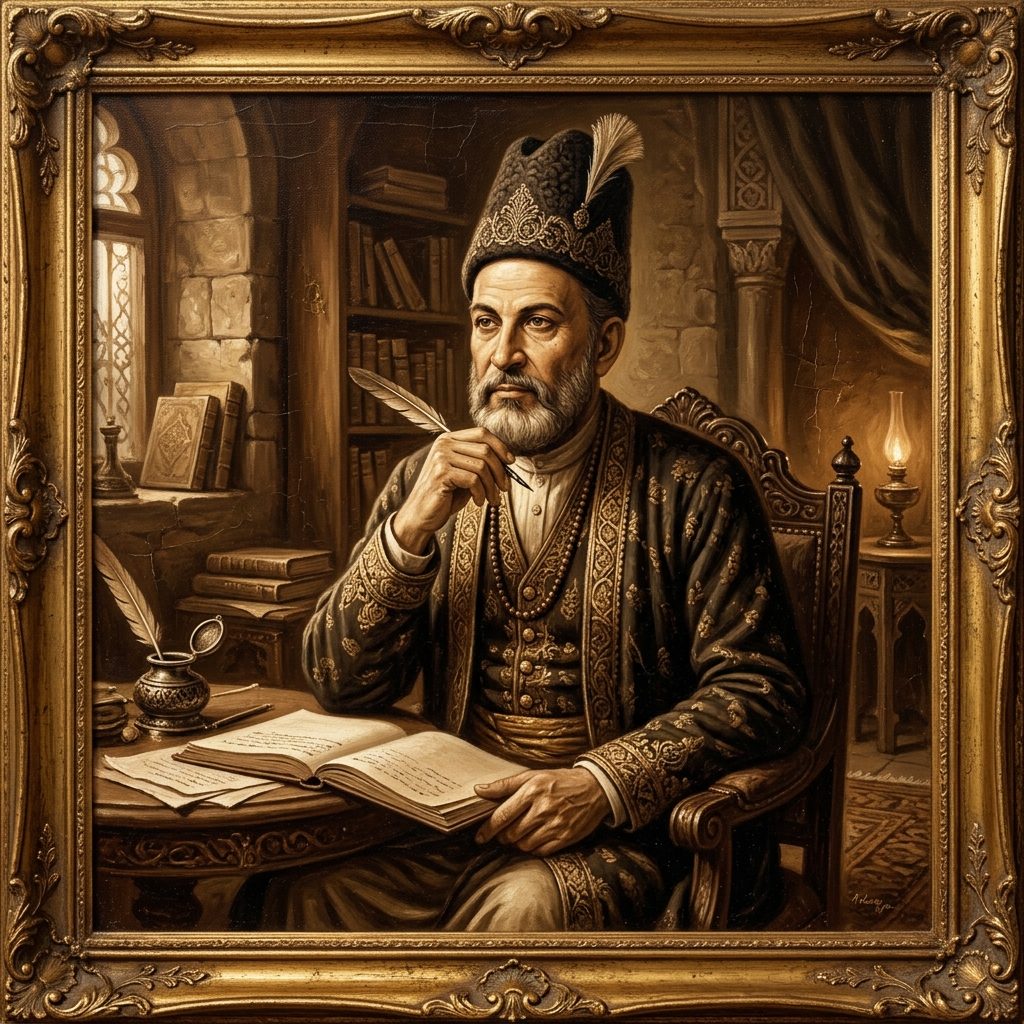
Nawab Mustafa Khan Shefta
Nawab Mustafa Khan Shefta (1809–1869), born in Delhi into a prominent Bangash Pathan landowning family — Nawab of Jahangirabad, holder of the Palwal and Jehangirabad jagirs — was a poet, critic and patron at the heart of Delhi's literary circle, alongside Ghalib, Zauq and Momin. He wrote Urdu verse as "Shefta" and Persian verse as "Hasrati," consulting Ghalib in Persian and Momin in Urdu, and his Delhi house was famous for its weekly mushairas, where he encouraged younger poets — it was Shefta who introduced Altaf Hussain Hali to Ghalib. His tazkira Gulshan-e-Bekhar (compiled 1834), cataloguing 671 poets, remains a trusted source for the literary history of the age. The 1857 uprising broke his world: suspected for his ties to Bahadur Shah Zafar and his rebel kinsmen, he was sentenced to seven years' imprisonment, his estates seized — half restored on appeal — and much of his poetry was lost in the sack of Delhi. His son later bought the very prison and built the family home, Mustafa Castle, over it, keeping the prison room. After the Hajj he turned increasingly to religious practice. He died at his house in Kucha Chelaan, Delhi, in 1869, and lies in the Bangash family graveyard at Hazrat Nizamuddin, near Ghalib.
Follow Nawab Mustafa Khan Shefta
0 FollowersReceive instant email alerts whenever new Ghazals, Nazms, or Couplets by Nawab Mustafa Khan Shefta are published.