
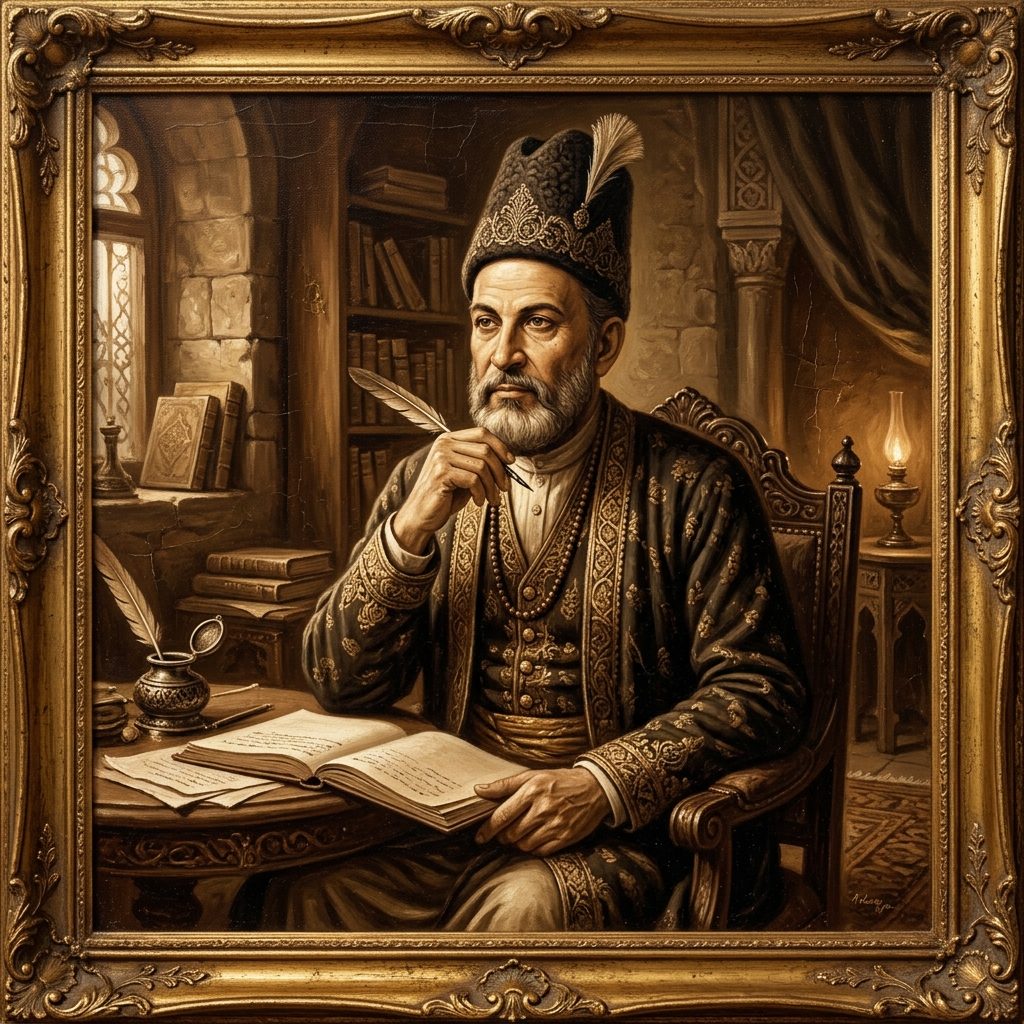
Rahi Masoom Raza
Ganga's son — the divided village, the sleepless road. Rahi Masoom Raza (1927–1992), born Masoom Raza on 1 September 1927 at Gangauli, a village on the Ganga in Ghazipur district, Uttar Pradesh, was an Indian Urdu poet, novelist and screenwriter — the Ganga's son, who carried his village with him to Bombay and never let it go. He was the younger brother of the educationist Moonis Raza and the scholar Mehdi Raza; his father, Bashir Hasan Abdi, was a lawyer in Ghazipur. He was schooled in Ghazipur and went on to Aligarh Muslim University, where he took a doctorate in Hindustani literature and became a lecturer in Urdu. He began by writing novels under the pen name Shahid Akhtar for a magazine from Allahabad. In 1967 he moved to Bombay and became one of Hindi cinema's busiest writers of screenplays and dialogues — for Mili (1975), Main Tulsi Tere Aangan Ki (1978), Gol Maal (1979), Karz (1980), Tawaif (1985) and Lamhe (1991), winning the Filmfare Award for Best Dialogue three times — and for television he wrote the screenplay and dialogues of the serial Mahabharat (1988–90), whose opening invocation of Time became part of the country's memory. His masterpiece as a novelist was Aadha Gaon (1966), the divided village of Gangauli at Partition, set beside Topi Shukla, Os Ki Boond, Dil Ek Saada Kagaz and Neem ka Ped. As a poet he published Mauj-e-Gul Mauj-e-Saba (1953), Ajnabi Shahr Ajnabi Raaste (1965) and Ghareeb Shahr (1992), and wrote verse in Hindi as well. He died in Bombay on 15 March 1992, aged sixty-four, leaving a wish to rest at last in the lap of the Ganga, the river he called his second mother.
Follow Rahi Masoom Raza
0 FollowersReceive instant email alerts whenever new Ghazals, Nazms, or Couplets by Rahi Masoom Raza are published.