
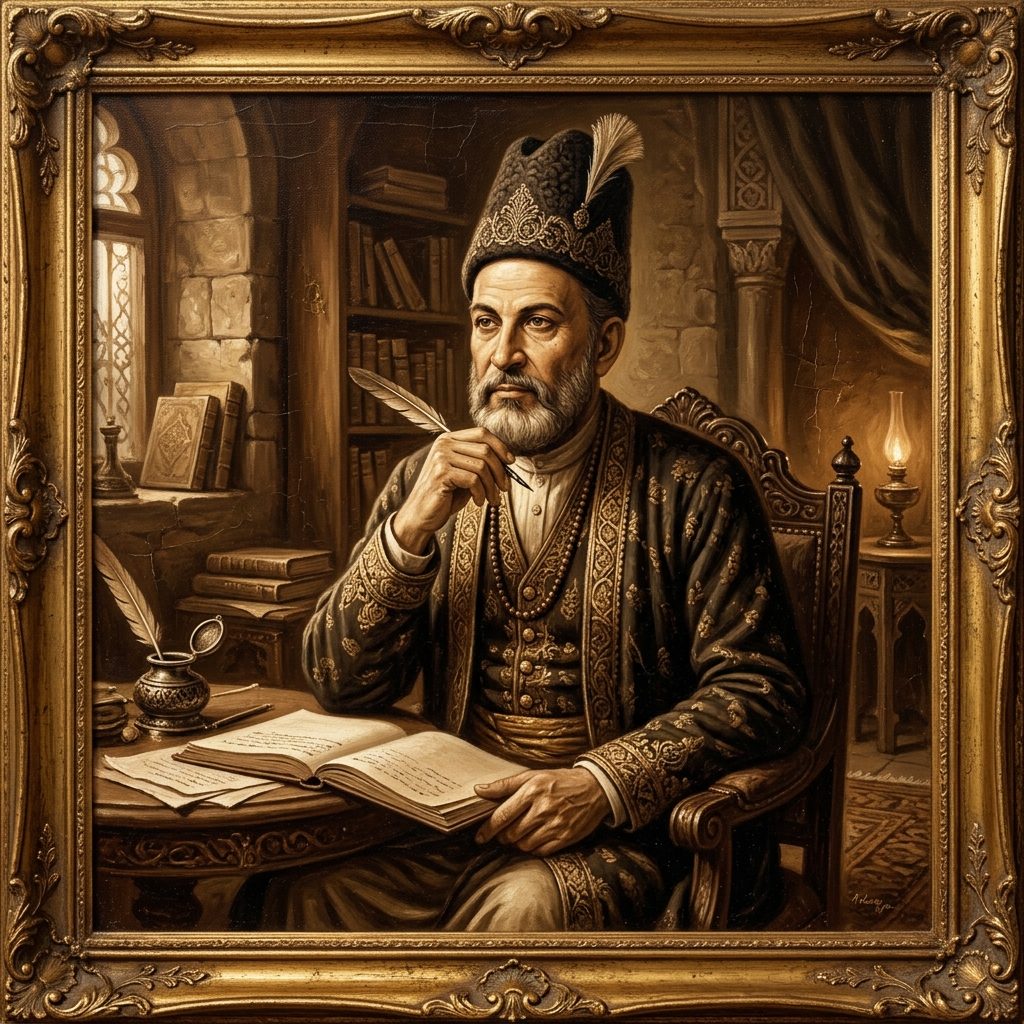
Rahman Rahi
Kashmir's first Jnanpith laureate — the poet who made his mother tongue a house of being. Rahman Rahi (1925–2023), born Abdur Rehman Rahi on 6 May 1925 at Nowshera in Srinagar, was a Kashmiri poet, translator and critic — the first Kashmiri writer to receive the Jnanpith Award, India's highest literary honour. As a schoolboy he opened an Urdu textbook one day and found Iqbal's poem "Maa Ka Khwab", a mother's dream, and the verse stayed with him for life. He began his working life as a clerk in the Public Works Department for a few months in 1948, then gave himself to literature: he became general secretary of the Progressive Writers Association, edited a few issues of its journal Kwang Posh, worked as a sub-editor of the Urdu daily Khidmat, and sat on the editorial board of the Urdu daily Aajkal in Delhi from 1953 to 1955. He took an MA in Persian in 1952 and an MA in English in 1962, taught Persian at the University of Kashmir, and became the founding head of its Kashmiri Department, retiring as professor. His first collections were Sana-Wani Saaz (1952) and Nawroz-i-Saba (1958), the dawn of spring, which won the Sahitya Akademi Award in 1961. His criticism, Kahwat, the Touchstone, published in 1980, laid the first rigorous foundations for reading modern Kashmiri poetry, and he carried Baba Farid's Sufi verse from Punjabi into Kashmiri. His masterpiece, Siyah Rood Jaeren Manz, In Black Drizzle, appeared in 1997 — a long lament on the turmoil that had overtaken the valley in the 1990s — and for it he received the Padma Shri in 2000, the Sahitya Akademi Fellowship in 2000, and the Jnanpith Award for the year 2004, presented in 2007. He also wrote the Kashmir University anthem. Dina Nath Nadim's influence runs through his early work, and beside it the thought of Camus and Sartre. He died at his home in Nowshera, Srinagar, on 9 January 2023, aged ninety-seven, the last surviving pillar of the progressive poets of the last century, and was laid to rest beside the shrine of Khwaja Habibullah Nowshehri.
Follow Rahman Rahi
0 FollowersReceive instant email alerts whenever new Ghazals, Nazms, or Couplets by Rahman Rahi are published.