
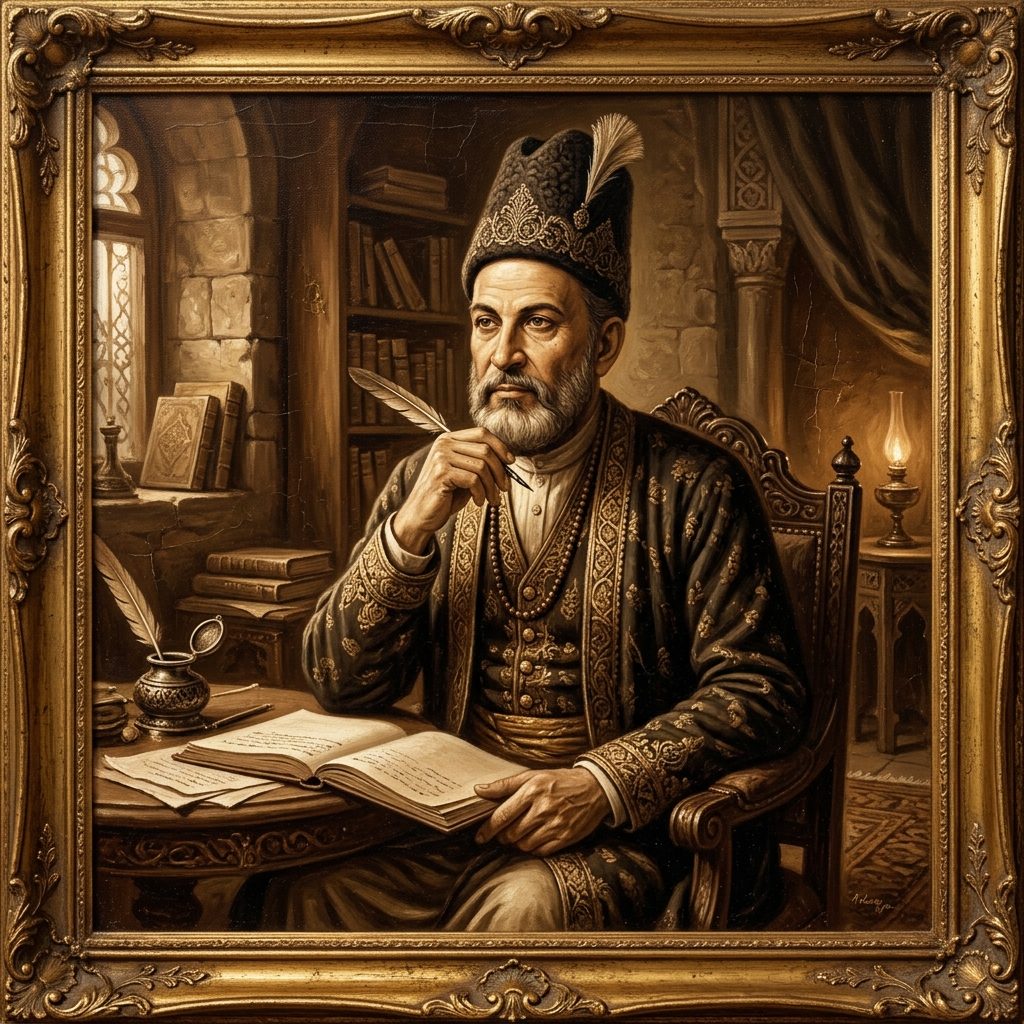
Rajinder Krishan
Rajinder Krishan (1919–1987), born Rajinder Krishan Duggal on 6 June 1919 in Jalalpur Jattan, in Gujrat district, was Hindi cinema's quiet master — a poet, lyricist and screenwriter who wrote more than sixteen hundred songs and never sought the limelight. He began writing couplets as a schoolboy, recited at his first mushaira at fifteen in Shimla, and learned his craft from the Urdu of Firaq Gorakhpuri and Ehsan Danish and the Hindi of Pant and Nirala. He moved to Bombay in the mid-1940s, wrote his first screenplay, Janta (1947), and his first film lyrics for Zanjeer (1947); Aaj Ki Raat (1948), Badi Bahen (1949) and Lahore (1949) made his name. Days after Mahatma Gandhi's assassination he wrote "Suno Suno Ai Duniya Walon, Bapu Ki Yeh Amar Kahani", which became a national lament. Across four decades he wrote songs of every kind — "Tumhi Mere Mandir, Tumhi Meri Pooja", "Chal Ud Ja Re Panchhi", "Mujhe Le Chalo", "Ek Chatur Naar", "Mere Piya Gaye Rangoon", "Chup Chup Khade Ho" — and the dialogues and screenplay of Padosan, besides eighteen scripts for AVM Studios. He won the Filmfare Award for Best Lyricist once, in 1966, for "Tumhi Mere Mandir, Tumhi Meri Pooja" (Khandan). He was also a ghazal poet in his own right, and his ghazals carry the same plain, aching Urdu as his songs. He kept so low a profile that many who loved his songs never knew his face — few photographs of him exist. He died in Bombay on 23 September 1987, aged 68; after his death His Master's Voice brought out an album of twelve of his songs.
Follow Rajinder Krishan
0 FollowersReceive instant email alerts whenever new Ghazals, Nazms, or Couplets by Rajinder Krishan are published.