
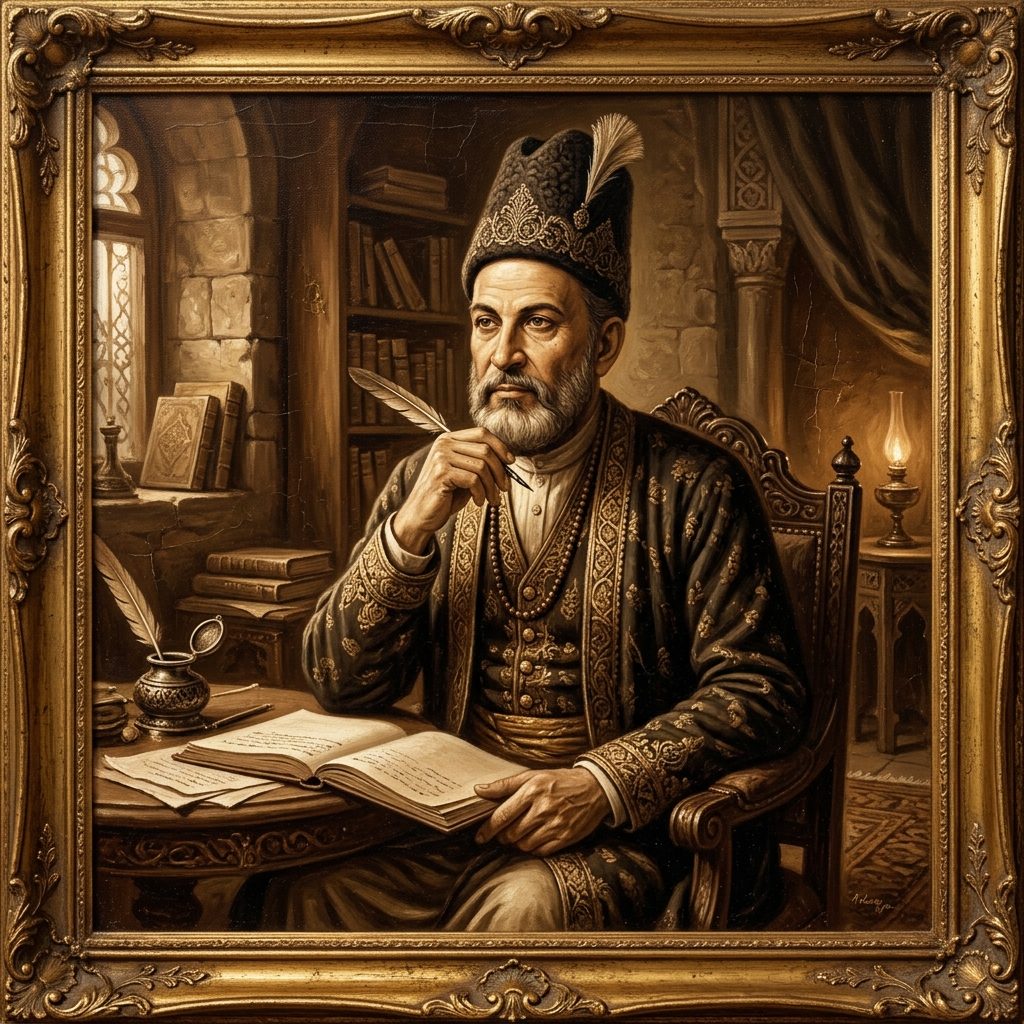
Samina Raja
Pakistan's fearless woman poet — twelve books of love, longing and a voice entirely her own. Samina Raja (1961–2012), born on 11 September 1961 at Bahawalpur in Punjab, was a Pakistani Urdu poet, writer, editor, translator, educationist and broadcaster — one of the most prolific and outspoken women poets of her generation. She took her master's degree in Urdu literature from the University of the Punjab at Lahore and began writing poetry in 1973. Her first collection, Huweda, appeared in 1995, and eleven more followed — Shehr-e-Saba, Aur Wisal, Khwabnaey, Bagh-e-Shab, Bazdeed, Haft Aasman, Parikhana, Adan Ke Rastey Par, Dil-e-Laila, Ishqabad and Hijr Nama — besides two collected volumes, Kitab-e-Khwab and Kitab-e-Jan, and a selection of her love poetry, Woh Sham Zara Si Gehri Thi. Her verse, in ghazal and nazm, speaks of love and longing, of loss and memory, and of a woman's own view of the world, in a voice entirely her own. She edited four literary magazines — Mustaqbil, Kitab, Aasar and Khwabgar — and worked as a subject specialist with the National Language Authority and the National Book Foundation at Islamabad, where she lived. She translated English prose into Urdu, among it Edward Said's Orientalism and Beverley Nichols's Verdict on India, and she conducted the All Pakistan Mushairas on Pakistan Television from 1995 and presented a literary programme on the role of woman in Urdu literature. She twice refused state literary awards, saying undeserving names stood beside hers, and she often refused to appear at gatherings whose chief guests had nothing to do with literature. Shortly before her illness she had begun a verse rendering of the Quran, starting with its second chapter, but the work remained unfinished at her death. She died of cancer at Islamabad on 30 October 2012, aged fifty-one, and was laid to rest in the Islamabad graveyard at H-8, survived by her three sons.
Follow Samina Raja
0 FollowersReceive instant email alerts whenever new Ghazals, Nazms, or Couplets by Samina Raja are published.