
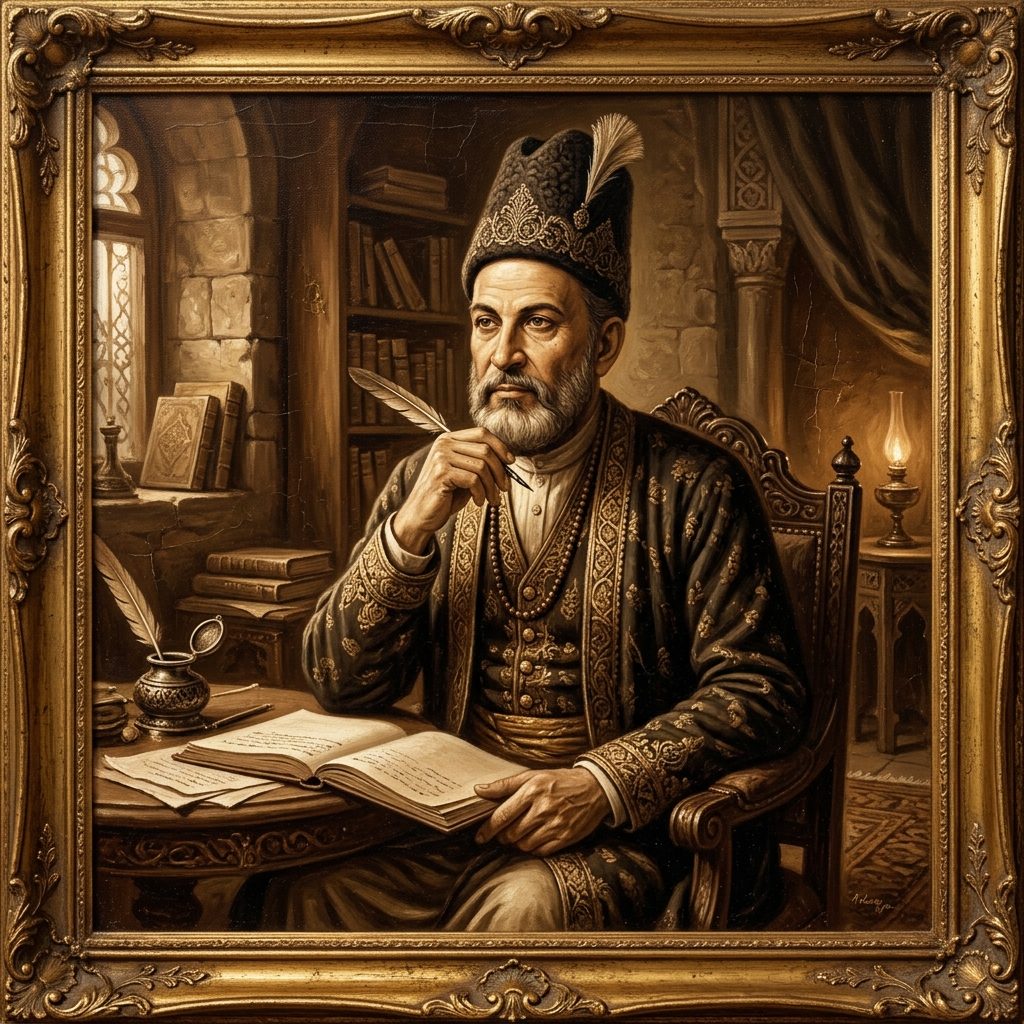
Shailendra
Shailendra (1923–1966), born Shankardas Kesarilal on 30 August 1923 in Rawalpindi, was the people's poet of Hindi cinema — the lyricist Raj Kapoor called "Kaviraj", his Pushkin. His family came from Akhtiyarpur in Ara district, Bihar, and he grew up in Mathura. In 1947 he was an apprentice in the Indian Railways workshop at Matunga, Bombay, writing fiery poems for the Indian People's Theatre Association, when Raj Kapoor heard him recite "Jalta Hai Punjab", his cry against the Partition riots, at a mushaira. He refused at first to sell his poem to the films, then joined Raj Kapoor for Barsaat (1949), writing "Barsaat Mein, Humse Mile Tum Saajan" and "Patli Kamar Hai, Tirchi Nazar Hai" for five hundred rupees. What followed was eighteen years of songs in the plain speech of ordinary India — "Awara Hoon", "Mera Joota Hai Japani", "Sab Kuch Seekha Hamne", "Ye Mera Deewanapan Hai", "Tu Pyaar Ka Sagar Hai", "Piya Tose Naina Laage Re", "Din Dhal Jaye", "Aaj Phir Jeene Ki Tamanna Hai" — nearly eight hundred songs in about a hundred and seventy films, most of them with Shankar-Jaikishan, and others with Salil Chowdhury and S. D. Burman. He won the Filmfare Award for Best Lyricist three times — in 1958, 1959 and, after his death, in 1968 — and he was the first winner of the award when the category was created. He also produced the film Teesri Kasam (1966), from Phanishwar Nath Renu's story "Maare Gaye Gulfam", which won the National Award for Best Feature Film after his death. His non-film poems — "Jalta Hai Punjab" and his Partition verses — and his Bhojpuri songs, including work for the first Bhojpuri film, show the poet behind the lyricist. He died in Bombay on 14 December 1966, aged only 43. In 2016 a street in Mathura was named for him, and his "Mera Joota Hai Japani" was heard in the Hollywood film Deadpool the same year.
Follow Shailendra
0 FollowersReceive instant email alerts whenever new Ghazals, Nazms, or Couplets by Shailendra are published.