
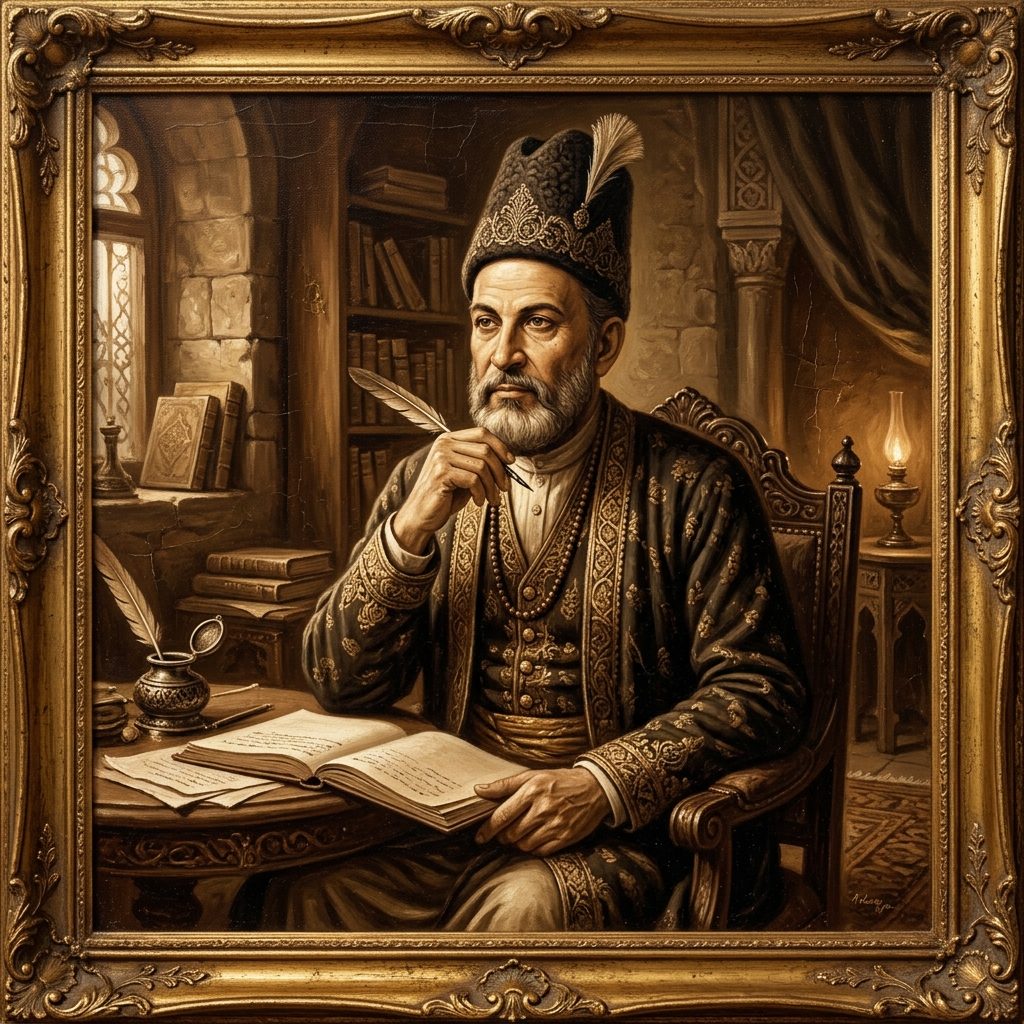
Sultan Bahu
Sultan Bahu (1630–1691) was a Punjabi Sufi poet of the Qadiri order and the founder of the Sarwari Qadiri tradition. He was born on 17 January 1630 at Shorkot, in the Jhang region of Punjab, into the Awan tribe; his father, Bayazid Muhammad, was an officer in the Mughal army, and his mother, Mai Rasti, was herself a woman of prayer, who first turned her son toward the spiritual life. Little is known of his early years beyond what later tradition records: by his own account he searched for a true guide for thirty years, and at last found his training in Delhi, under Syed Abdul Rehman Jilani Dehlvi of the Qadiri order, before returning to Punjab for the rest of his life. He wrote more than forty books on Sufism, almost all of them in Persian, on the knowledge and vision of God — but it is his Punjabi verse that made him beloved. The Abyat-e-Bahu are short quatrains in the people's tongue, simple enough for anyone to sing and deep enough for a lifetime of study: they speak of Faqr, spiritual poverty, as the whole of the path, of the perfect guide without whom the road cannot be walked, and of the cry "Hoo" — He — with which every verse ends, as if the poem itself were a breath of remembrance. He lived under the Mughal emperors Shah Jahan and Aurangzeb, and died on 1 March 1691, at sixty-one, without naming a successor to the trust of Faqr. His shrine stands at Garh Maharaja, near the Chenab, and has been moved twice as the river changed its course; his verses are still sung in qawwali and kafi gatherings across Punjab, in the singing style his own couplets created.
Follow Sultan Bahu
0 FollowersReceive instant email alerts whenever new Ghazals, Nazms, or Couplets by Sultan Bahu are published.