
Poets Directory (شعرائے کرام)
Explore profiles, portraits, life biographies, and complete poetry of classical and modern Urdu luminaries.
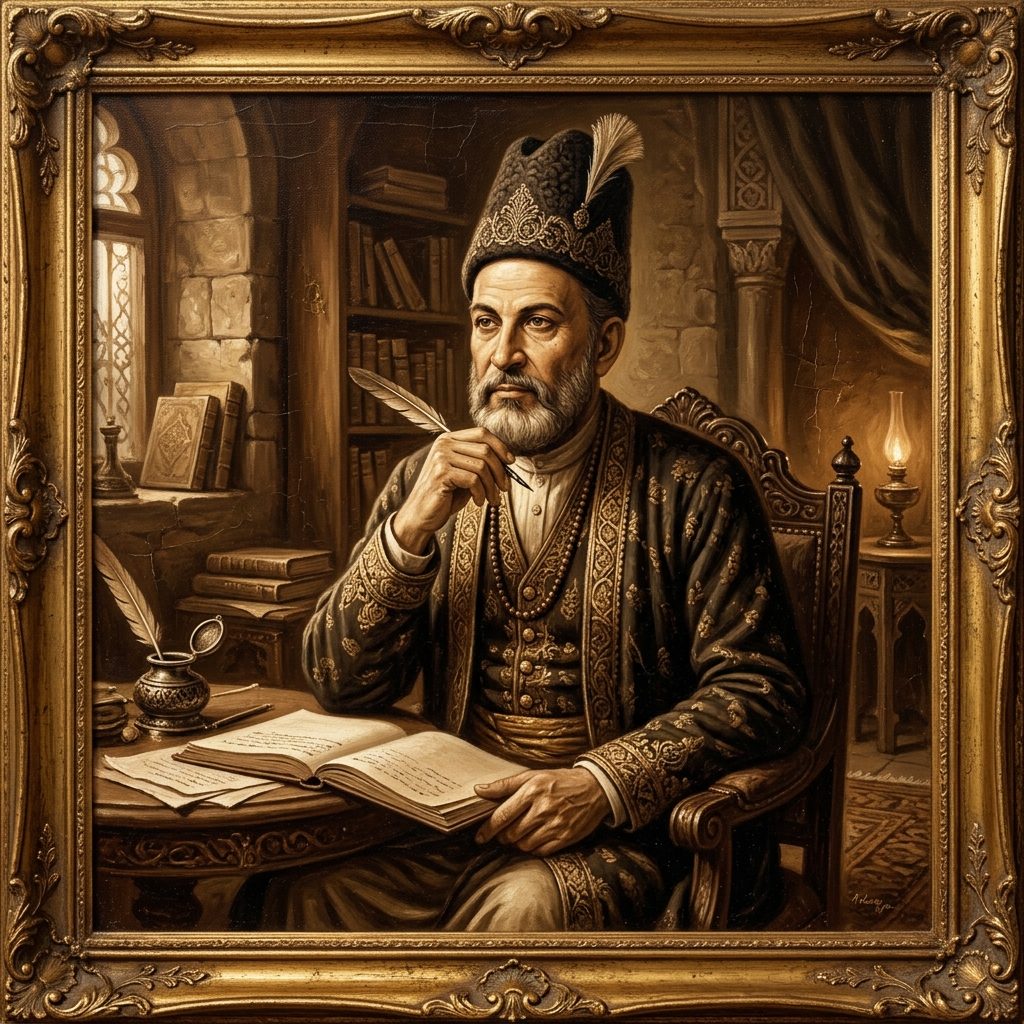
Lala Madhav Ram Jauhar
Lala Madhav Ram Jauhar — pen name Jauhar — was a classical Urdu poet of the nineteenth century and a contemporary of Mirza Ghalib. He held a highly respected post in the court of Bahadur Shah Zafar, the last Mughal emperor, placing him at the heart of Delhi's literary world in its final Mughal years. A Hindu poet writing fluent, graceful Urdu, he became known for ghazals of love, longing, and the beloved's glance — couplets in which a signal before the gathering, a withheld meeting, or a hidden love that cannot stay hidden carries the whole poem. About forty of his ghazals and 174 of his couplets survive, along with his prose work Insha-e-Madhoram. He lived through the passing of the Mughal order into British rule, and his verse keeps the courtly grace of that world while speaking plainly of separation and unmet desire. Jauhar died in 1889. His couplets remain widely quoted, including one carried into the film Prem Kahani (1975).
Lutf Ali
Lutf Ali (1716–1794) was a poet of Bahawalpur, and the author of the *Saifalnāma* — the tale of Prince Saif-ul-Muluk that the Saraiki country still reads and sings. He was born in 1716 in the village of Mao, in what is now the Rahim Yar Khan District of Punjab. Little is known of his life beyond the poem itself: he was a learned man of Bahawalpur — "Maulvi" is the title he carries — writing in the Saraiki speech of the Multan–Bahawalpur country. In 1781 he completed his *Saifalnāma*, also called *Sayf al-Mulūk*, the Sword of Kings: the story of Prince Saif-ul-Muluk, son of the King of Egypt, who falls in love with the fairy Badi-ul-Jamal from her picture on a cloth and sets out across seas and deserts to find her — a tale drawn from the Thousand and One Nights, told in long narrative verse in the manner of the Persian masnavi. The poem became the popular telling of the tale in the Saraiki country, and it has stayed in print and in song ever since — an Urdu rendering of it appeared in 1964. He died in 1794, thirteen years after finishing his poem, in the Bahawalpur country where he had lived and written.