
Poets Directory (شعرائے کرام)
Explore profiles, portraits, life biographies, and complete poetry of classical and modern Urdu luminaries.
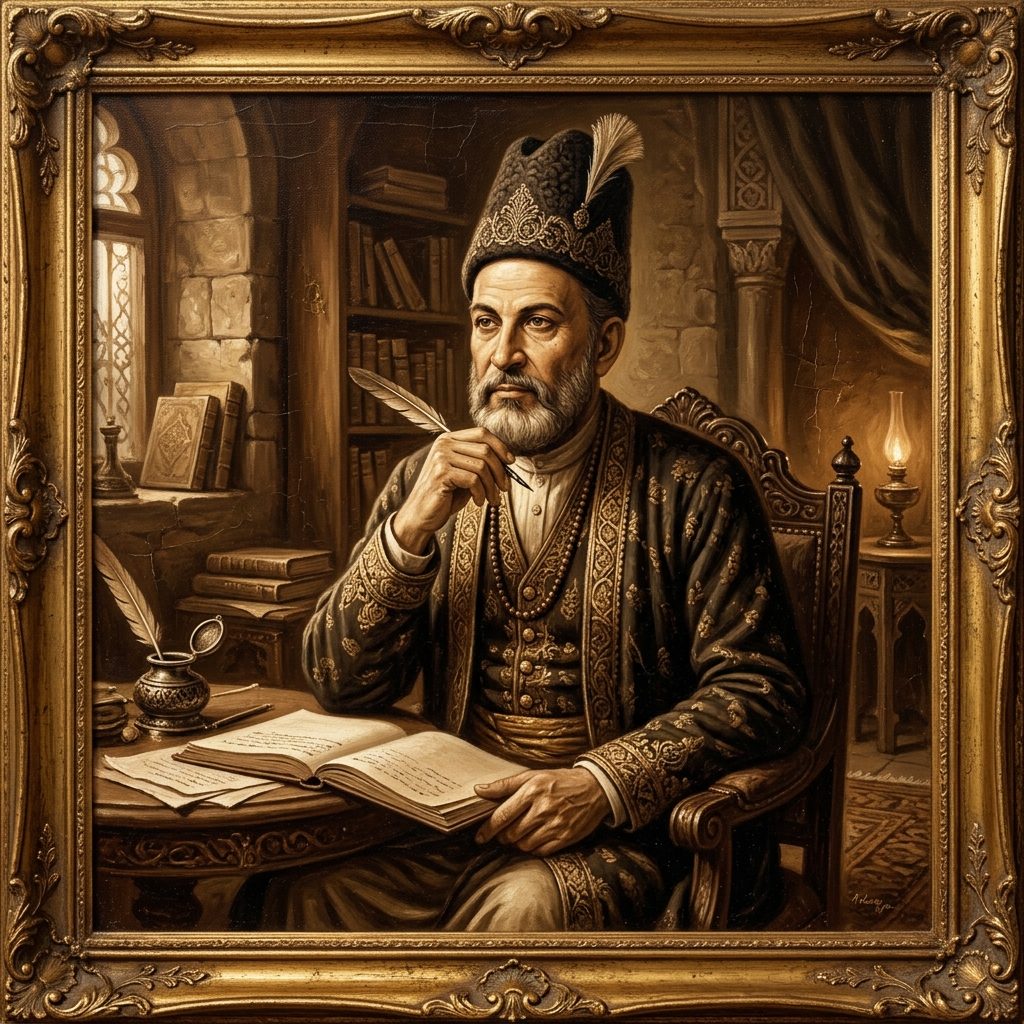
Waris Shah
Waris Shah (1722–1798) was a Punjabi Sufi poet of the Chishti order, and the voice Punjab still turns to when it tells the story of Heer and Ranjha. He was born in 1722 at Jandiala Sher Khan, in the Sheikhupura district, into a Sayyid family — his father was Gulsher Shah and his mother Kamal Banu — and his parents died while he was still young. He was educated at Kasur, under Hafiz Ghulam Murtaza, and became a disciple of Pir Makhdum of Kasur. After his studies he settled at Malka Hans, a village north of Pakpattan, where he lived in a small room beside the mosque that now bears his name. There, in 1766, at the asking of his friends, he made the old love of Heer new again: his *Heer Ranjha* retells the tale — traditionally set in the fifteenth century, one of the four great tragic romances of Punjab — in the speech of the Punjab itself, thick with its idioms, proverbs and sayings, and with a minute, living picture of Punjabi life and of the troubled politics of his own century, whose invasions he saw with his own eyes. He did not invent the story — earlier poets had told it before him — but his telling became the classic, the one singers still perform and listeners still know by heart. When he died in 1798 he was buried at Jandiala Sher Khan, where his tomb stands and an annual gathering is held, and lovers still come to it as pilgrims. He is remembered as the Shakespeare of the Punjabi language.
Wali Deccani
The founder of the Urdu ghazal — the Deccan poet whose diwan taught Delhi the music of Rekhta.
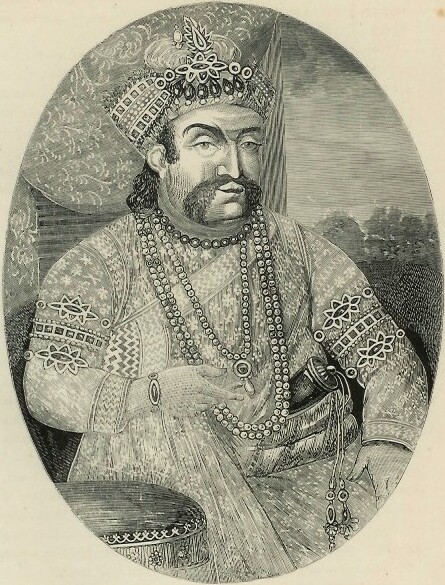
Wajid Ali Shah Akhtar
Wajid Ali Shah 'Akhtar' (1822–1887) was the last Nawab of Awadh. He ascended the throne of Lucknow in 1847 and ruled for nine years, until the British East India Company annexed his kingdom in February 1856 and removed him. He spent the rest of his life — over three decades — in exile at Matiya Burj (Metiabruz) near Calcutta, where he died in 1887. A poet, playwright, dancer and composer, he was one of the great patrons of the arts: he nurtured the Lucknow gharana of Kathak, staged magnificent rahas, and wrote over forty works in Urdu and Persian — poems, prose and thumris. His most famous couplet — "dar-o-diwar pe hasrat se nazar karte hain / KHush raho ahl-e-watan hum to safar karte hain" — was his farewell to Lucknow, and it lives on in every Urdu speaker's heart.