
Poets Directory (شعرائے کرام)
Explore profiles, portraits, life biographies, and complete poetry of classical and modern Urdu luminaries.
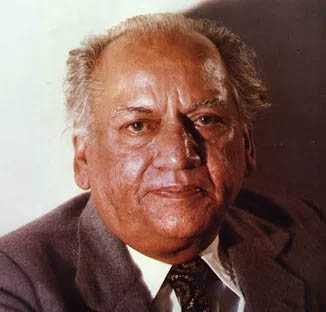
Faiz Ahmed Faiz
Faiz Ahmed Faiz was a nominated Nobel Prize poet and Lenin Peace Prize laureate. He seamlessly blended the classical romantic imagery of the ghazal with revolutionary themes of social justice, anti-imperialism, and human rights.

Fahmida Riaz
Fahmida Riaz (1946–2018), born 28 July 1946 at Meerut in a literary family, was Pakistan's poet of resistance — the woman's voice that refused, for fifty years, to be either decorative or silent. Her father, educationist Riaz-ud-Din Ahmed, was transferred to Sindh, so she grew up in Hyderabad, lost her father at four, and was raised by her mother; her first poem appeared in Ahmad Nadeem Qasmi's Funoon when she was fifteen. Her first collection, Patthar ki Zaban (1967), already spoke a young woman's desire with a directness Urdu had seldom heard; her second, Badan Dareeda (1973) — "the torn-bodied" — was denounced by conservatives as erotic and became a milestone of modern Urdu poetry for exactly that honesty. Under Zia-ul-Haq she was charged with sedition and spent seven years in exile in India, where she was poet-in-residence at Jamia Millia Islamia, Delhi, and learnt Hindi. On return she led the National Book Foundation, later headed the Urdu Dictionary Board in Karachi, and kept writing: Godaavari, Khatt-e Marmuz, novels, stories, and the first rhymed Urdu translation of Rumi's Masnavi, Khana e Aab O Gil, alongside translations of Shah Abdul Latif Bhitai and Shaikh Ayaz from Sindhi. Her late poem "Tum bilkul hum jaisey nikley" (2014) — addressed across the border — made her, once more, the conscience of two countries at once. She received the Pride of Performance (2010) and the Sitara-e-Imtiaz, and died in Lahore on 21 November 2018.
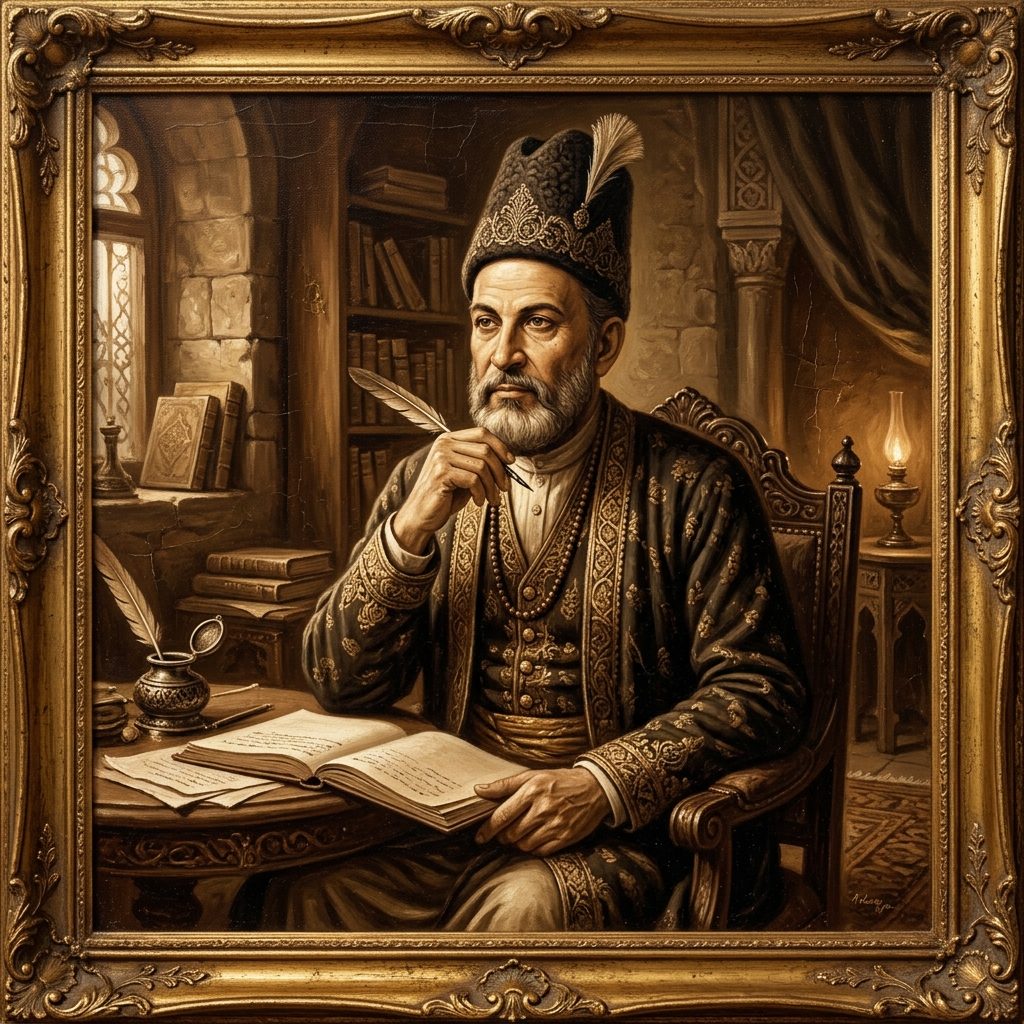
Fasahat Lucknowi
Lucknow's classical voice — the son of Inder Sabha's author, and eloquence itself. Fasahat Lucknowi (1857–1930), born Syed Abbas Hasan in Lucknow in 1857, was a representative of Lucknow's classical poetic tradition — and the elder son of the man who made Lucknow's name in Urdu letters. His father, Agha Hasan Amanat, wrote Inder Sabha, the first stage play in Urdu, and died in 1858, when Fasahat was still a small child. His upbringing and education were taken up by his elder brother, Syed Hasan Latafat, in whose literary company his own gift for verse was refined. In a short time he made his name as a poet of originality, refined and elegant language, and strong craftsmanship — the delicacy, vibrancy and subtle elegance of Lucknow's literary culture, kept alive in his ghazals. His poetry was first published under various names, so few readers knew it was his; it was later gathered and arranged as Diwan-e-Fasahat, with a preface by Abdul Halim Sharar and tributes from his contemporaries and students. He had a considerable circle of disciples, and he is counted among the prominent poets of his era. He died in Lucknow in 1930.
Fayyaz Hashmi
Fayyaz Hashmi (1920–2011) was a Pakistani poet and film lyricist, born in Calcutta in 1920 to the poet and stage-drama writer Syed Muhammad Hussain Hashmi 'Dilgeer'. He began writing songs as a teenager — his early hit "Tasveer teri dil mera behla na sakegi", sung by Talat Mahmood, made the singer famous — and served as resident lyricist of the Gramophone Company of India from 1943 to 1948. After Partition he moved to Lahore, where he helped organise Pakistan's music scene and promoted artists including Farida Khanum; his first Pakistani film songs were for Kunwari Bewa (1956). He is credited with 482 songs for 122 Pakistani films, and his lifetime song count is quoted at over 2,000. Alongside the film work he wrote ghazals, collected in Satah-e-Aaina (1982), winning the Graduate Award three times and the Nigar Award for best song in 1978. He died in Karachi on 29 November 2011.
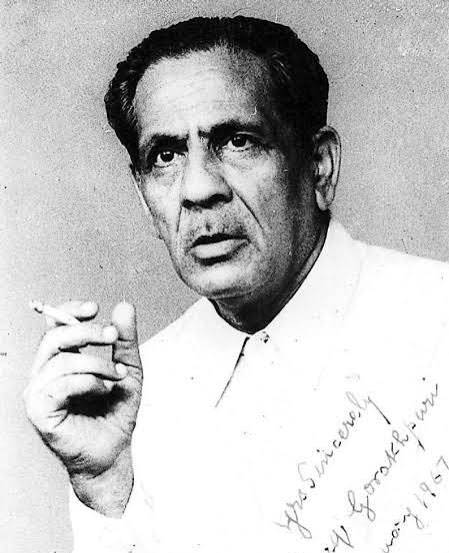
Firaq Gorakhpuri
First Urdu Jnanpith laureate — the poet who gave the modern ghazal an Indian heart.
Fani Badayuni
Shaukat Ali Khan (1879–1941), known to Urdu as Fani Badayuni — "Fani" meaning the mortal, the perishable — is the twentieth century's most uncompromising poet of despair. Born on 13 September 1879 at Islamnagar in the Badaun district of UP, he took his BA (1901) at Bareilly College and a law degree at Aligarh, but the practice of law never held him; a brief editorship of the magazine Tasneem, years of practice in Bareilly, Lucknow and Agra, and finally a head-teachership in Hyderabad (1932–1939) framed a life of narrowing fortunes. The deaths of his wife and his young daughter in the early 1930s sealed his inward turn — he wrote of himself as "a disgrace to my family, a burden on this earth." Called "Mayusi ka shayar" (the poet of despair) and "Sahib-e-gham," Fani took Mir's pathos and Ghalib's intellectual daring and distilled them into an unrelieved existential pessimism: life as a riddle neither to be solved nor explained. His collections Diwan-e Fani, Baqiyat-e Fani and Irfaniyat-e Fani preserve his later work; the early diwans were lost. He died in Hyderabad on 27 August 1941 and is buried there.