
Poets Directory (شعرائے کرام)
Explore profiles, portraits, life biographies, and complete poetry of classical and modern Urdu luminaries.
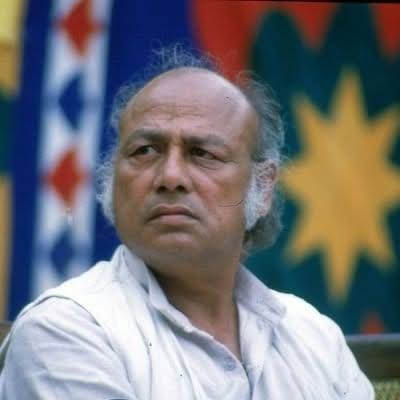
Habib Jalib
Habib Jalib was known as the "Shair-e-Awam" (The People's Poet). A fearless dissident who spent years in prison defying military dictatorships, his poem "Dastoor" is an eternal anthem of defiance.
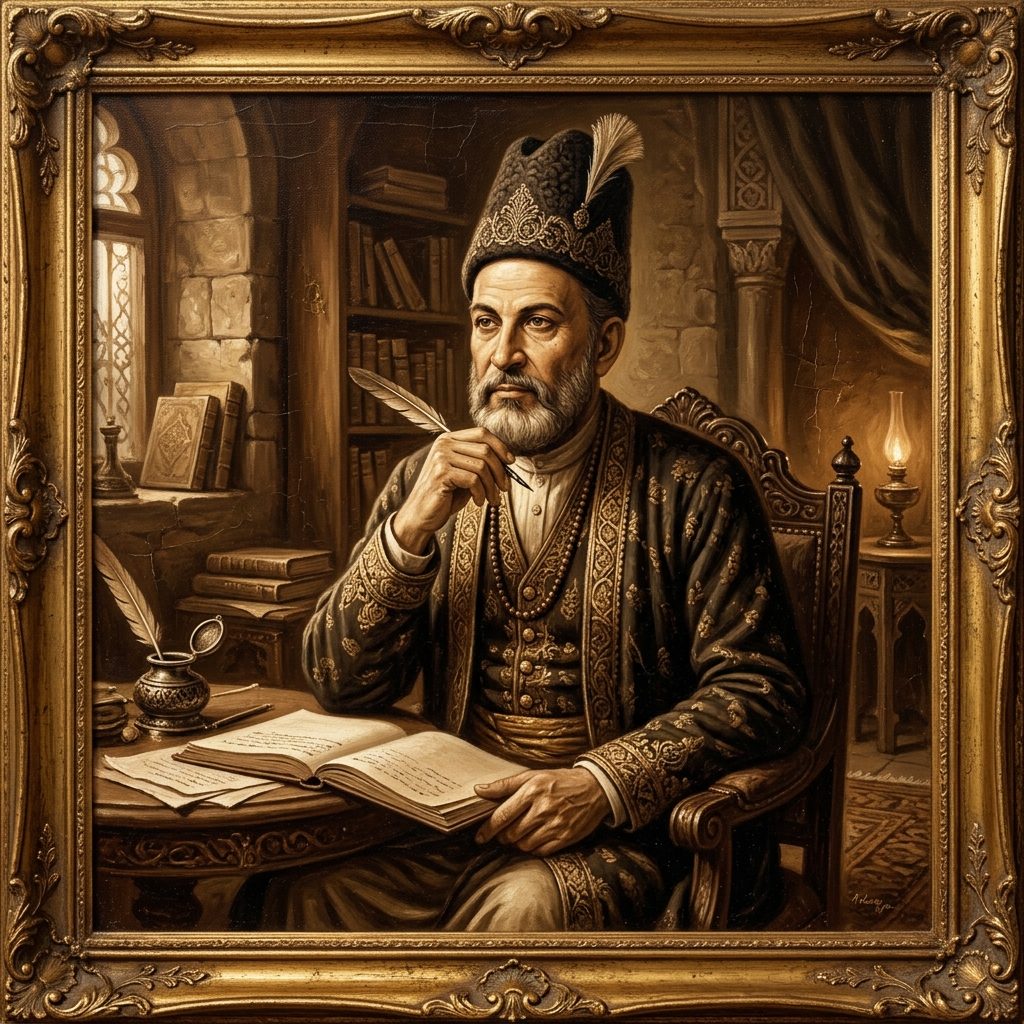
Hafeez Hoshiarpuri
The voice behind the century's ghazal — love that never grows few, and the friend who is hard to find. Hafeez Hoshiarpuri (1912–1973), born Shaikh Abdul Hafeez Saleem on 5 January 1912 at Hoshiarpur in Punjab, was one of the most refined ghazal poets of his generation. He was educated at Government College Lahore, where he studied alongside Faiz Ahmad Faiz; in October 1929 the teacher Sufi Tabassum first heard them both at a college mushaira. He began as a teacher, then entered government service, and after Partition made his life in Pakistan. He was one of the founders of Halqa-e-Arbab-e-Zauq, a researcher and a teacher of philosophy, and a master of tarikh-goee — the art of the chronogram, hiding a date inside a verse. He was the ustad of Nasir Kazmi, who learned the ghazal at his feet and went on to become one of the great names of Urdu poetry. His own ghazals are smooth and lyrical, balancing romance with reflection, and his most famous — "Mohabbat karne wale kam na honge", written in the 1920s — has been sung by Mehdi Hassan, Farida Khanum and Jagjit Singh, and a century after it was written, by Arooj Aftab, whose rendition won the Grammy Award for Best Global Music Performance in 2022. His collection Maqam-e-Ghazal appeared after his death. He died in Karachi on 10 January 1973, aged 61.
Hafeez Jalandhari
Abu al-Asar Hafeez Jalandhari (Muhammad Abdul Hafeez, 14 January 1900 – 21 December 1982) was the poet whose words became Pakistan's national anthem. Born in Jalandhar, Punjab, to Shams-ud-Din, a Hafiz-e-Quran, his formal schooling ended at the seventh grade — he disliked mathematics and loved only Urdu — yet he educated himself through voracious reading and became a disciple of the Persian poet Maulana Ghulam Qadir Bilgrami. From 1922 to 1929 he edited monthly magazines including Naunehal, Hazar Dastaan, Tehzeeb-e-Niswan and Makhzin, and he threw himself into the Pakistan Movement, using his writing to inspire its cause. After independence in 1947 he migrated to Lahore; in early 1948 he joined the forces for the freedom of Kashmir and was wounded. Out of 723 poets who competed to write Pakistan's national anthem, his lyrics were selected, set to music by Ahmed Ghulam Ali Chagla. His four-volume Shahnama-e-Islam retells the glorious history of Islam in verse, in the manner of Firdowsi's Shahnameh. His poem "Abhi To Main Jawan Hoon", sung by Malika Pukhraj, became a household song. The Government of Pakistan honoured him with the Pride of Performance (1958) and the Hilal-e-Imtiaz. He died in Lahore on 21 December 1982 and lies buried near the Minar-e-Pakistan.
Hasan Abidi
Hasan Abidi (1929–2005), pen name 'hasan', was a Pakistani journalist, poet and political activist whose ghazal carried the evening light of Karachi — a city he loved and questioned all his life. Born Syed Hasan Askari on 7 July 1929 at Zafarabad in Jaunpur district, he was educated at Azamgarh and Allahabad, and moved to Pakistan in 1948, settling in Karachi. He began in journalism in Lahore at the daily Afaq in 1955, moved to the weekly Lail-o-Nahar in 1957 — then edited by Faiz Ahmad Faiz and Sibte Hassan, both of whom shaped him — and later edited the women's magazine Akhbar-e-Khwateen before joining Dawn, where he worked until his death, writing a weekly literary column for its Karachi pages. He was president of the Karachi Press Club, an active trade unionist, and a member of the Irtiqa forum; his politics cost him spells in jail. His poetry collections are Navisht-i-Nai (1995), Jareeda (1998) and Farar Hona Huroof Ka (2004); he also wrote verses for children in Kaghaz ki Kashti and translated the essays of Eqbal Ahmed into Urdu. He wrote both ghazals and nazms, but his surest ground was the ghazal, while his nazms told the story of a society whose changing values he mourned. He died of a heart attack in Karachi on 6 September 2005, aged seventy-six, having handed in his latest column the evening before. He left a wife and three children.
Hasrat Jaipuri
Hasrat Jaipuri (1922–1999), born Iqbal Hussain on 15 April 1922 in Jaipur, was the romantic voice of Hindi cinema's golden age — the lyricist who gave Raj Kapoor's films their songs of love and longing. He came to Bombay in 1940 and worked for eight years as a bus conductor, earning eleven rupees a month, while his verses found their way to mushairas. A poem about a labourer's corpse, recited before Prithviraj Kapoor, brought him to Raj Kapoor, and his first film songs came in Barsaat (1949) — "Jiya Beqaraar Hai" was his first recorded song, and he wrote six of the film's ten songs — beginning a partnership with Raj Kapoor and the composers Shankar-Jaikishan that ran through some three hundred films. His pen gave Hindi cinema "Baharon Phool Barsao", "Zindagi Ek Safar Hai Suhana", "Ehsan Tera Hoga Mujh Par", "Tum Mujhe Yun Bhula Na Paoge", "Yeh Mera Prem Patra" and "Aji Rooth Kar Ab Kahan Jaiyega". He won the Filmfare Award for Best Lyricist twice, in 1966 for "Baharon Phool Barsao" (Suraj) and in 1972 for "Zindagi Ek Safar Hai Suhana" (Andaz). Beside the films he wrote ghazals all his life, in the plain, musical Urdu of the romantic tradition, and he kept writing lyrics until his last breath — his final film work appeared in Hatya (2004), five years after his death. He died in Bombay on 17 September 1999, aged 77.
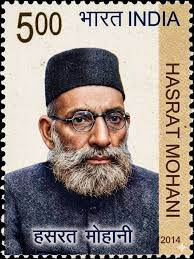
Hasrat Mohani
The poet whose pen carried love — and whose slogan, "Inquilab Zindabad", carried a revolution. Syed Fazlul Hasan "Hasrat" Mohani (1875–1951) — the "Mohani" marking his birthplace, Mohan in the Unnao district of Uttar Pradesh — was an Urdu poet of the ghazal and one of the Indian freedom movement's most fearless voices. A graduate of MAO College, Aligarh (1903), he founded the influential journal Urdu-i-Mualla, endured several British prison terms, coined the immortal slogan "Inquilab Zindabad" (Long Live the Revolution), and in 1921 became the first to demand complete independence (Purna Swaraj) at the Ahmedabad Congress session. A founder of the Communist Party of India and a member of the Constituent Assembly, he was equally a poet: essentially a ghazal poet who blended classical and modern styles and kept the ghazal alive when it was being marginalised. His ghazal "Chupke Chupke Raat Din Aansu Bahana Yaad Hai" — immortalised by Ghulam Ali and the film Nikaah — remains among the most sung verses in Urdu. He died in Lucknow on 13 May 1951.