
Poets Directory (شعرائے کرام)
Explore profiles, portraits, life biographies, and complete poetry of classical and modern Urdu luminaries.
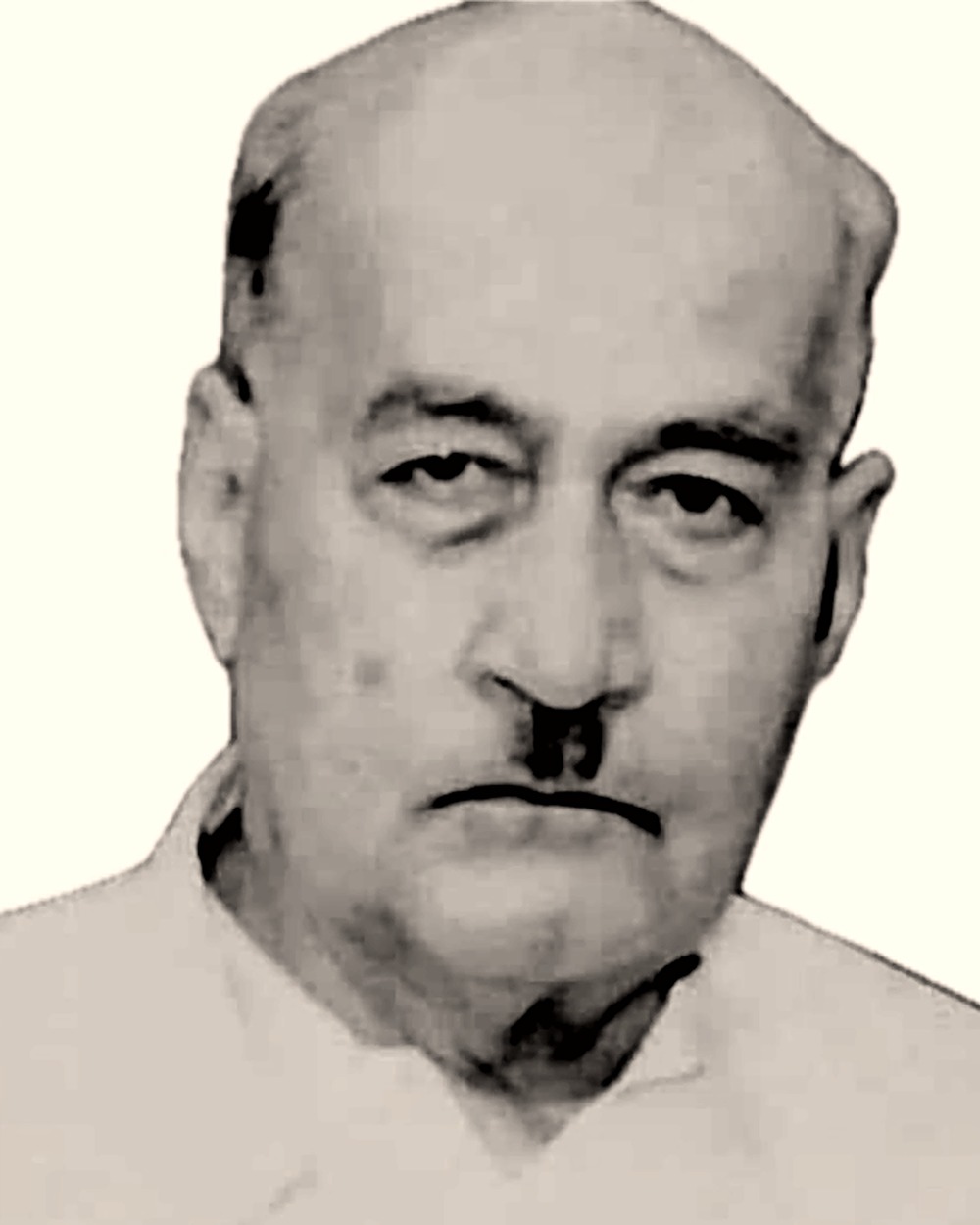
Josh Malihabadi
Shaair-e-Inqilab — the poet whose slogan was "revolution, revolution, and revolution."
Majaz Lucknawi
The "Keats of Urdu poetry" — who made revolution sing, and gave the lonely city its anthem.
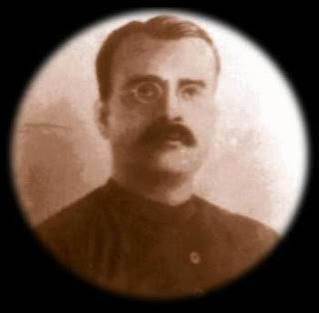
Brij Narayan Chakbast
Brij Narayan Chakbast (1882–1926), who wrote under the pen name Chakbast, was an Urdu poet of Lucknow and one of the founders of patriotic Urdu poetry in the modern age. Born into a Kashmiri Brahmin (Pandit) family at Faizabad on 19 January 1882 — the son of the poet Pandit Udit Narayan Chakbast — he moved to Lucknow as a boy after his father's death and made it his home for life. He earned his B.A. (1905) and LL.B. (1907) from Canning College, Lucknow, and rose to distinction at the Lucknow Bar. A lawyer by profession, he poured his public spirit into verse: he was a strong proponent of the Home Rule movement, helped found the Kashmiri Young Men's Association and the Bahadur Library, and chose the nazm as his chief form — *Subh-e-Watan* (Dawn of the Nation, 1926) made qaumiyat, love of nation, the subject of Urdu poetry without ever letting it collapse into mere propaganda. Secular to the bone, he wrote with equal reverence on Ram, Krishna, and Gokhale. He died suddenly on 12 February 1926 at Rae Bareli railway station, aged only 44, after a paralytic stroke. His philosophical sher *"Zindagi kya hai anasir mein zuhur-e-tartib / Maut kya hai inhin ajza ka pareshan hona"* — heard by millions at the opening of the film *Masaan* (2015) — returned him to public memory nearly a century later.
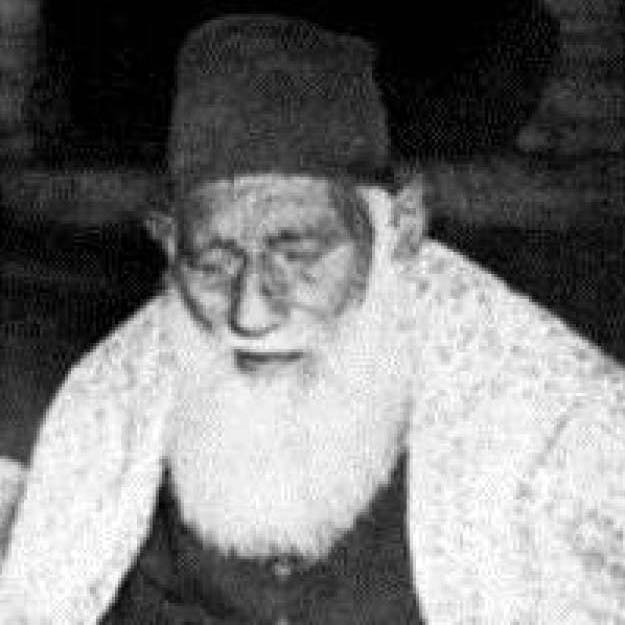
Bekhud Dehlvi
Syed Wahid-ud-din Ahmed (1863–1955), known to Urdu letters as Bekhud Dehlvi, was a classical ghazal poet of Delhi and among the finest disciples of Dagh Dehlvi. Born at Bharatpur (Rajasthan) on 21 March 1863 to the poet Syed Shams-ud-din 'Salim', he was brought to Delhi as a boy, where Altaf Hussain Hali schooled him in Arabic, Persian, and the craft of verse. In 1891 Hali made him Dagh's disciple, and he soon rose among the best of that illustrious circle — a lineage that also counted Iqbal's teacher among its masters. His ghazals — collected in Guftar-e-Bekhud and Shahsavar-e-Bekhud — are prized for linguistic dexterity and colloquial grace, carrying Dagh's living idiom into the twentieth century with a distinction all his own. His corpus also includes devotional verse, including a naat. He lived to ninety-two, dying in Delhi on 2 October 1955 — a living bridge from the Mughal twilight to independent India.
Fani Badayuni
Shaukat Ali Khan (1879–1941), known to Urdu as Fani Badayuni — "Fani" meaning the mortal, the perishable — is the twentieth century's most uncompromising poet of despair. Born on 13 September 1879 at Islamnagar in the Badaun district of UP, he took his BA (1901) at Bareilly College and a law degree at Aligarh, but the practice of law never held him; a brief editorship of the magazine Tasneem, years of practice in Bareilly, Lucknow and Agra, and finally a head-teachership in Hyderabad (1932–1939) framed a life of narrowing fortunes. The deaths of his wife and his young daughter in the early 1930s sealed his inward turn — he wrote of himself as "a disgrace to my family, a burden on this earth." Called "Mayusi ka shayar" (the poet of despair) and "Sahib-e-gham," Fani took Mir's pathos and Ghalib's intellectual daring and distilled them into an unrelieved existential pessimism: life as a riddle neither to be solved nor explained. His collections Diwan-e Fani, Baqiyat-e Fani and Irfaniyat-e Fani preserve his later work; the early diwans were lost. He died in Hyderabad on 27 August 1941 and is buried there.
Yagana Changezi
Mirza Wajid Hussain (1884–1956), who wrote first as "Yaas" (despair) and then as "Yagana" (the matchless) — finally Yagana Changezi — was born in 1884 at Azimabad, now Patna, into a family that traced its line to Iranian migrants in the Mughal army. Mentored in poetry by Shad Azimabadi, he tutored the Nawab of Awadh's grandson at Matyaburj, Calcutta, before settling in Lucknow — the city that would both make and break him. Egotistical, uncompromising and brutally outspoken, he caused scandal after scandal: he attacked the veneration of Ghalib in his prose work Ghalib-Shikan (1934), questioned Iqbal, and made controversial statements on religion that once got him attacked by a mob. Declared an apostate and humiliated by Lucknow's literary circles, he spent his last years in illness and loneliness, dying on 2 February 1956. His tone — direct, curt, stinging — made him an interrogator of life and art rather than a singer of love: "more than writing about the myriad manifestations of love, he wrote about the manifestations of life". His collections Nishtar-e Yaas (1914), Aayat-e Wijdani (1927), Tarana (1933) and Ganjina (1948) were rescued for posterity in Mushfiq Khwaja's Kulliyat-i Yagana (2003).
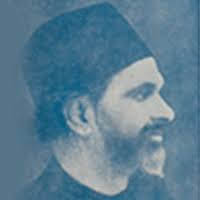
Asghar Husain (Asghar Gondvi)
Asghar Husain (1884–1936), known by his pen name Asghar Gondvi, was a pre-modern Urdu ghazal poet of rare philosophical depth. Born in the Gorakhpur district in 1884, his family settled in Gonda, where he lived most of his life and from which he took his name. With little formal schooling, he taught himself Urdu, Arabic, Persian, and English, and worked as an editor — first with Urdu Markaz, Lahore, then for many years at Tej Bahadur Sapru's Hindustani Press in Allahabad, editing the magazine Hindustani. A close friend of Jigar Moradabadi (whose Safha profile is in this directory), Asghar was not a prolific writer; he was preoccupied essentially with the idea of perfecting his ghazal. His poetry takes the stock romantic metaphors of the ghazal and re-thinks them in both romantic and spiritualist registers — a soft, melancholic voice that is philosophical without ever losing its music. His best-known sher, "chala jata hun hansta khelta mauj-e-hawadis se / agar aasaniyan hon zindagi dushwar ho jae," has entered the living memory of Urdu. His collections include Nishat-e-Rooh and Surood-e-Zindagi. He died in Allahabad in 1936.
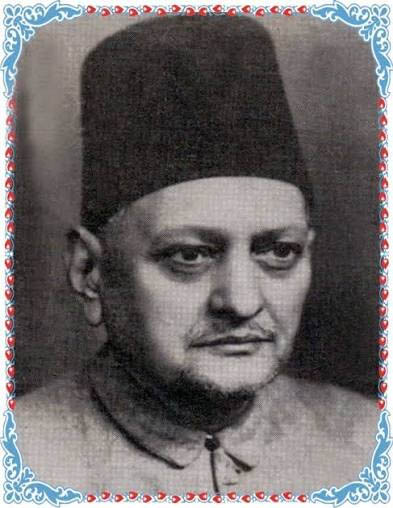
Seemab Akbarabadi (1882–1951), born Aashiq Hussain Siddiqui in Agra, was one of the most prolific poets of twentieth-century Urdu — some seventy-five books, including twenty-two collections of poetry. In 1898 he became a disciple of Daagh Dehlvi (whose Safha profile is in this directory), joining the great classical tradition of the Delhi school. In 1923 he founded the publishing house Qasr-ul-Adab in Agra and launched the monthly Paimana, the weekly Taj, and the monthly Shair — printing not only his own work but that of a generation; his son Aijaz Siddiqi carried Shair on for decades. His ghazals, beloved in the voice of Kundan Lal Saigal, move easily between love, philosophy, and social themes. Late in life he completed Wahi-e-Manzoom, a verse translation of the Quran, published after his death. After Partition he moved to Karachi, where a paralytic stroke in 1949 ended his writing life; he died there on 31 January 1951.