Poets Directory (شعرائے کرام)
Explore profiles, portraits, life biographies, and complete poetry of classical and modern Urdu luminaries.
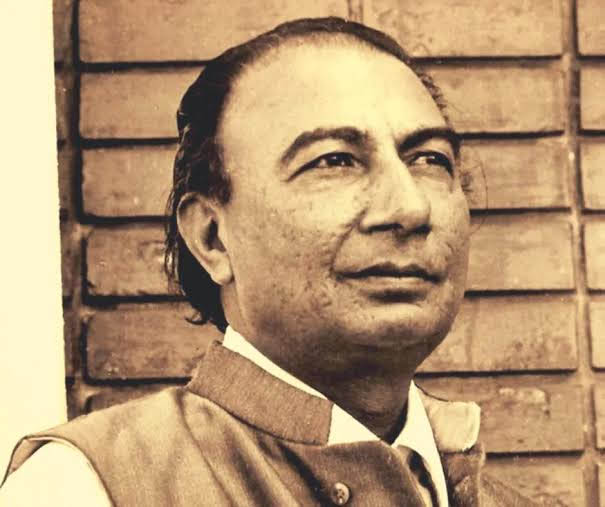
Sahir Ludhianvi
Sahir Ludhianvi was an iconic progressive poet and the most influential lyricist in Hindi-Urdu cinema. His poetry in "Talkhiyan" challenged feudal hypocrisy, religious dogma, and celebrated working-class dignity.
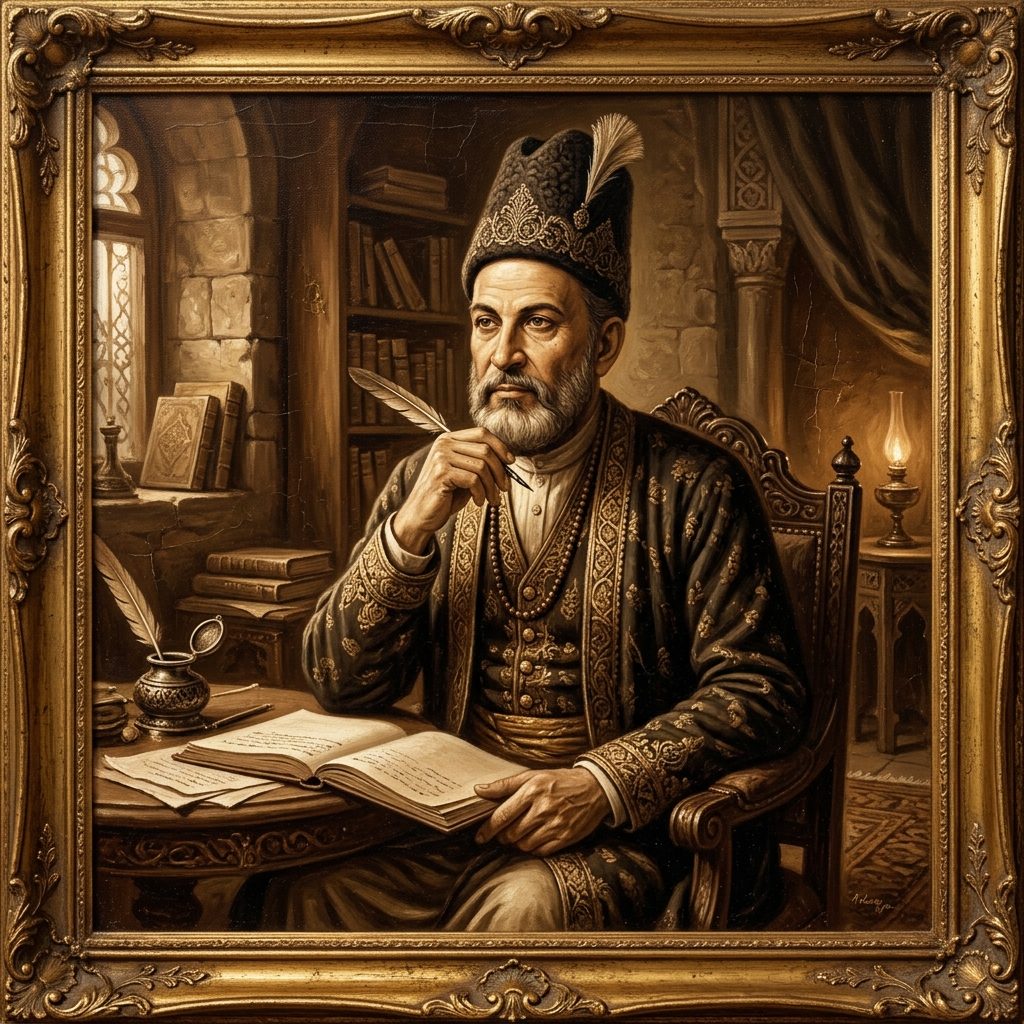
Safi Lakhnavi
Safi Lakhnavi (1862–1950) was a Lucknow Urdu poet of the people, honoured as Lassan-ul-Qaum, the spokesman of the people. Born Syed Ali Naqi Zaidi in Lucknow, he received his early education from his father, learnt Persian from Najmuddin Kakorvi and Arabic from Maulvi Ahmad Ali, took his Entrance degree from Canning College, and taught English in the school attached to that college. In 1883 he joined government service in the revenue department. He began writing verse at the age of thirteen without an ustad, when having a teacher was the norm, and his poetry broke from traditional Urdu verse in its plain, sweet language of the common folk. He preferred the nazm to the traditional ghazal, wrote patriotic poems on the social, political and cultural condition of his times, and also practised qasida, mathnawi and rubai. His works are gathered in Aagosh-e-Maadar, Tanzeem-ul-Hayaat and Deewan-i-Safi.
Saghar Nizami
Aligarh's star of the modern ghazal — the dramatist of Anarkali, honoured with the Padma Bhushan. Saghar Nizami (1905–1984), born Samad Yar Khan on 21 December 1905 at Aligarh, was an Indian Urdu poet of ghazal and nazm, and one of the chief revivers of the Urdu poetic drama. His father, Sardar Ahmed Yaar Khan, was a well-known medical doctor in the service of the British government of India. Saghar was among the earliest disciples of Seemab Akbarabadi, and from 1923 to 1932 he edited Paimana, a monthly magazine published by his teacher in Agra. In 1933 he moved to Meerut and founded Adabi Markaz, a publishing house which in its very first year introduced Mehr Lal Soni Zia Fatehabadi to the Urdu literary world by publishing Tullu, the latter's first collection of poems. His own collections include Subuhi (1934), Badah-e-Mashriq (1934), Kahkashan (1934), Rangmahal (1943), Mauj-e-Sahil (1949) and Nehrunama (1967). His great verse drama Anarkali was first broadcast as a radio script in 1958 and published in 1963; he also wrote Nehru Nama (1967), Samandar ki Devi (1972) and Mash'al-e-Azadi (1980), for which he received the Urdu Academy Award in 1981. He was honoured with the Padma Bhushan in 1969 and the Ghalib Award in 1982, and he worked in All India Radio. He died on 27 February 1984 at Delhi, aged 78.
Saghar Siddiqui
Muhammad Akhtar "Saghar" Siddiqui (1928–1974), remembered as the Shaair-e-Dard (Poet of Pain), was born in Ambala in British India's Punjab and began writing poetry as a child. He first wrote under the pen name Nasir Hijazi before becoming known as Saghar. After Partition in 1947 he migrated to Pakistan and settled in Lahore, where his melodious ghazals made him a beloved mushaira voice. He wrote for films and founded a literary magazine that won critical praise but failed commercially. Disappointment, financial ruin and addiction followed, and in his later years he lived on the streets of Lahore, still composing verse and still holding mushairas by candlelight on the footpaths. In July 1974 he was found dead on a street corner in Lahore, aged 46, and was buried at the Miani Sahib graveyard. Much of his later work is lost or unpublished, which is part of why the voice that survives — pain stated plainly, without ornament — still moves readers so directly.
Sahir Hoshiarpuri
Hoshiarpur's enchanter — who says love has a language? The eyes say it all. Sahir Hoshiarpuri (1913–1994), born Ram Prakash Sharma on 5 March 1913 at Hoshiarpur in Punjab, was an Indian Urdu poet whose main form was the ghazal. He studied at Government College and took his M.A. in Persian in 1935, learning his craft as a disciple of Josh Malsiyani of the Dagh school. In his college days he formed a lifelong friendship with the poet Mehr Lal Soni Zia Fatehabadi, and the two later lived in Kanpur. With Naresh Kumar Shad he edited the Urdu journal Chandan. Five collections of his verse appeared in his lifetime — Jal Tarang, Sahar-e-Ghazal (1959), Sahar-e-Naghma (1970), Sahar-e-Haraf (1982) and Sahar-e-Khayal (1990) — and his late study Nuqoosh-e-Dagh (1992) gathered the poets of the Dagh school. His ghazals were sung by leading singers, among them Jagjit Singh, and in 1989 the Ghalib Institute honoured him with the Ghalib Award. He died on 18 December 1994, aged 81.
Sail Dehlvi
Sail Dehlvi (1867–1945), born Nawab Sirajuddin Ahmad Khan, was a later-classical poet of the Delhi school and a carrier of Dagh Dehlavi's tradition. Born in Delhi on 29 March 1867, he was the son of Mirza Shahabuddin Ahmad Khan Saaqib and the grandson of the Loharu jagirdar Nawab Ziyauddin Ahmad Khan Nayyar Darakhshan; his name is said to have been suggested by Ghalib himself. He studied Arabic, Persian, Sanskrit and Unani medicine, became Dagh's disciple and later his son-in-law, and was a remarkable presence in the mushairas of his day. After Dagh's death, his rivalry with Bekhud Dehlvi over Dagh's legacy grew so bitter that Sail withdrew from mushairas altogether. His divan remained unpublished. He died in Delhi on 25 September 1945 and was buried at Mehrauli.
Saleem Ahmed
Saleem Ahmed (1927–1983), who wrote under the pen name Saleem, was born on 27 November 1927 at Barabanki in Uttar Pradesh. He studied at Meerut College, where the critic and teacher Karrar Hussain was among his mentors, and came to be known as one of the most unconventional voices in modern Urdu letters — a poet, a critic and a playwright. As a critic he stood against the grain of his age: he questioned the ghazal's long hold over Urdu poetry and argued against the modernism of his day, pressing instead for a poetry that faced the whole man and the whole of life. His own verse is spare and unsentimental — short, plain lines in which death, the seasons and the passing of time are looked at steadily, without flinching. His poetry collections — Bayaz, Ikai, Charagh-e-Neem Shab and Mashriq — were gathered after his death into Kulliyat-e-Saleem Ahmed (2003); his critical books include Iqbal Ek Shair (1978), Adhoori Jadeediyat (1987) and Nai Nazm Aur Poora Aadmi (1989). He died at Karachi on 1 September 1983, aged fifty-five.
Saqib Lucknawi
Saqib Lucknawi (1869–1946), born Mirza Zakir Hussain Qizilbash in Akbarabad (Agra), was the model Lucknow-school poet of the neo-classical tradition — "the very model of a Lakhnavi shayar." Raised in a family of Persian descent, he was educated in Arabic, Persian and Urdu, and in English at St. John's College, Agra. After his father's death left the family in difficulty, he tried his hand at business in Lucknow, served as personal secretary to the Iranian consul in Calcutta, and finally — in 1908 — accepted a post at the court of the Raja of Mahmudabad in Sitapur, where he remained until his death. His succinct, polished couplets — many of which attained the status of Urdu proverbs — made him beloved; the filmmaker S.U. Sunny was so taken by "Bade shauq se sun raha tha zamana" that he used it as the recited motto of his films *Mela* (1948) and *Kohinoor* (1960). His diwan, *Tajalli-e-Shahab-e-Saqib*, was published in 1936. He died at Sitapur on 24 November 1946.
Shabnam Shakeel
Shabnam Shakeel (1942–2013), born in Lahore, was a modern Urdu poet whose ghazals carry a deep feminist consciousness in a classical frame. She grew up in a literary home: her father, Syed Abid Ali Abid, was a poet and academician, and her childhood circle included Ghulam Mustafa Tabassum and Faiz Ahmad Faiz. Educated at Kinnaird College and Islamia College, Lahore, she took her M.A. in Urdu from Oriental College, Lahore, and lectured at several colleges. Her first book, *Tanqeedi Mazameen* (1965), was criticism; her poetry collections — *Shab Zaad* and *Masaafat Raigaan Thi* (2008) among them — speak in a woman's voice about love, failure, dignity and the road's dust, with the ghazal's discipline intact. Rekhta, which carries 53 of her ghazals, describes her as a poet who "deeply expresses feminist consciousness". Pakistan honoured her with the Pride of Performance. She died in Karachi on 2 March 2013, ten days short of her seventy-first birthday, and was buried in Islamabad.
Shad Azimabadi
Shad Azimabadi (1846–1927), born Syed Ali Mohammad in Azimabad (Patna), was a master of the ghazal and the marsiya and one of Bihar's greatest literary figures. Born into a wealthy and respected Syed family, he received a classical education in Arabic, Persian and Urdu, and trained under several masters of the age — chief among them Shah Ulfat Hussain Faryaad. The British government titled him Khan Bahadur, and he served Patna as Honorary Magistrate and Municipal Commissioner. The Urdu scholar Ali Jawad Zaidi called him "a saviour of the ghazal"; the critic Kalimuddin Ahmad placed him, with Mir and Ghalib, as the third pillar of the Urdu ghazal — a judgment Allama Iqbal himself shared in his admiration. His five volumes of verse blend feeling, thought and richness of expression. Beyond ghazals and marsiyas he wrote *Hayat-e-Faryaad* (his master's biography), the historical tract *Nawa-e-Watan*, and *Fikr-e-Baligh*, an account of marsiya poets. He died in Patna on 7 January 1927.