
Poets Directory (شعرائے کرام)
Explore profiles, portraits, life biographies, and complete poetry of classical and modern Urdu luminaries.
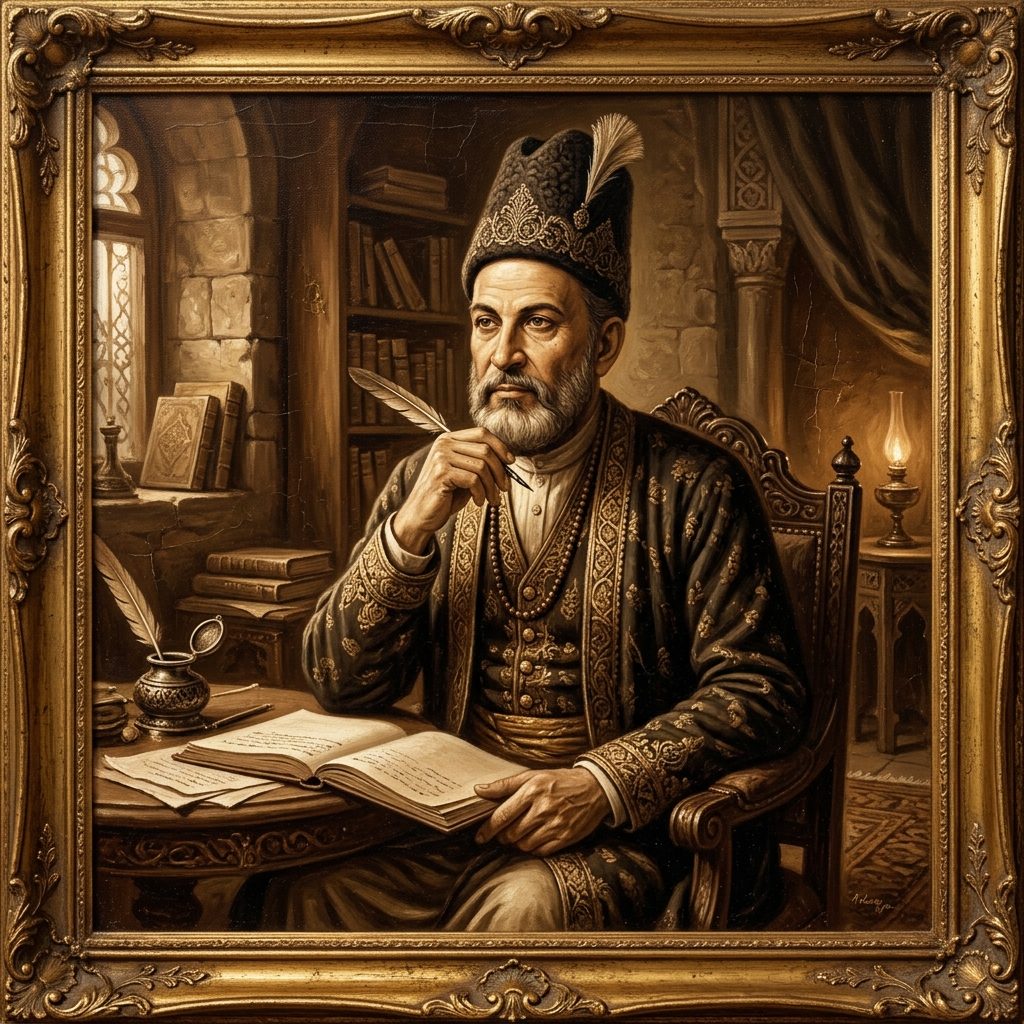
Taashshuq Lakhnavi
Lucknow's ghazal voice inside the marsiya — the garden, the sleepless night, the martyr's grave. Taashshuq Lakhnavi (1824–1892), born Sayyid Mirza at Lucknow on 11 March 1824, was a poet of the Lucknow school who wrote both ghazal and marsiya. He was the younger brother of the poet Ishq Lakhnavi, a disciple of Nasikh, and belonged to the family of poets around Mir Anees, the great master of the marsiya. He began with ghazals in his early years, and his ghazals are remembered for their delicacy of feeling and freshness of theme; his marsiyas carry the ghazal's music into lament, and the two forms meet in his verse — the same images, of the garden, the night of separation and the martyr's grave, serve both. Among his books are Baraheen-e-Gham and Baraheen-e-Ghazal, and his diwan and a later selection, Afkar-e-Tashshuq, survive in print. He died at Lucknow on 12 April 1892, aged 68.
Tufail Hoshiarpuri
Hoshiarpur's lyricist — the heart's tales reach the lips only as sighs. Tufail Hoshiarpuri (1914–1993), born on 17 July 1914 at Hoshiarpur in Punjab, was a Pakistani Urdu poet and film song lyricist whose ghazals and whose film songs both travelled far beyond his own name. He began by reading patriotic poems at Muslim League gatherings, and wrote songs for films in British India before Partition; after 1947 he became one of Pakistan's best-loved lyricists — his words carried by the qawwali "Sanson Ki Mala Pe" in Nusrat Fateh Ali Khan's voice, and by the breakthrough hit "Ni Suhay Chooray Waliye" from the film Shammi (1950). Alongside the film work he kept writing ghazals, dohe, rubai and naat, and his services to Urdu letters were honoured with the Pride of Performance. He died at Lahore on 4 January 1993, aged 78.