
Poets Directory (شعرائے کرام)
Explore profiles, portraits, life biographies, and complete poetry of classical and modern Urdu luminaries.
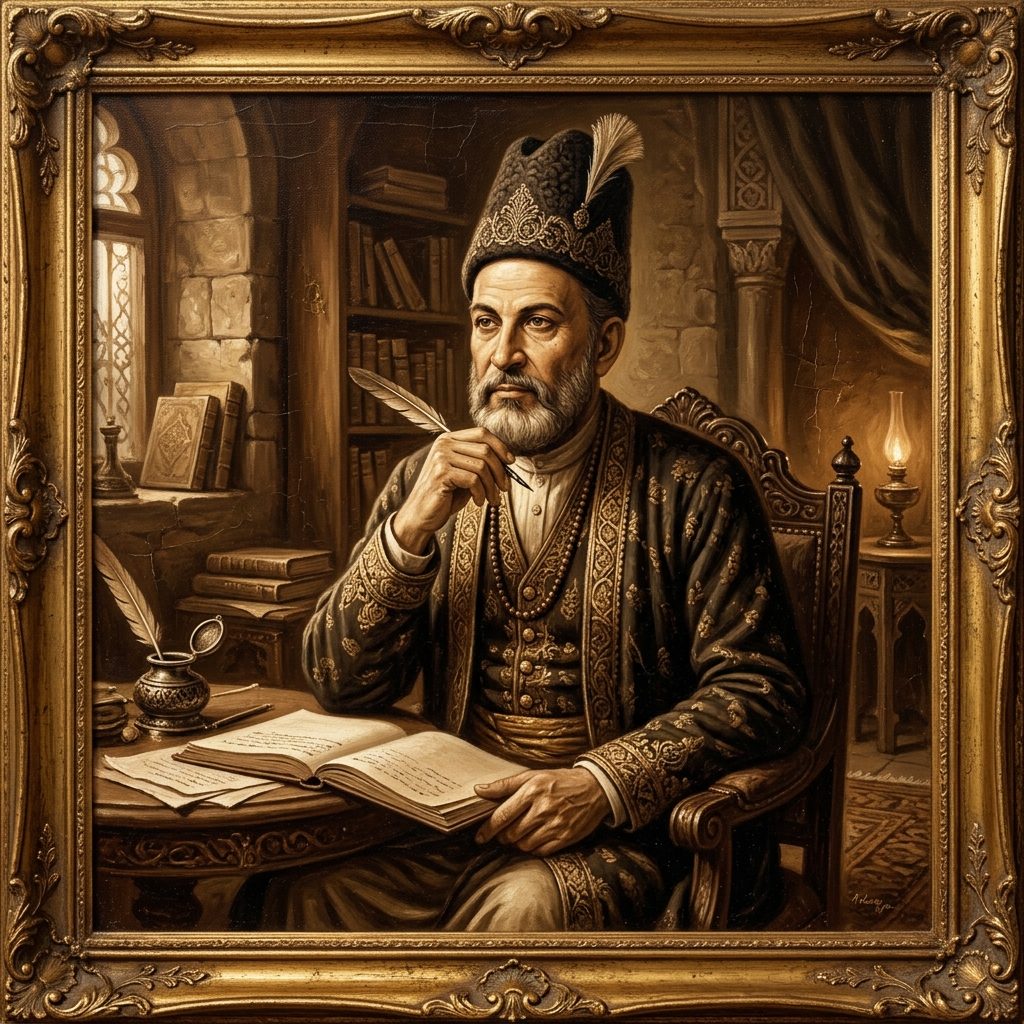
Faez Dehlvi
Delhi's first voice in Urdu — the founder who gave the ghazal the language of the bazaar. Faez Dehlvi (1690–1738), born Nawab Sadruddin Mohammad Khan in Delhi, was one of the earliest poets of northern India to leave behind a complete divan in Urdu, and a founder of Delhi's Urdu poetry before Mir. His forefathers had come from Iran and settled in Delhi, and his father, Mohammad Khalil Zabardast Khan, was a Mughal noble of high rank who served as a judge in Jaunpur and as an administrator in Awadh. Faez was brought up in a disciplined and cultured household, educated under his father's eye and by accomplished teachers, and learned Arabic and Persian alongside the living speech of Delhi's streets and bazaars. He wrote about nineteen thousand verses in Persian and some five hundred in Urdu — ghazals, masnavis and other poems — and in the Urdu verse he took the people's tongue, still new to poetry, and gave it the full ghazal: Persian compounds, similes and metaphors set beside plain dialect words, in a style praised for its simplicity and clarity. His ghazals sing mostly of love — divine love and the beauty of the beloved — and his Holi verses show a poet at home in the festivals and colours of India. His last years were shadowed by money troubles and by a troubled mind; he withdrew into seclusion and stopped meeting people. He died in Delhi in 1738 and was buried there. Only a part of his Persian work survives, but the five hundred Urdu verses that remain mark the moment when Delhi began to speak its poetry in its own tongue.
Faqir Muhammad Khan Goya
Faqir Muhammad Khan Goya (c. 1784 – c. 1850) was the soldier-poet Nawab of Malihabad, in Awadh. Born into an Afridi Pashtun family whose roots lay in the Khyber region, he mastered Urdu and Persian and followed the school of Imam Bakhsh Nasikh. He served as a soldier and commander under Yashwant Rao Holkar at Indore and under Ghaziuddin Haider, Nawab of Awadh, rising to Commander-in-Chief of the Awadh army, and founded the Tharri-Fatehnagar estate at Malihabad. His Diwan-e-Goya holds ghazals, qasidas, naats, nohas and salaams, and his Bustan-e-Hikmat (Nawal Kishore, 1887) renders the Persian Anwar-e-Suhaili into Urdu. He is remembered in Malihabad's literary line as the great-grandfather of Josh Malihabadi — the elder voice of the town whose poetry Josh would later carry to the world.
Fidvi Lahori
Fidvi Lahori (1729–1780) was born Mukund Lal into a Hindu Bania family of Lahore. He converted to Islam and took the name Mirza Fidai Beg, with "Fidvi" — one who sacrifices himself, a devotee — as his takhallus. After several years in Isfahan, he came to Delhi and became a pupil of Sabir Ali Sabir. A qasida he wrote for Ahmad Shah won him a horse, a sword and a thousand rupees. He served at the courts of Nawab Muhammad Yar Khan and later Nawab Zabita Khan. His poetic rivalry with Mirza Sauda was famous: Sauda lampooned him in satires, one of them in Punjabi, that survive in Sauda's kulliyat. Little of Fidvi's own Diwan has survived, but one of his couplets — on the lover's funeral going out with pomp — has passed into proverb. He died in 1780, in Lahore according to most accounts, though Mashafi says Moradabad.