Poets Directory (شعرائے کرام)
Explore profiles, portraits, life biographies, and complete poetry of classical and modern Urdu luminaries.
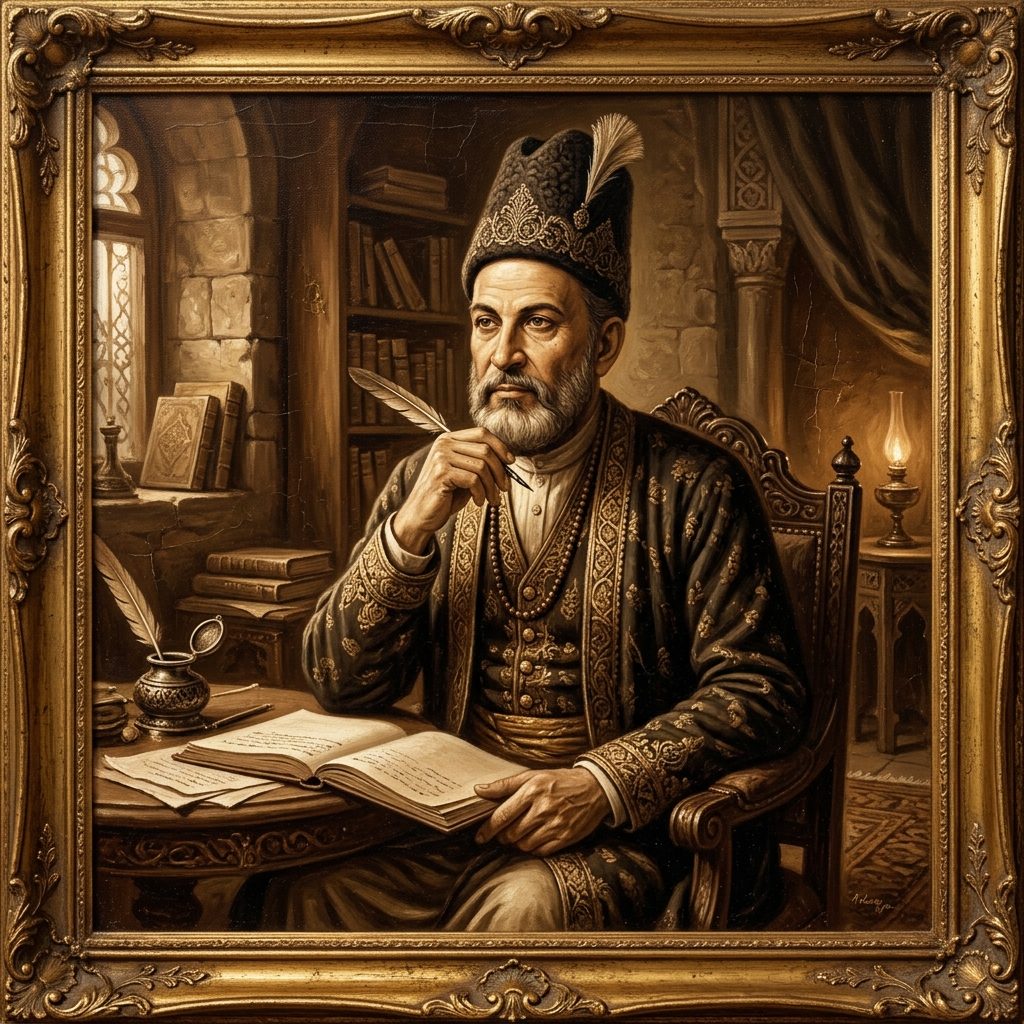
Ehsan Danish
Ehsan Danish (born Ehsan-ul-Haq; died 22 March 1982, Lahore) was a self-taught Urdu poet, prose writer, linguist and lexicographer known as Shair-e-Mazdoor, the Poet of the Workmen. Born in Kandhla, Muzaffarnagar district, Uttar Pradesh, into a poor family, he could not continue formal schooling and taught himself Arabic and Persian. Migrating to Lahore, he worked for years as a labourer — mason, painter's assistant, watchman and more — before establishing himself as a writer and founding the publishing house Maktaba-e-Danish. He wrote more than 80 books of poetry, prose, linguistics and lexicography, including the classic autobiography Jahan-e-Danish, and received the Sitara-e-Imtiaz in 1978. His early verse was romantic; his mature poetry spoke for labourers and common people in plain, direct Urdu.
Fahmida Riaz
Fahmida Riaz (1946–2018), born 28 July 1946 at Meerut in a literary family, was Pakistan's poet of resistance — the woman's voice that refused, for fifty years, to be either decorative or silent. Her father, educationist Riaz-ud-Din Ahmed, was transferred to Sindh, so she grew up in Hyderabad, lost her father at four, and was raised by her mother; her first poem appeared in Ahmad Nadeem Qasmi's Funoon when she was fifteen. Her first collection, Patthar ki Zaban (1967), already spoke a young woman's desire with a directness Urdu had seldom heard; her second, Badan Dareeda (1973) — "the torn-bodied" — was denounced by conservatives as erotic and became a milestone of modern Urdu poetry for exactly that honesty. Under Zia-ul-Haq she was charged with sedition and spent seven years in exile in India, where she was poet-in-residence at Jamia Millia Islamia, Delhi, and learnt Hindi. On return she led the National Book Foundation, later headed the Urdu Dictionary Board in Karachi, and kept writing: Godaavari, Khatt-e Marmuz, novels, stories, and the first rhymed Urdu translation of Rumi's Masnavi, Khana e Aab O Gil, alongside translations of Shah Abdul Latif Bhitai and Shaikh Ayaz from Sindhi. Her late poem "Tum bilkul hum jaisey nikley" (2014) — addressed across the border — made her, once more, the conscience of two countries at once. She received the Pride of Performance (2010) and the Sitara-e-Imtiaz, and died in Lahore on 21 November 2018.
Fasahat Lucknowi
Lucknow's classical voice — the son of Inder Sabha's author, and eloquence itself. Fasahat Lucknowi (1857–1930), born Syed Abbas Hasan in Lucknow in 1857, was a representative of Lucknow's classical poetic tradition — and the elder son of the man who made Lucknow's name in Urdu letters. His father, Agha Hasan Amanat, wrote Inder Sabha, the first stage play in Urdu, and died in 1858, when Fasahat was still a small child. His upbringing and education were taken up by his elder brother, Syed Hasan Latafat, in whose literary company his own gift for verse was refined. In a short time he made his name as a poet of originality, refined and elegant language, and strong craftsmanship — the delicacy, vibrancy and subtle elegance of Lucknow's literary culture, kept alive in his ghazals. His poetry was first published under various names, so few readers knew it was his; it was later gathered and arranged as Diwan-e-Fasahat, with a preface by Abdul Halim Sharar and tributes from his contemporaries and students. He had a considerable circle of disciples, and he is counted among the prominent poets of his era. He died in Lucknow in 1930.
Fayyaz Hashmi
Fayyaz Hashmi (1920–2011) was a Pakistani poet and film lyricist, born in Calcutta in 1920 to the poet and stage-drama writer Syed Muhammad Hussain Hashmi 'Dilgeer'. He began writing songs as a teenager — his early hit "Tasveer teri dil mera behla na sakegi", sung by Talat Mahmood, made the singer famous — and served as resident lyricist of the Gramophone Company of India from 1943 to 1948. After Partition he moved to Lahore, where he helped organise Pakistan's music scene and promoted artists including Farida Khanum; his first Pakistani film songs were for Kunwari Bewa (1956). He is credited with 482 songs for 122 Pakistani films, and his lifetime song count is quoted at over 2,000. Alongside the film work he wrote ghazals, collected in Satah-e-Aaina (1982), winning the Graduate Award three times and the Nigar Award for best song in 1978. He died in Karachi on 29 November 2011.
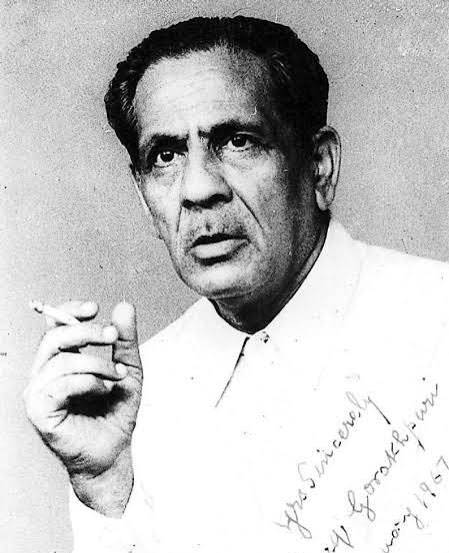
Firaq Gorakhpuri
First Urdu Jnanpith laureate — the poet who gave the modern ghazal an Indian heart.
Ghulam Muhammad Qasir
Ghulam Muhammad Qasir (d. 1999) was a Pakistani Urdu poet from Paharpur, Dera Ismail Khan, counted among the finest modern poets of the Urdu ghazal. A Pashtun who grew up speaking Pashto, he made Urdu his literary home. Ahmad Nadeem Qasmi introduced him in the journal Fanoon in 1977, the year his first collection Tasalsul appeared; Qasmi called him "the poet of continuity". Two further collections followed — Aathwaan Aasman Bhi Neela Hai (1988) and Darya-e-Gumaan (1997) — and his complete works were gathered as Ik Sher Abhi Tak Rehta Hai. By profession a lecturer in Urdu at government colleges across the North-West Frontier Province, he also wrote more than seventy dramas and programmes for PTV Peshawar and Radio Pakistan, including the popular serials Talash and Bhoot Bangla. His ghazal turns away from the beloved alone toward the deprivation and hope of ordinary people — a book instead of gunpowder, a dream instead of despair. He died in Peshawar on 20 February 1999 and is buried there; the Government of Pakistan awarded him the Pride of Performance posthumously in 2006–07.
Gulzar Dehlvi
Gulzar Dehlvi (1926–2020), born Anand Mohan Zutshi, was one of the last voices of Old Delhi's composite Ganga-Jamuni culture — a Kashmiri Pandit who carried the Gita and the Quran in one heart, and wrote Urdu ghazals in a white sherwani with a rose on his chest. Born on 7 July 1926 in Gali Kashmeerian, Old Delhi, to two poets — his father Tribhuvan Nath 'Zar' and his mother Brij Rani 'Be-Zaar' — he was given his pen name 'Gulzar', a bed of roses, by his ustad Bekhud Dehlvi. He took an M.A. from Hindu College, Delhi, and became editor-in-chief of Science Ki Duniya in 1975, Urdu's first science magazine. Jawaharlal Nehru recited his poem 'Zarurat Hai Un Naujawano Ki' from the Red Fort on 15 August 1947. Honoured by the Vice-President of India on his 91st birthday for his lifelong service to Urdu, he died at his Noida home on 12 June 2020, days after recovering from COVID-19, aged 93.
Hafeez Hoshiarpuri
The voice behind the century's ghazal — love that never grows few, and the friend who is hard to find. Hafeez Hoshiarpuri (1912–1973), born Shaikh Abdul Hafeez Saleem on 5 January 1912 at Hoshiarpur in Punjab, was one of the most refined ghazal poets of his generation. He was educated at Government College Lahore, where he studied alongside Faiz Ahmad Faiz; in October 1929 the teacher Sufi Tabassum first heard them both at a college mushaira. He began as a teacher, then entered government service, and after Partition made his life in Pakistan. He was one of the founders of Halqa-e-Arbab-e-Zauq, a researcher and a teacher of philosophy, and a master of tarikh-goee — the art of the chronogram, hiding a date inside a verse. He was the ustad of Nasir Kazmi, who learned the ghazal at his feet and went on to become one of the great names of Urdu poetry. His own ghazals are smooth and lyrical, balancing romance with reflection, and his most famous — "Mohabbat karne wale kam na honge", written in the 1920s — has been sung by Mehdi Hassan, Farida Khanum and Jagjit Singh, and a century after it was written, by Arooj Aftab, whose rendition won the Grammy Award for Best Global Music Performance in 2022. His collection Maqam-e-Ghazal appeared after his death. He died in Karachi on 10 January 1973, aged 61.
Hafeez Jalandhari
Abu al-Asar Hafeez Jalandhari (Muhammad Abdul Hafeez, 14 January 1900 – 21 December 1982) was the poet whose words became Pakistan's national anthem. Born in Jalandhar, Punjab, to Shams-ud-Din, a Hafiz-e-Quran, his formal schooling ended at the seventh grade — he disliked mathematics and loved only Urdu — yet he educated himself through voracious reading and became a disciple of the Persian poet Maulana Ghulam Qadir Bilgrami. From 1922 to 1929 he edited monthly magazines including Naunehal, Hazar Dastaan, Tehzeeb-e-Niswan and Makhzin, and he threw himself into the Pakistan Movement, using his writing to inspire its cause. After independence in 1947 he migrated to Lahore; in early 1948 he joined the forces for the freedom of Kashmir and was wounded. Out of 723 poets who competed to write Pakistan's national anthem, his lyrics were selected, set to music by Ahmed Ghulam Ali Chagla. His four-volume Shahnama-e-Islam retells the glorious history of Islam in verse, in the manner of Firdowsi's Shahnameh. His poem "Abhi To Main Jawan Hoon", sung by Malika Pukhraj, became a household song. The Government of Pakistan honoured him with the Pride of Performance (1958) and the Hilal-e-Imtiaz. He died in Lahore on 21 December 1982 and lies buried near the Minar-e-Pakistan.
Hari Chand Akhtar
Lahore's laughing ghazal poet — the priest gets paradise, the poet gets hell. Pandit Harichand Akhtar (1901–1958), born on 15 April 1901 at Hoshiarpur in Punjab, was an Urdu ghazal poet and journalist whose sharp, laughing verse made him one of Lahore's best-loved literary voices. Born into a Brahmin family of the Kaushal line, with no literary tradition behind him, he was schooled at the Government High School, Jalandhar, and Foreman Christian College, Lahore, passed the Munshi Fazil examination, and took his master's degree in English from Punjab University, Lahore. He began writing verse under the pen name 'Sharma'; after meeting Hafeez Jalandhari and becoming his disciple, he took the pen name 'Akhtar'. He spent most of his working life in Lahore, writing for the newspaper Paras, owned and edited by Lala Karam Chand, and serving in the office of the Punjab Legislative Assembly. It was his life as a journalist that fed his satirical and humorous poetry: a conventional ghazal poet in form, he was unlike any other in manner — plain, direct, and always with a sting of wit, so that even his serious verse carries an undercurrent of sarcasm. His best-known ghazal, on the priest's paradise and the poet's hell, is still sung as a qawwali. After Partition he moved to Delhi, where he died in 1958, aged fifty-six. His scattered verse was gathered after his death by his friend Arsh Malsiyani into the volume Kufr-o-Iman.