
Poets Directory (شعرائے کرام)
Explore profiles, portraits, life biographies, and complete poetry of classical and modern Urdu luminaries.
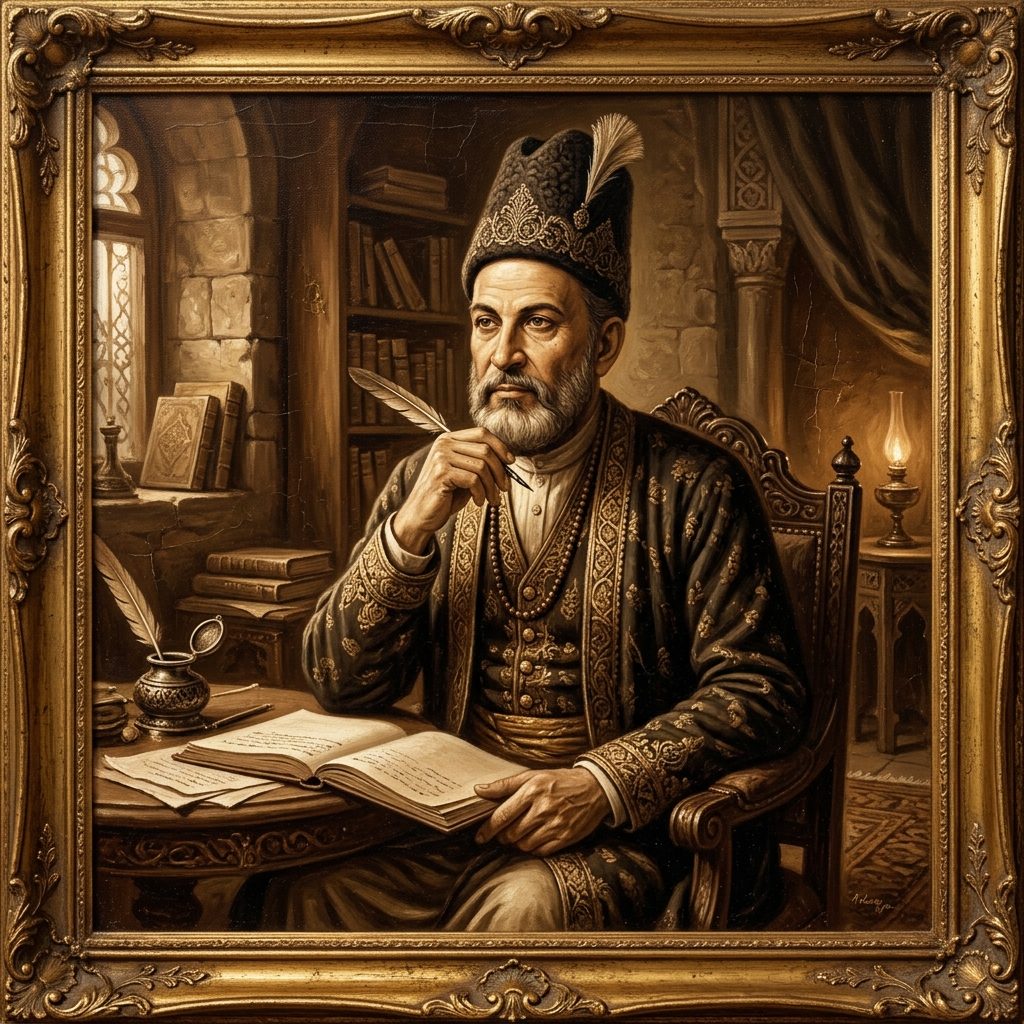
Wahid Akhtar
Syed Waheed Akhtar was an Indian Urdu poet, critic, orator and philosopher, and one of the leading Muslim scholars of the twentieth century. Born in Aurangabad to a family that had migrated from Nasirabad–Jais in Raebareli district, he spent his childhood in Aurangabad, studied at Osmania University, Hyderabad, where he completed his Ph.D., and was then appointed lecturer at Aligarh Muslim University, where he settled for the rest of his life and retired in 1995 as Professor of Philosophy. In his early years he used the takhallus Barq. His poetry collections include Shab Ka Razmiyah, Paththaron Ka Mughanni and Zanjeer Ka Naghma, and his Karbala Ta Karbala (1991) carried the marsia into a new age; he also wrote a major research study of Khwaja Mir Dard. Shamsur Rahman Faruqi described him as a modernist whom many also counted as a progressive, who argued that modernism was really an extension of progressivism. He died on 13 December 1996.
Wahshat Raza Ali Kalkatvi
Wahshat Raza Ali Kalkatvi (1881–1956) was a prominent later–classical Urdu poet from Bengal. Born on 18 November 1881 in Hooghly to Maulvi Shamshad Ali, who had moved there from Delhi, he was schooled at Madrasa Aaliya in Calcutta and became a poetry apprentice of Abul Qasim Mohammad Shams in 1898. After higher education he served as Chief Maulvi in the Persian department of the Imperial Record Department, Calcutta, and when Islamia College started in 1926 he became a professor of Urdu there. In 1931 the British Government honoured him with the title of Khan Bahadur. His collections include Diwan-e-Wahshat and Taraana-e-Vahshat (1950), and the progressive poet Parvez Shahdi was his disciple. After independence he migrated to Pakistan, where he died in 1956.
Waris Shah
Waris Shah (1722–1798) was a Punjabi Sufi poet of the Chishti order, and the voice Punjab still turns to when it tells the story of Heer and Ranjha. He was born in 1722 at Jandiala Sher Khan, in the Sheikhupura district, into a Sayyid family — his father was Gulsher Shah and his mother Kamal Banu — and his parents died while he was still young. He was educated at Kasur, under Hafiz Ghulam Murtaza, and became a disciple of Pir Makhdum of Kasur. After his studies he settled at Malka Hans, a village north of Pakpattan, where he lived in a small room beside the mosque that now bears his name. There, in 1766, at the asking of his friends, he made the old love of Heer new again: his *Heer Ranjha* retells the tale — traditionally set in the fifteenth century, one of the four great tragic romances of Punjab — in the speech of the Punjab itself, thick with its idioms, proverbs and sayings, and with a minute, living picture of Punjabi life and of the troubled politics of his own century, whose invasions he saw with his own eyes. He did not invent the story — earlier poets had told it before him — but his telling became the classic, the one singers still perform and listeners still know by heart. When he died in 1798 he was buried at Jandiala Sher Khan, where his tomb stands and an annual gathering is held, and lovers still come to it as pilgrims. He is remembered as the Shakespeare of the Punjabi language.
Wasif Ali Wasif
Khushab's Sufi teacher — the drop that holds the ocean. Wasif Ali Wasif (1929–1993), born Malik Muhammad Wasif on 15 January 1929 at Khushab in Punjab, was a Pakistani teacher, writer, poet and Sufi figure whose short prose pieces — aphorisms and reflections first printed in newspaper columns — made him one of the most widely read Urdu voices of his generation. Born into an Awan family — his father was Malik Muhammad Arif — he took his early religious schooling from his father, matriculated from Government High School, Khushab, in 1944, and moved to Jhang, where his maternal grandfather headed a government high school, graduating from Government Degree College there. In Lahore he took an MSc in mathematics from Government Islamia College and an MA in English from Government College, where he played hockey and wrote for the college magazine Ravi in Urdu and English. In 1954 he passed the Punjab Civil Service examination but chose teaching over the service; after some years in private institutions he founded the Lahore English College near Anarkali in 1958 and taught there for the rest of his working life. His newspaper column in the daily Nawa-i-Waqt carried the short reflections that became his books: Kiran Kiran Sooraj (1983), Dil Darya Samundar (1987), Qatra Qatra Qulzum (1989), Harf Harf Haqeeqat (1994) and Baat Se Baat (1995) — plain-spoken meditations on conduct, patience, gratitude and the inner life, read aloud in homes and gatherings across Pakistan. His poetry stands beside the prose: Shab Chiragh (1978) and the posthumous Shab Raaz (1994) in Urdu, Bharay Bharolay (1994) in Punjabi, and the devotional Zikr-e-Habib; his collected verse appeared as Kulyat-e-Wasif Ali Wasif in 2014. He was close to Qudratullah Shahab, Ashfaq Ahmed and Hanif Ramay, and his Lahore home became a meeting place — regular gatherings where seekers put their questions to him, later printed as the Guftugu series in thirty volumes. He died in Lahore on 18 January 1993, aged sixty-four, and lies in the Miani Sahib graveyard; his shrine on Bahawalpur Road, near Chowk Chauburji, draws visitors still, and his death anniversary is marked each year.
Wazir Agha
Wazir Agha (1922–2010) was a Pakistani Urdu poet, critic and essayist, and one of modern Urdu's most prominent critics. Born in Wazir Kot in the Sargodha district, he learned Persian from his father and Punjabi from his mother, graduated from Government College Jhang, took a master's in economics from Government College Lahore, and earned a PhD from the University of Punjab in 1956 for research on humour and satire in Urdu literature. From 1960 to 1963 he co-edited Adbi Duniya, and from 1965 he edited the monthly Auraq for many decades. He wrote more than forty prose books, including the landmark critical study Urdu Shairi ka Mizaj, and experimented in poetry with ballads, sonnets and free verse, his poems often carrying an element of story. He received the Sitara-e-Imtiaz and was a Life Fellow of the Pakistan Academy of Letters.
Wali Deccani
The founder of the Urdu ghazal — the Deccan poet whose diwan taught Delhi the music of Rekhta.
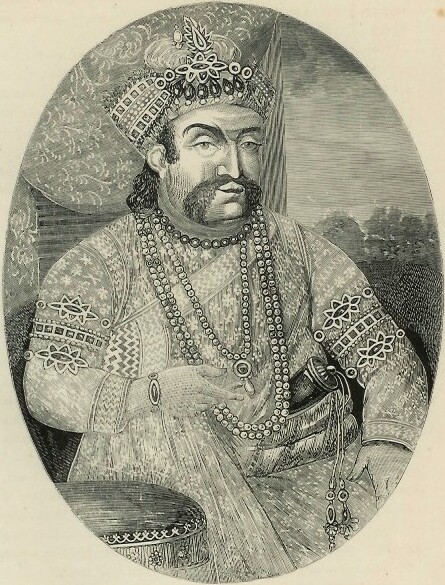
Wajid Ali Shah Akhtar
Wajid Ali Shah 'Akhtar' (1822–1887) was the last Nawab of Awadh. He ascended the throne of Lucknow in 1847 and ruled for nine years, until the British East India Company annexed his kingdom in February 1856 and removed him. He spent the rest of his life — over three decades — in exile at Matiya Burj (Metiabruz) near Calcutta, where he died in 1887. A poet, playwright, dancer and composer, he was one of the great patrons of the arts: he nurtured the Lucknow gharana of Kathak, staged magnificent rahas, and wrote over forty works in Urdu and Persian — poems, prose and thumris. His most famous couplet — "dar-o-diwar pe hasrat se nazar karte hain / KHush raho ahl-e-watan hum to safar karte hain" — was his farewell to Lucknow, and it lives on in every Urdu speaker's heart.