Poets Directory (شعرائے کرام)
Explore profiles, portraits, life biographies, and complete poetry of classical and modern Urdu luminaries.
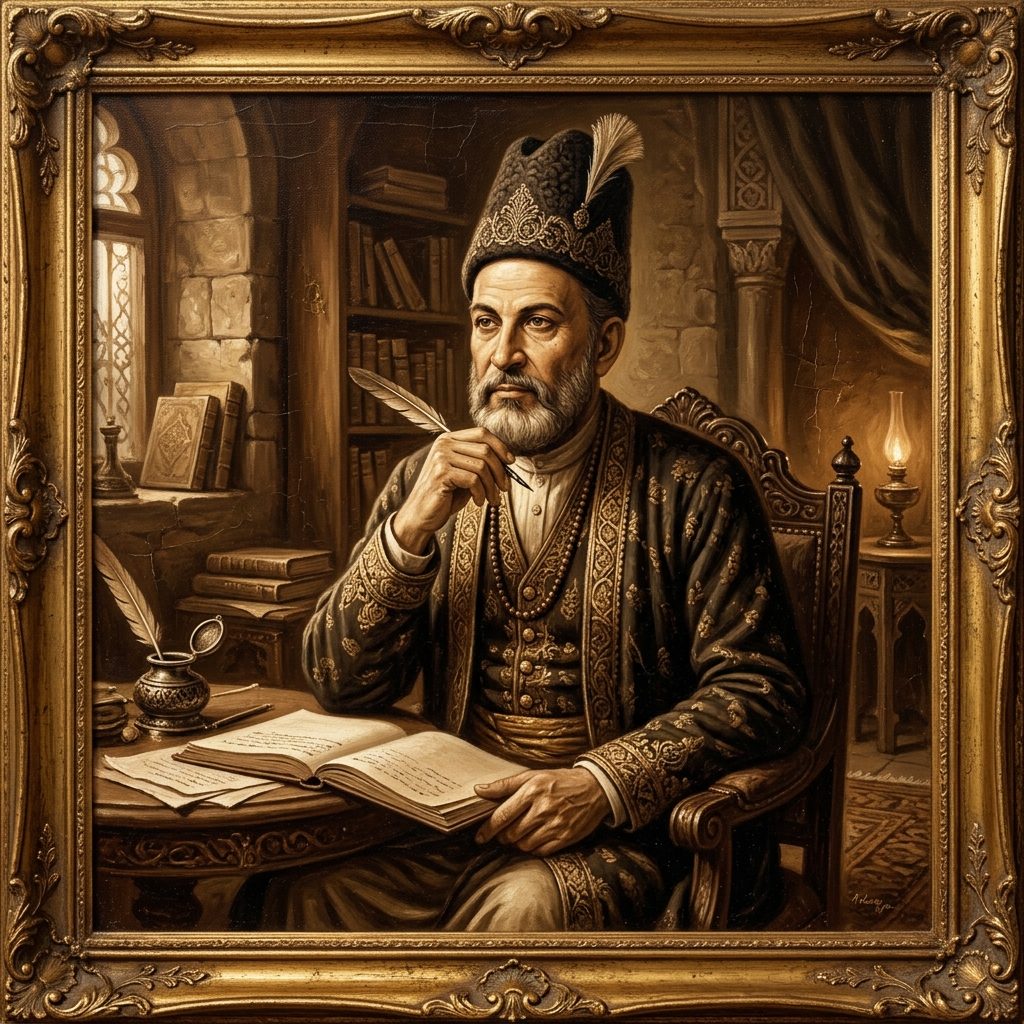
Rais Amrohvi
Rais Amrohvi, born Syed Muhammad Mehdi in Amroha in 1914, was a Pakistani Urdu poet, scholar, journalist and psychoanalyst, and the elder brother of Jaun Elia. After migrating to Pakistan in 1947 he settled in Karachi, where for decades he wrote quatrains for the daily Jang, becoming famous for qata-nigari — the topical quatrain as a daily comment on politics, society and morals. He founded the Rais Academy for emotional and moral well-being and wrote widely on metaphysics, meditation and yoga, besides attempting an Urdu translation of the Bhagavad Gita. His books include Masnavi Lala-e-Sehra (1956), Pase Ghubar (1969), the Qattat volumes, Hikayaat (1975) and Aasaar (1985). His most famous poem, on the threatened fate of Urdu, opens "Urdu ka janaza hai zara dhoom se nikle." He was assassinated in Karachi on 22 September 1988.
Rajinder Krishan
Rajinder Krishan (1919–1987), born Rajinder Krishan Duggal on 6 June 1919 in Jalalpur Jattan, in Gujrat district, was Hindi cinema's quiet master — a poet, lyricist and screenwriter who wrote more than sixteen hundred songs and never sought the limelight. He began writing couplets as a schoolboy, recited at his first mushaira at fifteen in Shimla, and learned his craft from the Urdu of Firaq Gorakhpuri and Ehsan Danish and the Hindi of Pant and Nirala. He moved to Bombay in the mid-1940s, wrote his first screenplay, Janta (1947), and his first film lyrics for Zanjeer (1947); Aaj Ki Raat (1948), Badi Bahen (1949) and Lahore (1949) made his name. Days after Mahatma Gandhi's assassination he wrote "Suno Suno Ai Duniya Walon, Bapu Ki Yeh Amar Kahani", which became a national lament. Across four decades he wrote songs of every kind — "Tumhi Mere Mandir, Tumhi Meri Pooja", "Chal Ud Ja Re Panchhi", "Mujhe Le Chalo", "Ek Chatur Naar", "Mere Piya Gaye Rangoon", "Chup Chup Khade Ho" — and the dialogues and screenplay of Padosan, besides eighteen scripts for AVM Studios. He won the Filmfare Award for Best Lyricist once, in 1966, for "Tumhi Mere Mandir, Tumhi Meri Pooja" (Khandan). He was also a ghazal poet in his own right, and his ghazals carry the same plain, aching Urdu as his songs. He kept so low a profile that many who loved his songs never knew his face — few photographs of him exist. He died in Bombay on 23 September 1987, aged 68; after his death His Master's Voice brought out an album of twelve of his songs.
Ratan Nath Sarshar
Lucknow's great novelist — Azad and Khoji, and the city that laughed at itself. Ratan Nath Dhar Sarshar (1846–1903), known by his pen name Sarshar, was one of the pioneers of the Urdu novel — a novelist, journalist, translator and editor whose great book, Fasana-e-Azad, brought the streets of Lucknow alive in print. Born in 1846 into a Kashmiri Pandit family settled in Lucknow, he lost his father at the age of four and was brought up by his mother. He learnt Persian and Arabic in the old way, entered Canning College but left without taking a degree, and taught for a time in a school in Kheri district. In August 1878 he became editor of the Lucknow newspaper Avadh Akhbar, and in its pages his Fasana-e-Azad began to appear — the wandering tale of Azad and his companion Khoji, from the lanes of Lucknow to the battlefields of the Russo-Turkish War, told with the humour of Don Quixote and Pickwick and the colour of the old dastan. Published in four volumes between 1881 and 1883, it ran to more than three thousand pages and stands among the first novels in Urdu; Premchand later turned it into Hindi as Azad Katha. Later novels followed — Sair-e-Kohsar and Jam-e-Sarshar — and translations, among them Don Quixote as Khuda-e-Foujdar and the Alif Laila. In 1895 he moved to Hyderabad, where he worked for Maharaja Sir Kishen Pershad and edited the journal Dabdaba-e-Asifi. He wrote poetry too, and taught poetry to the Maharaja, but his fame rests on his prose. He died at Hyderabad on 21 January 1903.