
Poets Directory (شعرائے کرام)
Explore profiles, portraits, life biographies, and complete poetry of classical and modern Urdu luminaries.
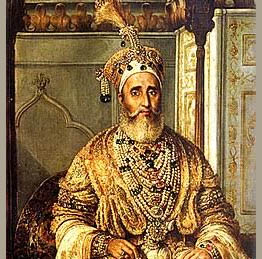
Bahadur Shah Zafar
The last Mughal Emperor of India and a poignant master of Urdu ghazals. Exiled to Rangoon after the 1857 war of independence, his elegies mourn the tragic loss of home, empire, and liberty.
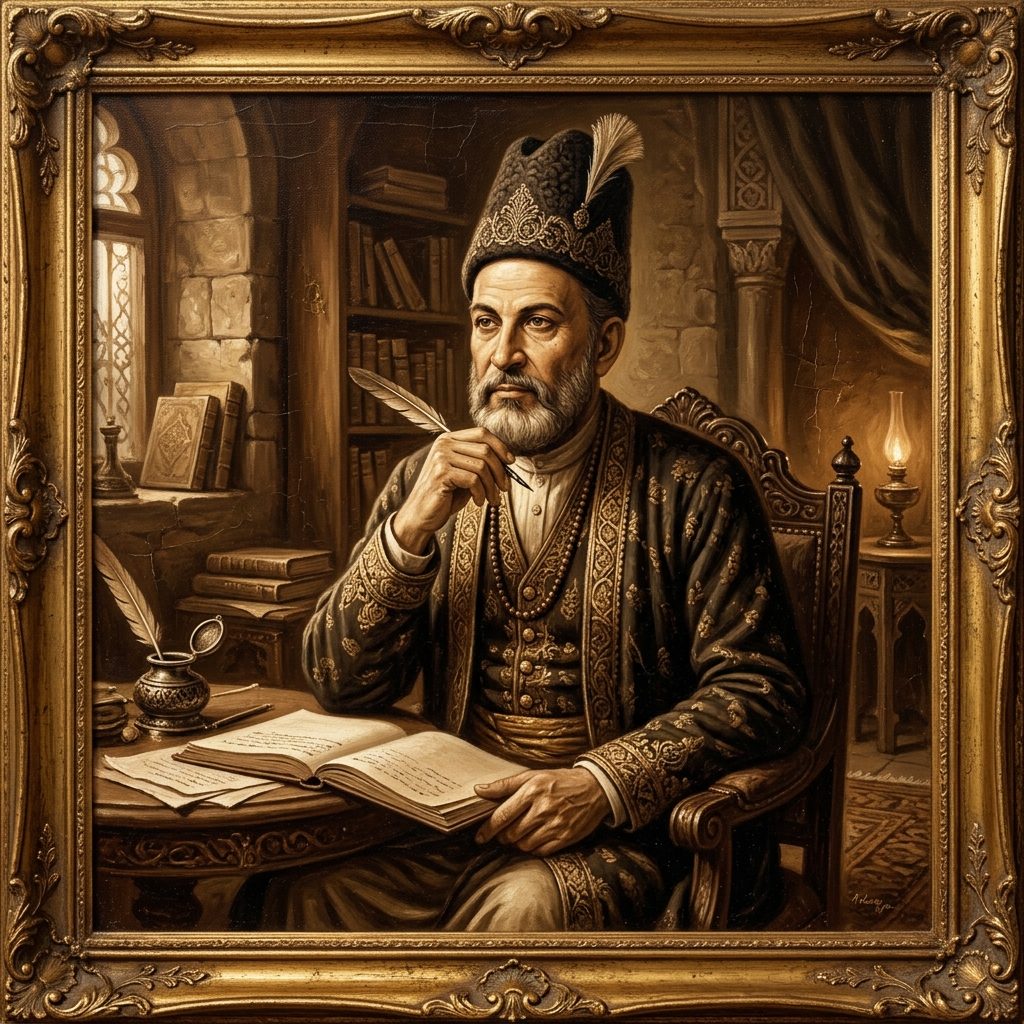
Baba Farid
Baba Farid (1173–1266), born Fariduddin Masud, was the first great voice of Punjabi poetry and one of the founding saints of the Chishti order in India. He was born in 1173 at Kothewal, a village near Multan, to Jamal-ud-din Sulaiman and Maryam Bibi; the family traced its line to Kabul, and tradition says the child was named after the Persian poet Fariduddin Attar. He learned first from his mother and his father, then sought the path of the Sufis, becoming the disciple of Qutbuddin Bakhtiar Kaki in Delhi. When his master died in 1235, Farid became his spiritual successor — but instead of taking the seat in Delhi, he left the capital, set up a centre of devotion at Hansi, and then settled at Ajodhan, the town that took a new name from him: Pakpattan, the Holy Ferry. There he lived simply and austerely, teaching all who came, and there the young Nizamuddin Auliya came to him and became his disciple and successor. Farid wrote in the people's own tongue. His short Punjabi verses — plain, severe, and tender at once — speak of the body as a guest-house that must one day be emptied, of the grave waiting at the road's end, and of a love that asks for nothing. They were carried by singers for three centuries before they were gathered into the Guru Granth Sahib, where they are still read and sung today. "Ganjshakar", treasury of sugar, was the name the people gave him, for the sweetness of his speech. He died at Pakpattan on 7 May 1266, and his shrine there is still one of Punjab's great places of pilgrimage, visited by Muslims, Sikhs and Hindus alike.
Bahram Ji
Hyderabad's Parsi priest-poet — every idol a memory of God, every house of worship one search. Bahram Ji (1828–1895), born on 2 December 1828 at Navsari in Gujarat, was a Parsi high priest and Urdu poet of Hyderabad. He received his religious training in his home town and was made a mobed — a Parsi priest — in 1843; after study at Poona under his father and elder brother, he came to Hyderabad, where he perfected his Urdu and Persian and his knowledge of Parsi theology. He served as Dastur, the high priest of the Parsis of Hyderabad and Secunderabad, and from 1863 also as a talluq-dar, a revenue official of the state; in 1875 he retired from the revenue post and returned wholly to the priesthood, using the community's funds generously for Parsi welfare. Alongside a life of religious duty he wrote poetry in Urdu and Persian, and his collected Urdu verse, the Deewan-e-Bahram, was published in 1943, long after his death. His ghazals carry a priest's open gaze: the Muslim and the Brahman, the mosque and the temple, the idol and the memory of God — all one search. He died at Hyderabad on 18 March 1895, aged 66.
Balraj Komal
Balraj Komal (1928–2013) was one of the leading modern poets of the Urdu nazm in India. Born on 25 September 1928 at Sialkot, he fled to Delhi in the Partition of 1947, carrying the displacement into a lifetime of poetry. After retiring as an Education Officer with the Delhi Administration, he wrote full-time — poems, short stories and criticism — and served on the Delhi Urdu Akademi and the Sahitya Akademi's advisory board. His collection Parindon Bhara Aasman (Sky Full of Birds) won the Sahitya Akademi Award in 1985; he also won the Uttar Pradesh Urdu Academy Award twice (1971, 1982) and received the Padma Shri in 2011. His nazms — above all 'A Girl Alone' (1948), a Partition-orphaned girl begging a stranger to become her family — made him a poet of displacement, tenderness and quiet revolt. He died in Delhi in 2013, aged 85.
Barq Dehlvi
Delhi's later voice — the doorstep vigil, the night with no dawn, and the gaze that cannot look away. Barq Dehlvi (July 1884 – 9 February 1936), whose real name was Munshi Maharaj Bahadur, was a later voice of Delhi's poetry, born into a Kayastha family of the old city whose men had served in high places at the Mughal court. His father, Munshi Har Narayan Das, was a poet of standing, and his maternal grandfather, Daulat Ram 'Ibrat', kept a diwan and had learned his craft from Zauq, the court poet of the last Mughal king. Barq learned his own craft under Agha Shair Qazalbash. He wrote ghazals, nazms and couplets, and in his early years plays as well — Krishna Avatar and Savitri were staged more than once. His books of verse were Krishna Darpan (1927), Matla-i-Anwar (1929) and Harf-e-Natamaam, published after his death in 1941. His ghazals carry the old Delhi manner into a new century: the doorstep where the lover waits, the night of separation with no dawn in sight, the beloved's face that holds the eye prisoner. He died at Panipat on 9 February 1936.
Bhartendu Harishchandra
Benares' Moon of India — the father of modern Hindi letters who wrote Urdu ghazals as Rasa. Bhartendu Harishchandra (1850–1885), born on 9 September 1850 at Benares, was the founder of modern Hindi literature and theatre — and a poet of Urdu who wrote under the pen name Rasa. Born into a wealthy family of Benares, he lost both his parents while still young, and his father Gopal Chandra was himself a poet. At fifteen he travelled with his family to the Jagannath temple at Puri, a journey that turned him toward the Bengal Renaissance and a life of writing. In 1880 the scholars of Kashi honoured him with the title Bharatendu — the Moon of India. He wrote in Hindi, Braj, Urdu, Sanskrit, Bengali and English, and he made the stage a mirror of his country: his plays Bharat Durdasha, Satya Harishchandra, Neel Devi and Andher Nagari spoke of a land in chains, while his journals Kavi Vachan Sudha, Harishchandra Magazine and Bala Bodhini carried reform, women's education and the Swadeshi cause. Beneath the public work he wrote Urdu ghazals in the classical manner — love and longing, the festival of Holi, devotion to Krishna, and the shortness of the world that keeps neither Alexander nor Jamshid. He died at Benares on 6 January 1885, aged only 34.
Bismil Azimabadi
Bismil Azimabadi (1901–1978) was an Indian freedom-fighter poet from Patna, born Syed Shah Mohammad Hasan into a zamindar family of Azimabad. He took "Bismil" — the wounded one — as his pen name and became a disciple of Shad Azimabadi, frequenting the Qutub-khana Anjuman Taraqqi Urdu Library in Patna. He took part in the independence movement and is reported to have recited his poem "Sarfaroshi" at the Calcutta Congress session of 1920. Most of his poetry was lost; what survived was compiled after his death as *Hikayat-e-Hasti* (1980), and he left a short memoir, *Yaraan-i-Maikadah* (1976). He died in Patna on 20 June 1978. The Bihar Urdu Academy's Bismil Azimabadi Award keeps his name alive.
Bulleh Shah
Bulleh Shah (c. 1680–1757), born Sayyid Abdullah Shah Qadri, was a Punjabi Sufi poet of Kasur, and one of the greatest voices Punjab has ever produced. He was born around 1680 — Uch is the place most often named, though some accounts give Pandoke, near Kasur, where his family settled when he was six. His father, Shah Muhammad Darwaish, was a village mosque preacher who taught him his first lessons while the boy worked as a herder; his higher learning came at Kasur, under Hafiz Ghulam Murtaza, and then at Lahore, where he became the disciple of the Qadiri Sufi Shah Inayat — a gardener of the Arain caste. That choice cost him everything respectable: a Sayyid bowing to a man of low caste shocked his family, and the town's clerics declared him a non-believer. He answered them in the people's own tongue. His kafis — short, song-like poems built on a refrain — ask the simplest and hardest questions: who am I, if I am neither believer nor unbeliever, neither Moses nor Pharaoh? More than 150 kafis and 94 other compositions survive, carried for over a century by singers before they were first printed. When he died at Kasur in 1757, the clerics who had condemned him refused to lead his funeral prayer; it was led instead by Syed Zahid Hamdani, and a shrine grew over his grave. Three centuries on, his verses are still sung — by qawwals, by rock bands, in village gatherings and concert halls — wherever Punjabis gather. He is remembered as the Poet of the People.
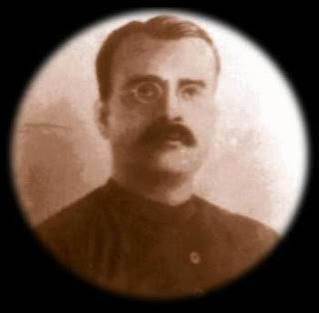
Brij Narayan Chakbast
Brij Narayan Chakbast (1882–1926), who wrote under the pen name Chakbast, was an Urdu poet of Lucknow and one of the founders of patriotic Urdu poetry in the modern age. Born into a Kashmiri Brahmin (Pandit) family at Faizabad on 19 January 1882 — the son of the poet Pandit Udit Narayan Chakbast — he moved to Lucknow as a boy after his father's death and made it his home for life. He earned his B.A. (1905) and LL.B. (1907) from Canning College, Lucknow, and rose to distinction at the Lucknow Bar. A lawyer by profession, he poured his public spirit into verse: he was a strong proponent of the Home Rule movement, helped found the Kashmiri Young Men's Association and the Bahadur Library, and chose the nazm as his chief form — *Subh-e-Watan* (Dawn of the Nation, 1926) made qaumiyat, love of nation, the subject of Urdu poetry without ever letting it collapse into mere propaganda. Secular to the bone, he wrote with equal reverence on Ram, Krishna, and Gokhale. He died suddenly on 12 February 1926 at Rae Bareli railway station, aged only 44, after a paralytic stroke. His philosophical sher *"Zindagi kya hai anasir mein zuhur-e-tartib / Maut kya hai inhin ajza ka pareshan hona"* — heard by millions at the opening of the film *Masaan* (2015) — returned him to public memory nearly a century later.
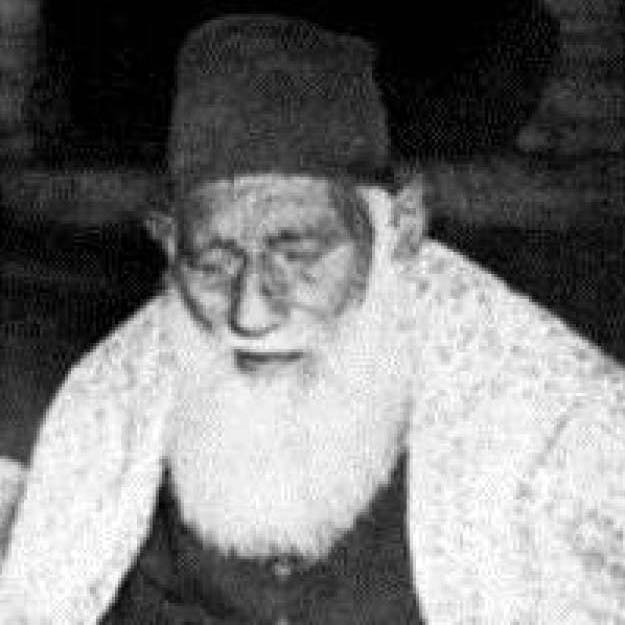
Bekhud Dehlvi
Syed Wahid-ud-din Ahmed (1863–1955), known to Urdu letters as Bekhud Dehlvi, was a classical ghazal poet of Delhi and among the finest disciples of Dagh Dehlvi. Born at Bharatpur (Rajasthan) on 21 March 1863 to the poet Syed Shams-ud-din 'Salim', he was brought to Delhi as a boy, where Altaf Hussain Hali schooled him in Arabic, Persian, and the craft of verse. In 1891 Hali made him Dagh's disciple, and he soon rose among the best of that illustrious circle — a lineage that also counted Iqbal's teacher among its masters. His ghazals — collected in Guftar-e-Bekhud and Shahsavar-e-Bekhud — are prized for linguistic dexterity and colloquial grace, carrying Dagh's living idiom into the twentieth century with a distinction all his own. His corpus also includes devotional verse, including a naat. He lived to ninety-two, dying in Delhi on 2 October 1955 — a living bridge from the Mughal twilight to independent India.