Poets Directory (شعرائے کرام)
Explore profiles, portraits, life biographies, and complete poetry of classical and modern Urdu luminaries.
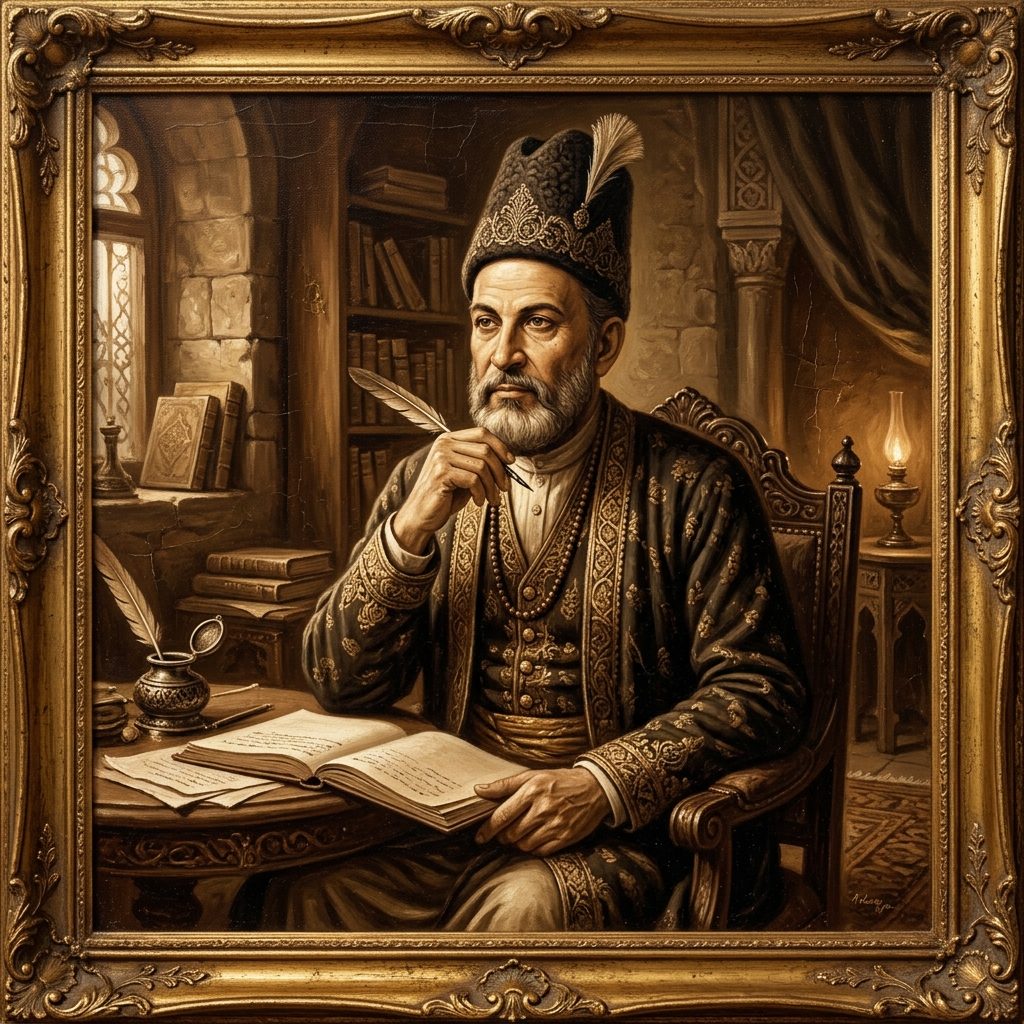
Jalil Manikpuri
Jalil Hassan 'Jalil' Manikpuri (1862–1946) was a post-classical Urdu poet of the Lucknow tradition and court poet of Hyderabad. Born in Manakpur, district Pratapgarh in Uttar Pradesh, he was the eldest son of Abdul Karim, memorised the Qur'an by twelve, and studied Persian and Arabic at Lucknow's Madrasa Farangi Mahal. With his elder brother Khalil, also a poet, he became a disciple of Amir Ahmed Minai, who entrusted him with his great dictionary Amir-ul-Lughat. Following Minai to Hyderabad in 1900, Jalil succeeded Dagh Dehlvi as Ustad-e-Shah — court poet to Nizam VII Mir Osman Ali Khan — in 1909, a position he held through decades of honoured leisure. His collections include Taj-e-Sukhan, Sartaj-e-Sukhan and the later Kainat-e-Jalil. Known for flawless, fluent diction without obscurity, he wrote ghazals of love, beauty and longing in a classical mould. He died in Hyderabad on 6 January 1946 and was buried at Dargah Yusufain.
Jamal Ehsani
Jamal Ehsani (1951–1998) was a Pakistani poet noted for his work in the ghazal, and a favourite poet in the student circles of Urdu literature. Born in Sargodha on 21 April 1951, he received his primary education there and moved to Karachi at a very young age, where he continued his studies and worked in a variety of jobs. Two of his poetry books were published in his lifetime — *Sitara-e-Safar* (1982) and *Raat Ke Jaage Hue* (1986) — and a third after his death with the help of Dr Fatima Hasan; his complete poetry was published posthumously as *Kulliyat-e-Jamal* (2008). He died in Karachi on 10 February 1998, aged 46.
Jameel Mazhari
Patna's poet-critic — the eyes teach the lesson of love. Jameel Mazhari (1904–1979), born Syed Kazim Ali on 2 September 1904 at Patna in Bihar, was an Indian Urdu poet, critic and prose writer whose verse joined the classical tradition to modern thought. He took the pen name Jameel and added Mazhari in honour of an elder of his family, Syed Mazhar Hassan, himself a poet. Schooled at Motihari and Muzaffarpur, he went to Calcutta for higher studies, taking his M.A. from Calcutta University in 1931; there he learned from Maulana Abul Kalam Azad, Aghaz Hashr, Naseer Hussain Khayal and Allama Raza Ali Wahshat, and used to take his verse to Wahshat for correction. After graduation he worked in journalism for about six years, writing political essays, scholarly articles, novels and fiction, and in 1937 he became a publicity officer in the Congress government in Bihar, resigning in 1942 when that government fell. He then withdrew from practical politics and taught Urdu at Patna, at the university and at Patna College, until his retirement in 1964, after which he gave himself wholly to Urdu poetry and literature. His collections — Fikr-e-Jameel, his ghazals, and Naqsh-e-Jameel, his nazms — stand beside his long poem Masnavi Ab-o-Sarab and his much-loved prose work Farz Ki Qurban-Gah Par. His verse ranges from love and the beloved's eyes to the lamps of Diwali, the colours of Holi, and a song for the motherland, Ae Madar-e-Hindustan; he studied the Sufi mystics and the Bhakti saints, and his poetry carries the old and the new together in one voice. His work was honoured with the Ghalib Modi Award in 1974. He died at Patna on 23 July 1979, aged 74.
Jameeluddin Aali
Jameeluddin Aali (20 January 1925 – 23 November 2015) was a poet, institution-builder and public voice of Pakistan — the man who gave the nation its most sung anthem of itself and revived the doha in Urdu. Son of Nawab Sir Amiruddin Ahmed Khan of Loharu, himself a poet, and Syeda Jamila Begum, from Khwaja Mir Dard's family — his paternal grandfather was a disciple and friend of Ghalib — he took a BA in Economics from Anglo Arabic College, Delhi (1944), and migrated to Karachi on 13 August 1947. He passed the CSS examination in 1951, joined the Pakistan Taxation Service and rose to income-tax commissioner, served as Officer on Special Duty at President House (1959–1963), joined the National Bank of Pakistan in 1967 and retired as vice-president in 1988, and took an LLB/FEL from the University of Karachi (1971). Alongside that career he co-founded the Pakistan Writers' Guild, served as honorary secretary of Anjuman Taraqqi-e-Urdu Pakistan for decades, chaired the Urdu Dictionary Board, and wrote a newspaper column for some fifty years. His long poem Insaan runs to some 4,000 verses; his travelogues are Duniya Mere Aage and Tamasha Mere Aage; his collections include Ghazlein Dohey Geet, La Hasil, Goshai-e-Bisaat, Harf-e-Chand and Aye Mere Dasht-e-Sukhan. He revived the doha in Urdu, wrote the milli naghma "Jeevay Jeevay Pakistan" (named here, never quoted), and received the Pride of Performance (1991), Hilal-e-Imtiaz (2004) and Kamal-e-Fun (2006). He served as a Senator from 1997 to 2003.
Jan Nisar Akhtar
Jan Nisar Akhtar (18 February 1914 – August 1976) was a Progressive poet who carried Urdu verse from the mushaira into the cinema hall. Son of the poet Muztar Khairabadi and great-grandson of Fazl-e-Haq Khairabadi, he took a BA (Hons) and MA in Urdu from Aligarh Muslim University, lectured at Victoria College, Gwalior (1940), and became Professor of Urdu at Hamidia College, Bhopal. A member of the Progressive Writers' Movement, he moved to Bombay in 1949 and became a Bollywood lyricist, writing 151 songs — among them Yasmin (1955), "Aankhon Hi Aankhon Mein" in CID (1956), Prem Parbat (1974), Noorie (1979) and "Ae Dil-e-Naadaan" in Razia Sultan (1983). His poetry collections include Nazr-e-Butaan, Salaasil, Javidaan, Pichali Pehar, Ghar Angan and Khaak-e-Dil, which won the 1976 Sahitya Akademi Award in Urdu. His style is romantic and revolutionary at once, in simple but eloquent language with extensive Hindi words. He was the father of the lyricist Javed Akhtar and the psychoanalyst Salman Akhtar.
Jazib Qureshi
Karachi's poet-critic — pray for rain, but look at your own broken house first. Jazib Qureshi (1940–2021), born on 3 August 1940 in Lucknow, was a Pakistani Urdu poet, writer and critic whose work spanned more than fifty years. His father died when he was six, and the family moved to Lahore in 1950, where the young Jazib worked in the press and began to write poetry, guided by Shakir Dehlavi of the Dagh school. His first public reading was at the Shahi Qila, in a gathering chaired by Ehsan Danish. In 1962 he moved to Karachi, worked in magazines and newspapers, took a master's degree from the University of Karachi, and taught in government schools and colleges for thirty-five years. Eight collections of his poetry appeared, along with half a dozen books of criticism — among them Pehchaan, Shinasai and Takhleeqi Awaaz — and an autobiography; his studies of Ghalib, Iqbal and other masters were widely read, and younger writers admired him as a critic who wrote about the living. He travelled widely to read his poetry, visiting thirty-five cities in the United States and returning often to the Gulf. He died in Karachi on 21 June 2021, aged 80, and is buried in the Azizabad graveyard.
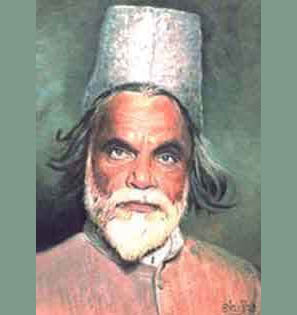
Jigar Moradabadi
Ali Sikandar (1890–1960), known by his takhallus **Jigar Moradabadi**, was one of the great Urdu ghazal poets of the twentieth century. Born in Moradabad, he lost his father at an early age, received an oriental education in Arabic, Persian and Urdu, and briefly worked as a travelling salesman. Still in his teens he moved to Gonda, near Lucknow, where he befriended the poet Asghar Gondvi and made the town his permanent home. His first lessons in poetry came from his father Ali Nazar, a poet himself; he later sought guidance from Dagh Dehlavi. An iconic mushaira poet famed for musical, romantic verse on love and wine, he published *Daagh-e-Jigar* (1928), *Shola-e-Toor* (1932) and *Aatish-e-Gul* (1954), which won the Sahitya Akademi Award in 1958. He was the second poet after Muhammad Iqbal to receive an honorary D.Litt. from Aligarh Muslim University, and a mentor to Majrooh Sultanpuri. He is known as *Rais-ul-Mutaghazzileen* — the prince of ghazal writers.
Joshish Azimabadi
Joshish Azimabadi (1737–1801) was a classical Urdu poet of Azimabad — the 18th-century name for Patna in Bihar — and a prominent contemporary of Mir Taqi Mir. He wrote "at far-off Azimabad in Delhi style," proof that the Delhi ghazal had travelled well beyond the capital by the mid-1700s and found a serious practitioner in the east. Little else about his life is preserved: no given name, teacher or court attachment is reliably recorded, and his work survives principally through his diwan, Deewan-e-Joshish, in a 1976 Bihar Urdu Academy edition. What the couplets show is a poet equally at home in love's dishevelled complaint and in Sufi argument. He turns the beloved's tress into a mirror of his own distraught state, blesses a cruel beloved with ironic courtesy, and, in his most philosophical verses, dissolves the quarrel of temple and sanctuary into one truth: the Kaaba and the idol-house are one, and the only road worth taking leads to the house of the heart.
Kaifi Azmi
The progressive poet who carried Urdu into Hindi cinema — from "Kar chale hum fida" to "Waqt ne kiya". Syed Athar Hussain Rizvi (1919–2002), takhallus Kaifi — "Azmi" from his Azamgarh roots — was born on 14 January 1919 in Mijwan, Azamgarh district, Uttar Pradesh, and died in Mumbai on 10 May 2002. At eleven he composed his first ghazal ("Itna to zindagi mein kisi ke khalal paDe") and recited it at a mushaira — his father had to be convinced the verse was truly the boy's own. The Quit India agitation of 1942 ended his formal studies of Persian and Urdu; in 1943 he joined the Communist Party of India as a full-time worker and became a leading voice of the Progressive Writers' Movement, writing for the party paper *Qaumi Jung* in Bombay alongside Ali Sardar Jafri. His first collection, *Jhankar* (1943), was followed by *Aakhir-e-Shab*, *Sarmaya*, and the celebrated *Awaara Sajde*, which won the Sahitya Akademi Award (1975); he also received the Padma Shri (1974) and the Sahitya Akademi Fellowship (2002). As Hindi cinema's lyricist he is remembered for *Kaagaz Ke Phool* (1959), *Haqeeqat* (1964), and the all-verse dialogue of *Heer Raanjha* (1970); his story and dialogues for *Garam Hawa* (1973) won three Filmfare awards. His nazms — "Aurat", "Makaan", "Daaera" — gave progressive thought its most humane Urdu voice.
Kaleem Aajiz
Kaleem Aajiz (birth year unknown–2015) was an Indian Urdu poet from Telhara in Bihar, widely regarded as a classical poet in the tradition of Mir Taqi Mir. A gold medallist in B.A. from Patna College, he took his M.A. in Urdu and his PhD (1965) from Patna University, where he then lectured in Urdu for decades and later chaired the Urdu Advisory Committee of the Government of Bihar. His first book of ghazals was released in 1976 by the President of India, and in the 1960s and 1970s he was the only Urdu poet representing Bihar at the annual Red Fort mushaira. His books include Woh Jo Shairi Ka Sabab Hua, written in the wake of Partition violence that took members of his family, and Jahan Khushboo Hi Khushboo Thi. He received the Padma Shri in 1989 and the Ghalib Award, and died on 14 February 2015 at Hazaribagh in Jharkhand.