Poets Directory (شعرائے کرام)
Explore profiles, portraits, life biographies, and complete poetry of classical and modern Urdu luminaries.
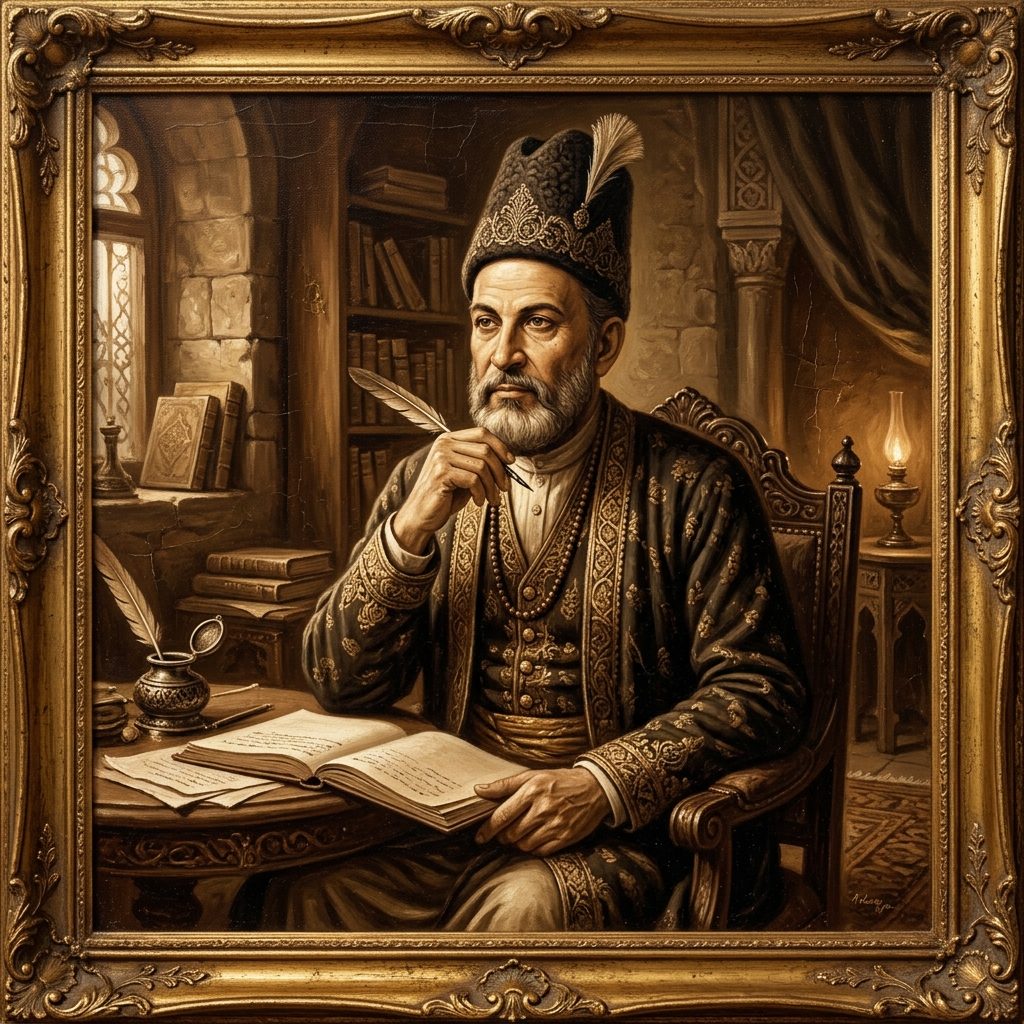
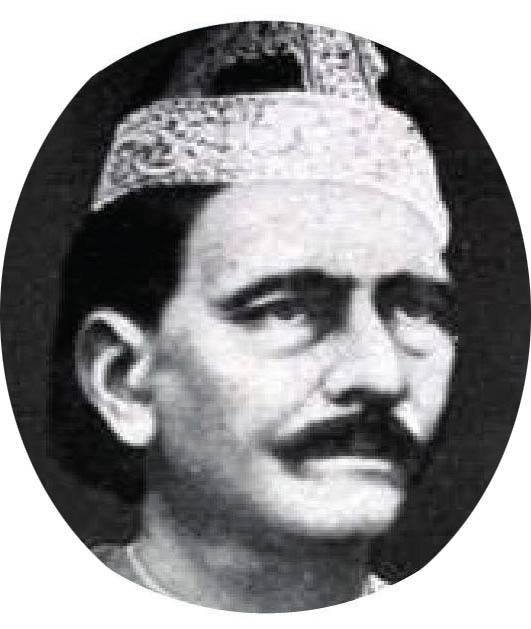
Mirza Muhammad Taqi Hawas
Lucknow's cousin of the Nawab — the classical ghazal in its simplest, most elegant dress. Mirza Muhammad Taqi Hawas (1766–1855), whose real name was Mirza Mohammad Taqi Khan, was a classical Urdu poet of Lucknow, remembered by his pen name Hawas. Born at Faizabad in 1766, he was a cousin of Asif-ud-Daula, the Nawab of Awadh, and spent his working life in Lucknow, in the flourishing literary world of the Nawabi court. His ghazals are noted for their elegance and simplicity, turning on longing, love and quiet reflection; twenty-three of his ghazals survive. His collected verse survives as Deewan-e-Hawas. He died at Lucknow in 1855.
Mirza Rafi Sauda
The unrivalled satirist of classical Urdu — master of qasida, ghazal and marsiya.
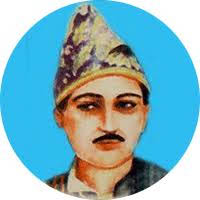
Mirza Shauq Lakhnavi
Mirza Shauq Lakhnavi (d. 1871) was a poet of Lucknow, born in the city in the late eighteenth century — his exact birth year is not settled — and he lived his whole life there, through the last decades of Nawabi rule and the fall of the old order. His real name was Tasadduq Husain Khan; "Shauq", longing, was the name he wrote under. He began with ghazals, but his fame rests on his masnavis, above all Zahr-e-Ishq, the Poison of Love, written between 1855 and 1862: a love story told in his own voice, of a poet who falls for a merchant's daughter glimpsed from a neighbouring rooftop, and of a parting that ends in her death by poison and his own attempt to follow her. Plain-spoken where the court ghazal was ornate, drawing on the everyday speech of Lucknow and its idioms and proverbs, the masnavi moved its first audiences to tears — its stage performance was stopped, its printing banned, and the ban was only lifted in 1919 — yet handwritten copies passed from reader to reader, and its popularity came to overshadow the most celebrated masnavis of the age. His other masnavis, Bahar-e-Ishq, Fareb-e-Ishq and Lazzat-e-Ishq, belong to the same world of love told as a lived story. Only a handful of his ghazals survive beside them, but they carry the same voice: plain, direct, and unafraid of grief, of death, and of its own sins.
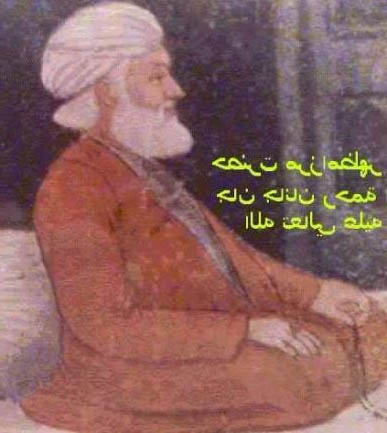
Mohammad Meer Soz Dehlvi
Mohammad Meer Soz Dehlvi — born in Delhi, the son of Syed Ziauddin, whose forefathers had migrated from Bukhara to India — was a prominent contemporary of Mir Taqi Mir. He first took "Mir" as his takhallus, then changed it to "Soz" (burning, passion) when Mir Taqi Mir rose to fame under that name — a change he himself records in one of his couplets. A master of Persian and Arabic, a noted calligrapher, and a skilled archer and horseman, Soz was above all famous as a reciter: his manner of reciting verse was widely imitated in his day. When Delhi lay devastated, he left for Lucknow, where Nawab Asaf-ud-Daula honoured him and even became his disciple. His Urdu diwan holds ghazals, masnavis, quatrains and mukhammas, and his ghazals are praised for directness, simplicity and pathos. In his last years he withdrew into seclusion and prayer, and died in Lucknow.
Mufti Muhammad Sadruddin Khan Azurda
Mufti Muhammad Sadruddin Khan Azurda (1804–1868) of Delhi was, at once, the city's Grand Mufti, one of its leading scholars of hadith and Islamic law, and a poet of the Delhi school. Son of Lutfullah, he studied under Shah Abdul Aziz — Delhi's great authority on hadith — and Fazl-e-Imam Farooqi Khairabadi, served as Sadr Amin of Delhi from 1827 to 1846, then as Sadr-us-Sudur (Grand Mufti) from 1846 to 1857, and examined Arabic at the Anglo-Oriental College. His Delhi house was a meeting place of rebel leaders, scholars, poets and literary men, and he was an acquaintance and admirer of Ghalib. In 1857 he was one of the thirty Delhi scholars who signed the declaration calling the uprising a jihad; he mediated between the British, the Mughal court and the sepoys, was tried after the fall of Delhi, spent six months in detention, and lost his property — his house was restored through Lord Lawrence's intercession, his library was lost for good. Syed Ahmed Khan counted him an accomplished scholar; Hakim Abdul Hai called him the pride of India. He wrote in Persian and Urdu under the takhallus "Azurda" — the distressed one — a name his later years earned twice over. He died in Delhi in 1868.
Muhammad Nusrati
Muhammad Nusrati (d. 1674) was a seventeenth-century Dakhni poet of the Adil Shahi court at Bijapur, where he rose to poet laureate. Born in the Carnatic region, he lived for a time as a Sufi dervish before coming to Bijapur, where he became a mansabdar under Sultan Ali Adil Shah II and was named malik al-shu'ara, king of poets, for his 'Ali-nama. That masnavi, patterned on the Persian Shah-nama, celebrates Ali II's wars against the Mughals and Marathas and is the earliest panegyric of a ruler in Dakhni. His earlier romance masnavi Gulshan-i 'Ishq (1657/1658) follows Prince Manohar's quest for Madhumalati to their union in a rose garden. His final poem, Tarikh-i Sikandari, celebrates Bahlol Khan's victory over Shivaji at Umrani in 1672. Writing in archaic, complex Dakhni, Nusrati is remembered as Bijapur's greatest poet, and as a theorist who first separated a poem's theme (mazmun) from its deeper meaning (ma'ni).
Muhammad Quli Qutb Shah
Muhammad Quli Qutb Shah (1565–1612), the fifth Sultan of Golconda, is remembered by history as a king — and by Urdu as its first true poet. Ascending the throne at fifteen in 1580, he ruled thirty-one years, and in 1591 founded a new capital on the south bank of the Musi: Hyderabad, crowned by the Charminar and the Mecca Masjid. But his deeper founding was literary. He is the first *sahib-e-diwan* of Urdu — the first to compile a full diwan of Urdu verse, the *Kulliyat-e-Quli Qutb Shah*, writing in the Dakhni idiom of the Deccan alongside Persian and Telugu. His court made Dakhni a language of poetry, celebration, and devotion: ghazals, qasidas, masnavis, marsiyas, hamds and manqabats, in an earthy, musical diction full of "na" for "nahin" and "koon" for "ko". He is a Shi'a poet of divine and earthly love alike, and he is called the father of Urdu poetry in India. His famous munajat — "mera shahar logan sun ma'mur kar" (populate my city with people) — is still remembered as the prayer with which Hyderabad was born. He died in Hyderabad on 11 January 1612.
Mulla Wajhi
The Deccan's first classic — the masnavi and prose tale that gave Urdu its southern beginning. Mulla Wajhi (real name Asadullah; birth year not known — died about 1665–1672, Golconda, Deccan) was the first great poet of the Deccan and the founder of Urdu poetry and prose in the south. Born in Golconda during the reign of Sultan Ibrahim Qutb Shah, from a family said to have come from Khurasan, he rose to become the first poet laureate of the Golconda court under Muhammad Quli Qutb Shah. In 1609 he wrote Qutb Mushtari, a romance in verse telling the love of Prince Qutb Shah for the princess Mushtari, a work counted among the first long poems in Urdu. After the king's death he fell from favour, and lived in hardship and obscurity under the pious Muhammad Qutb Shah, until Abdullah Qutb Shah recalled him to honour. At the sultan's command he wrote Sab Ras in 1634, a prose allegory of love in which a prince's search for his beloved becomes a teaching on conduct and the life of the spirit — the first great work of Urdu prose. He also wrote Taj-ul-Haqaiq, and marsiyas for the mourning gatherings of his time, one of which, on Husain, was long sung. His verse and prose gave the language of the Deccan its first classics, and for some two and a half centuries after him his books were loved and read across the Deccan.
Nawab Mustafa Khan Shefta
Nawab Mustafa Khan Shefta (1809–1869), born in Delhi into a prominent Bangash Pathan landowning family — Nawab of Jahangirabad, holder of the Palwal and Jehangirabad jagirs — was a poet, critic and patron at the heart of Delhi's literary circle, alongside Ghalib, Zauq and Momin. He wrote Urdu verse as "Shefta" and Persian verse as "Hasrati," consulting Ghalib in Persian and Momin in Urdu, and his Delhi house was famous for its weekly mushairas, where he encouraged younger poets — it was Shefta who introduced Altaf Hussain Hali to Ghalib. His tazkira Gulshan-e-Bekhar (compiled 1834), cataloguing 671 poets, remains a trusted source for the literary history of the age. The 1857 uprising broke his world: suspected for his ties to Bahadur Shah Zafar and his rebel kinsmen, he was sentenced to seven years' imprisonment, his estates seized — half restored on appeal — and much of his poetry was lost in the sack of Delhi. His son later bought the very prison and built the family home, Mustafa Castle, over it, keeping the prison room. After the Hajj he turned increasingly to religious practice. He died at his house in Kucha Chelaan, Delhi, in 1869, and lies in the Bangash family graveyard at Hazrat Nizamuddin, near Ghalib.
Qayem Chandpuri
Qayem Chandpuri (1722–1793), born Sheikh Qayam-ud-din at Chandpur in Bijnor district, was one of the prominent poets of the eighteenth-century Delhi school — the contemporary, and the self-declared rival, of Mir Taqi Mir, Mirza Sauda and Khwaja Mir Dard. He began as a disciple of Mir Dard and then of Mir himself, but made his own road: a plain, simple, idiomatic rekhta, stripped of ornament, that claimed dignity for the spoken tongue. Delhi in his lifetime was a city of invasions and upheaval — he wrote shahr-ashobs on the turmoil of Shah Alam II's Delhi — and his long years at Rampur, and a spell at Lucknow under Raja Ticket Roy's patronage, gave him the full canvas of the declining Mughal world. Alongside the divan, he left a prose tazkira, Tazkira-e-Makhzan-e-Nikaat, keeping the record of his age's poets. His famous boast — that he gave rekhta itself "the robe of acceptance" — is the claim of a whole school: that Urdu, the plain tongue, needs no apology before any master.