Poets Directory (شعرائے کرام)
Explore profiles, portraits, life biographies, and complete poetry of classical and modern Urdu luminaries.
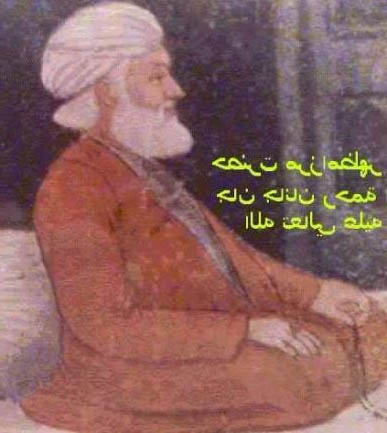
Siraj Aurangabadi
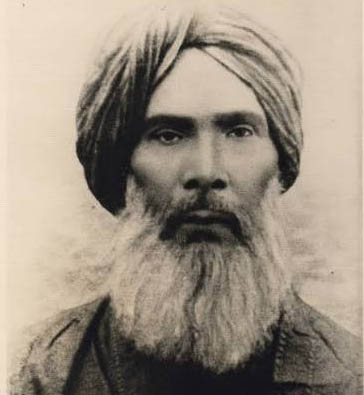
The Deccan's Sufi ascetic — one immortal ghazal that dissolves lover, beloved, and self into pure unknowing. Siraj Aurangabadi (1715–1763), born Syed Sirajuddin in Aurangabad, is the Deccan's great Sufi ghazal-voice. He began in Persian, under the spell of Hafiz, then turned to Urdu and wrote over five thousand shers — a bridge between the old Deccani style and the new idiom taking shape in the north. In 1734, at about twenty, he took bai'at with Shah Abdul Rahman Chishti; on his murshid's order he renounced poetry after 1740 and lived as an ascetic — younger poets still gathered at his house for instruction. His youth had its own wandering: he left home as a mendicant and was brought back and kept under guard. His fame rests on one ghazal, "Khabar-e-tahayyur-e-ishq" — hear the wonder-tale of love, where neither madness nor the beloved remains — sung in our own time by Abida Parveen and others. His *Kulliyat-e-Siraj* gathers ghazals, qasidas and rubais, and his masnavi *Bostan-e-Khayal* is a long narrative in verse. Divine love is the centre of everything he wrote. He died in Aurangabad in 1763.
Siraj-ud-Din Ali Khan Arzu
Siraj-ud-Din Ali Khan Arzu (1687–1756), born in Agra, was the great scholar-poet of eighteenth-century Delhi — a Persian poet of the first rank, a pioneering linguist and lexicographer, and the mentor of a whole generation of Urdu poetry. Writing mainly in Persian (seven divans, five masnavis), he nevertheless championed rekhta — early Urdu — at a time when Persian still ruled the literary world: he urged poets like Sauda to compose in the vernacular, and groomed his own nephew Mir Taqi Mir alongside Mazhar Jan-e-Janan and Shah Mubarak Abroo. His home mushaira in Delhi was the city's literary court; poets sent their manuscripts to him for correction, and Mir wrote that every master of rekhta was, in effect, Arzu's student. As a scholar he stood a century ahead of his time: his dictionaries — *Siraj-ul-Lughat*, the Urdu–Persian *Nawadir-ul-Alfaz* (1751), and the *Chiragh-e-Hidayat* glossary of poetic idiom — laid the foundations of Urdu lexicography, and in his philological treatise *Muzmir* he was the first scholar to place Sanskrit in the Indo-European language family, decades before Sir William Jones. He moved to Lucknow in 1754 and died there in 1756.
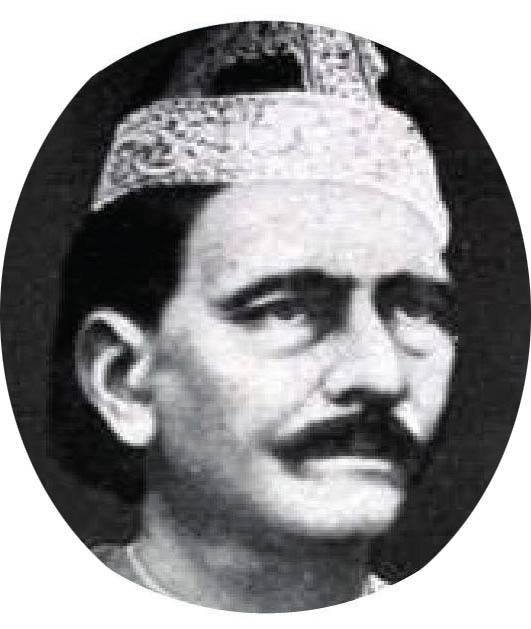
Sufi Ghulam Mustafa Tabassum
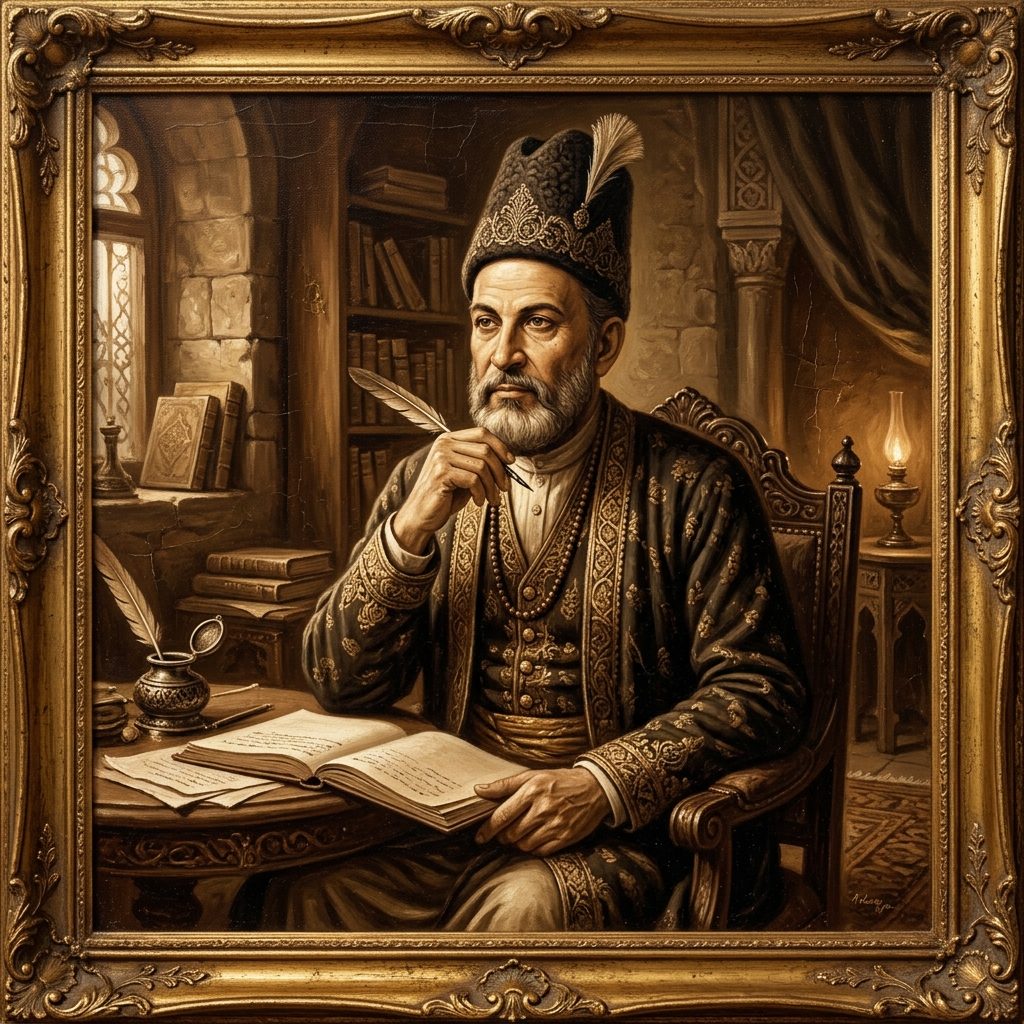
Sufi Ghulam Mustafa Tabassum (1899–1978) was a Pakistani poet, scholar and translator, universally known by his pen name Tabassum. Born in Amritsar on 4 August 1899 to parents of Kashmiri ancestry, he earned a master's degree in Persian from Forman Christian College, Lahore, and spent his whole career at Government College Lahore, rising to head the Department of Persian Studies. He wrote in Urdu, Persian and Punjabi, created the beloved children's character Tot Batot, and translated many poetical works from Persian into Punjabi and Urdu, including Shakespeare's *A Midsummer Night's Dream* into Punjabi. He received Iran's Tamgha-e-Nishan-e-Sipas in 1966 and Pakistan's Sitara-i-Imtiaz, and died in Lahore on 7 February 1978.
Suhail Azimabadi
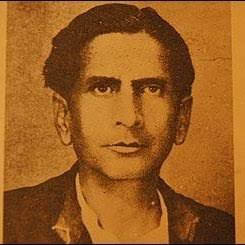
Patna's storyteller — the friend's stone, and the fiction writer who began as a poet. Suhail Azimabadi (1911–1979), born Syed Mujibur Rahman on 16 July 1911 at Shahpur Bhadaul, Islampur, in Patna district, was a novelist, short-story writer, journalist and critic — one of the men who carried the Progressive movement into Bihar. His mother died when he was one year old, and he was raised in his maternal grandparents' home. As a student he wrote verse under the name "Sohail Jamili"; on the advice of Jameel Mazhari he gave up poetry for fiction, and fiction became his true identity. He edited Sathi, an Urdu daily from Patna, and in 1936 he set up the Patna branch of the Progressive Writers' Movement. He worked with Hamdard, a Calcutta daily, until the paper was banned in 1936 after an article of his, and he later served in All India Radio and spent five to seven years working for Urdu in the Chhota Nagpur region. His story collections — Alao (1942), Naye Puraane (1944), Rang Mahal (1960), Chaar Chehre (1977) — and his novel Be-Jar ke Pauday (1972) made him one of the best-known fiction writers of his generation; some hundred and twenty-five of his short stories survive. He died in Allahabad on 28 November 1979, aged 68, and is buried at Shah Ganj Qabristan in Patna.
Sultan Bahu
Sultan Bahu (1630–1691) was a Punjabi Sufi poet of the Qadiri order and the founder of the Sarwari Qadiri tradition. He was born on 17 January 1630 at Shorkot, in the Jhang region of Punjab, into the Awan tribe; his father, Bayazid Muhammad, was an officer in the Mughal army, and his mother, Mai Rasti, was herself a woman of prayer, who first turned her son toward the spiritual life. Little is known of his early years beyond what later tradition records: by his own account he searched for a true guide for thirty years, and at last found his training in Delhi, under Syed Abdul Rehman Jilani Dehlvi of the Qadiri order, before returning to Punjab for the rest of his life. He wrote more than forty books on Sufism, almost all of them in Persian, on the knowledge and vision of God — but it is his Punjabi verse that made him beloved. The Abyat-e-Bahu are short quatrains in the people's tongue, simple enough for anyone to sing and deep enough for a lifetime of study: they speak of Faqr, spiritual poverty, as the whole of the path, of the perfect guide without whom the road cannot be walked, and of the cry "Hoo" — He — with which every verse ends, as if the poem itself were a breath of remembrance. He lived under the Mughal emperors Shah Jahan and Aurangzeb, and died on 1 March 1691, at sixty-one, without naming a successor to the trust of Faqr. His shrine stands at Garh Maharaja, near the Chenab, and has been moved twice as the river changed its course; his verses are still sung in qawwali and kafi gatherings across Punjab, in the singing style his own couplets created.
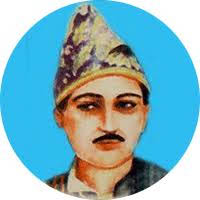
Suroor Jahanabadi
The founding voice of the modern Urdu nazm — a patriot's pen, a mourner's heart, and sher that turned dust into philosophy. Suroor Jahanabadi (December 1873 – 3 December 1910), born Munshi Durga Sahai in Jahanabad, a town of the Pilibhit district (then the North-Western Provinces), was one of the chief architects of the modern Urdu nazm. Studious from childhood, he learned Arabic and Persian and taught himself elementary English; he signed his early verse "Wahshat" before settling on the takhallus "Suroor". He worked in the editorial department of *Zamana*, the Kanpur literary magazine, and his ghazals and nazms found their way into prestigious journals — *Adeeb*, *Makhzan*, *Ismat*, *Urdu-e-Mualla*. While he wrote ghazals, he chose the nazm as his favourite form, and critics credit him with authenticating the new Urdu nazm through his thematic concern and stylistic innovations. His poetry uses Hindi and indigenous words freely and draws imagery from Hindu mythology; much of it is written in six-line musaddas stanzas. He wrote patriotic poems — *Khak-e-Watan*, *Madar-e-Hind*, *Hasrat-e-Watan* — and historical ones — *Padmani*, *Sitaji-ki-Giria-o-Zari*, *Nur Jahan ka Mazar*. The deaths of his wife and his only son broke him; he drank heavily and died at thirty-seven. His collections — *Khumkhana-e-Suroor* and *Jam-e-Suroor* (1911), *Khumkada-e-Suroor* (1931, posthumous) — keep his work alive.
Syed Ahmad Khan
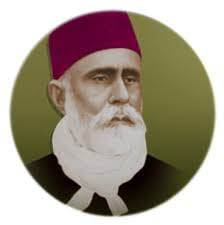
Syed Ahmad Khan (1817–1898), born Syed Ahmad Taqvi on 17 October 1817 in Delhi, was the reformer and educationist who led the Aligarh Movement and founded the college that became Aligarh Muslim University. Born into a family close to the fading Mughal court, he entered the Company's judicial service as a young man and rose to sub-judge; at Bijnor in 1857 he sheltered European lives during the uprising, and afterwards wrote his searching account of the revolt's causes. Convinced that his people's future lay in modern learning, he founded the Scientific Society in 1864 to carry Western knowledge into Urdu, visited England in 1869–70 to study its universities, and in 1870 began the journal Tahzib-ul-Akhlaq, which taught a new plain prose and a rational, questioning temper. In 1875 he founded the Muhammadan Anglo-Oriental College at Aligarh, and in 1886 the Muhammadan Educational Conference. His great works — the survey of Delhi's monuments, his history of the revolt, and his commentary on the Quran — sit beside a lifetime of essays urging reason, science and education. Knighted in 1888, he died at Aligarh on 27 March 1898 and lies buried in the college mosque.
Syed Muhammad Jafari
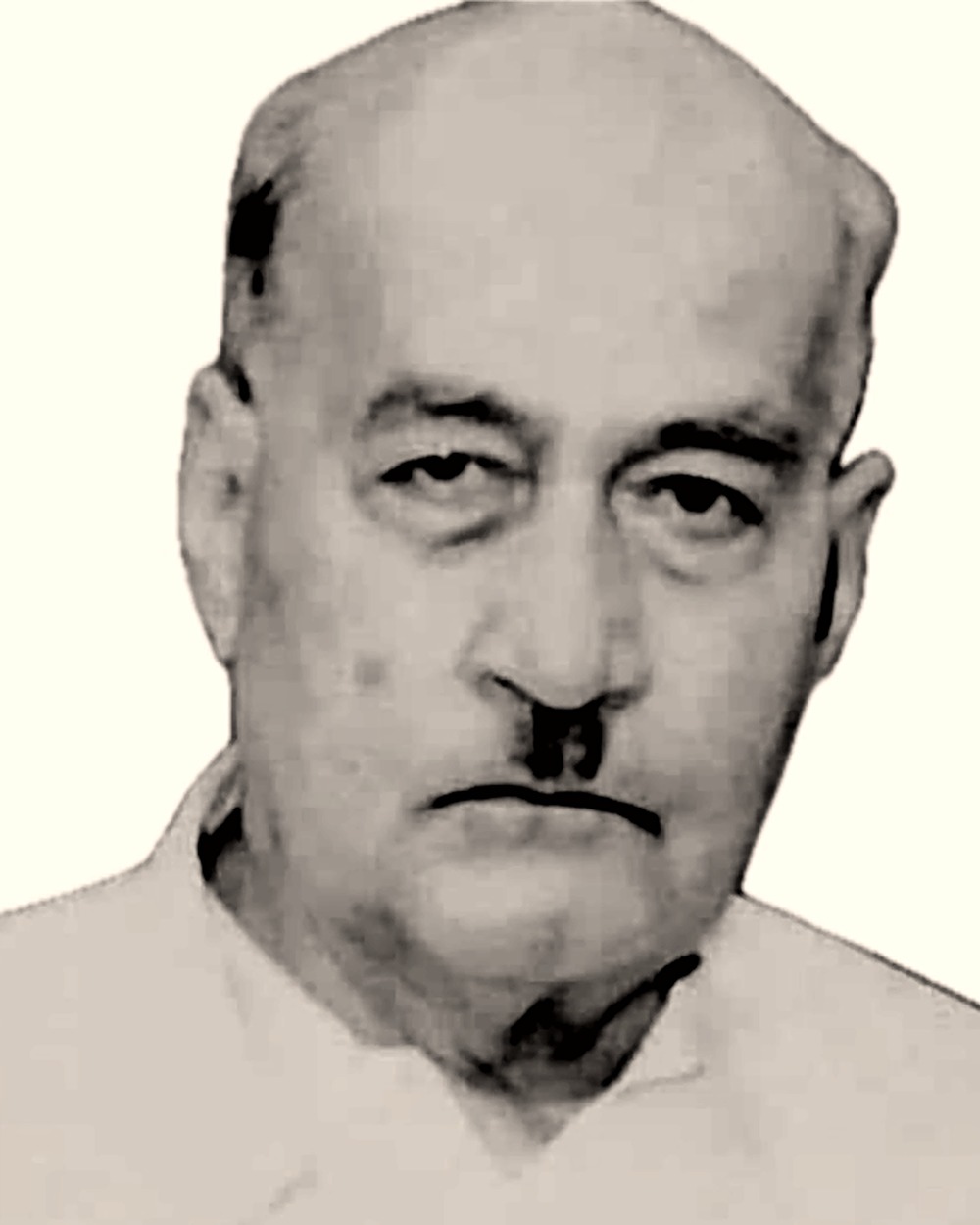
Syed Muhammad Jafari (1905–1976) was a humorist and satirist of Lahore, a poet who made laughter do the work of reform. The son of Mohammad Ali, principal of Government College, Lahore, he passed his Munshi Fazil examination at fourteen and his matriculation at seventeen, took a B.Sc. (Honours) in Chemistry from Islamia College, Lahore, and then turned to the arts for an M.A. and M.O.L. in Persian from Oriental College, Lahore. The great humorist Pitras Bukhari was one of his teachers, and he also trained in painting and fine art at the Mayo College of Arts. He served first in the Department of Education and then in the Department of Publicity and Information, retiring in 1966. He wrote nearly nine hundred nazms on political and social subjects, and wove the lines of Ghalib and Iqbal into his own verse. His satire was sharp and unsparing — corruption in public and private life, elections, politics, the promises of the great powers — yet free of rancour and personal malice: the joke was always aimed at the fault, never at the man. His collections include Teer-e-Neem Kash, and his best-known book of humorous verse, Shokhi-e-Tahreer, was published after his death by his sons. He died in 1976. No birthplace is recorded for him; Lahore was the city of his education, his service and his verse.
Syed Sulaiman Nadvi
Syed Sulaiman Nadvi (1884–1953) was a historian, biographer and scholar of Islam from Desna, a village in Bihar, whose life's work was the life of the Prophet — the great Sirat-un-Nabi, begun by his teacher Shibli Nomani and completed by Nadvi in six volumes. Born on 22 November 1884 into a learned Sayyid family — his father, Hakim Syed Abul Hasan, was a Sufi — he was schooled in Urdu and Persian in his village and nearby towns, then joined the Darul Uloom Nadwatul Ulama at Lucknow in 1901 and graduated in 1906. He worked on the seminary's journal An-Nadwa, taught Arabic literature and theology there from 1908, and for two years assisted Shibli himself on the Sirat; in 1910 he joined Abul Kalam Azad's Al-Hilal as assistant editor and lead writer. When Shibli died in 1914 leaving the Sirat unfinished, Nadvi took up the work and carried it through, volume by volume, until 1938. In 1914 he founded the Darul Musannifeen — the House of Writers, the Shibli Academy — at Azamgarh, and became the founding editor of its journal Ma'arif in 1916; from 1923 he chaired the seminary's education committee for over twenty years. His other books range across history, biography and literature: the eight Madras lectures on the Prophet's life, published as Khutbat-e-Madras; a study of Omar Khayyam (1933); a life of Aisha; the life of his teacher, Hayat-i-Shibli; and his essays, Naqoosh-e-Sulaimani. His Urdu poems were gathered after his death as Armaghan-e-Sulaiman. Iqbal, who consulted him on religious questions, called him Ustad-ul-Kul — Teacher of All — and Aligarh Muslim University conferred an honorary doctorate on him. In 1946 he served as chief justice of Bhopal. In June 1950 he moved to Pakistan and settled in Karachi, where he chaired the board advising on the Islamic provisions of the constitution. He died in Karachi on 22 November 1953, his sixty-ninth birthday, and Pakistan Post honoured him with a commemorative stamp in 1992.
Syed Zameer Jafri
Syed Zameer Jafri (1916–1999) was a Pakistani poet, humorist, columnist and retired army officer, the best-known name in Urdu humorous poetry. Born on 1 January 1916 at Chak Abdul Khaliq, near Dina in district Jhelum, he began his working life as a journalist, then served in the Pakistan Army Education Corps — in the Far East during the Second World War and in the wars of 1947–48 and 1965 — retiring as a Major in 1965. He then became the first Director of Public Relations of the Capital Development Authority in Islamabad. Across some 78 books of poetry and prose in Urdu, Punjabi and English, above all the humorous collection Ma Fi-Zamir, he made laughter a vehicle for patriotism, common sense and love of mankind. He received the Tamgha-e-Quaid-e-Azam in 1967 and the Pride of Performance in 1984, and the Presidential Iqbal Award for his Urdu poetry in 2001. He died in New York on 12 May 1999.