Poets Directory (شعرائے کرام)
Explore profiles, portraits, life biographies, and complete poetry of classical and modern Urdu luminaries.
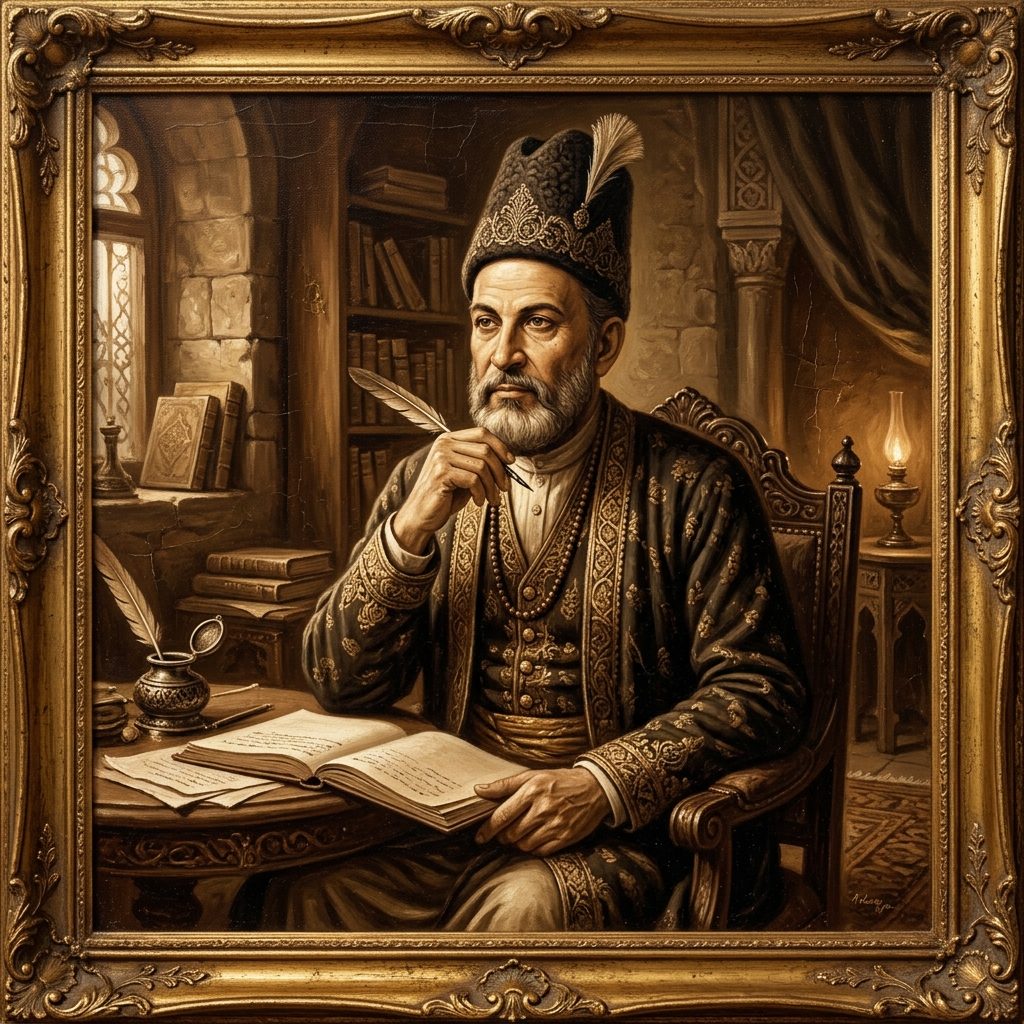
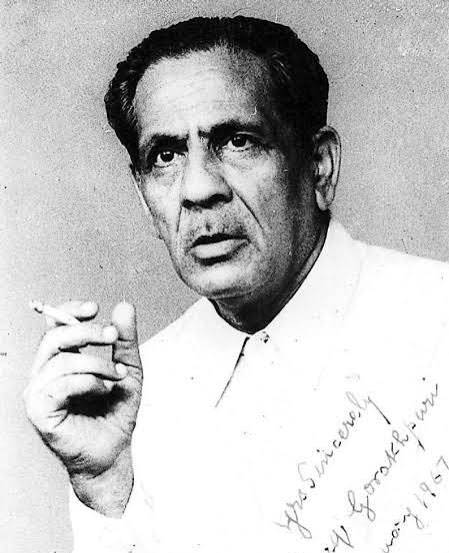
Asar Lakhnavi
Asar Lakhnavi (1885–1967), born Mirza Jafar Ali Khan, was a prominent poet of the later Lucknow School, a critic, scholar and civil servant. Born on 12 July 1885 in Katra Abu Turab, Lucknow, he was educated at Canning College, served as Deputy Collector and held other important administrative posts, and later worked as a minister in the Government of Jammu and Kashmir, for which service India conferred on him the Padma Bhushan. A disciple of Aziz Lakhnavi, he wrote on traditional subjects with great linguistic finesse. His poetry collections include Baharaan, Naubaharaan and Uroos-e-Firtrat, his critical studies include Anis ki Marsiya Nigari, Mutala-e-Ghalib and Chhan Been, and his dictionary Farhang-e-Asar remains a landmark. He died in Lucknow on 6 June 1967.
Ashraf Ali Khan Fughan
Ashraf Ali Khan Fughan (died 1772) was a prominent 18th-century poet of Delhi and a contemporary of Mir Taqi Mir. His birth year is not settled — 1725/6 is one given year, while other accounts place him vaguely in the early 1700s — so his birth year is recorded here as Unknown rather than choosing between them. His Diwan-e-Fughan survives in modern editions, and 15 of his ghazals survive. He is praised for fresh imagery, elegant diction, and a playful satire and wit that set him beside Mir and Sauda among the Delhi masters. One fuller life story — foster brother of Emperor Ahmad Shah Bahadur, pupil of Ali Quli Nadeem, bearer of the title Zarif-ul-Mulk, later in Murshidabad, Awadh and Azimabad (Patna) — is also told of him, though it remains uncertain; the title itself is also known as a name variant.
Aziz Hamid Madni
Aziz Hamid Madni (1922–1991) was a Pakistani poet, critic and translator, and one of the stalwarts of the new Urdu ghazal in Pakistan. He was born on 15 June 1922 in Raipur, in British India, the son of Mohammad Hamid Saqi — a student of Shibli Nomani and a classmate of Maulana Muhammad Ali Jauhar. In 1948 he moved to Pakistan and settled in Karachi. After a master's degree in English, he taught and worked in journalism for a short while, then joined Radio Pakistan as a programme executive. Three collections of his poetry appeared in his lifetime — Chashm-e-Nigaraan (1962), Dasht-e-Imkaan (1964) and Nakhl-e-Gumaan (1983) — and his two-volume critical survey of modern Urdu poetry, Jadeed Urdu Shaeri, remains a landmark study. His translations of Shakespeare's Othello and Antony and Cleopatra, and most of his translations of French poetry into Urdu, were never published. Forty-three of his ghazals and thirty-seven of his sher survive, and some of his ghazals have been set to music. He died in Karachi on 23 April 1991.
Aziz Lakhnavi
Aziz Lakhnavi, born Mirza Mohammad Hadi in Lucknow in 1882, was a distinguished Persian and Urdu scholar and poet of the Lucknow school. His family, descended from migrants from Shiraz who first settled in Kashmir and later moved to Lucknow under the Awadh nobles, was renowned for scholarship. Educated at home after his father's death when he was seven, he later taught Persian and Urdu at Aminabad School and then became guardian to the siblings of Ali Mohammad Khan, Maharaja of Mahmudabad, spending the rest of his life there. A disciple of Safi Lakhnavi, he practised every poetic form and earned a particular reputation as a qasida poet, praised for the magnanimity of his language and the vitality of his imagination. His works include Gulkadah and the collected Kulliyat-e-Azeez.
Baba Farid
Baba Farid (1173–1266), born Fariduddin Masud, was the first great voice of Punjabi poetry and one of the founding saints of the Chishti order in India. He was born in 1173 at Kothewal, a village near Multan, to Jamal-ud-din Sulaiman and Maryam Bibi; the family traced its line to Kabul, and tradition says the child was named after the Persian poet Fariduddin Attar. He learned first from his mother and his father, then sought the path of the Sufis, becoming the disciple of Qutbuddin Bakhtiar Kaki in Delhi. When his master died in 1235, Farid became his spiritual successor — but instead of taking the seat in Delhi, he left the capital, set up a centre of devotion at Hansi, and then settled at Ajodhan, the town that took a new name from him: Pakpattan, the Holy Ferry. There he lived simply and austerely, teaching all who came, and there the young Nizamuddin Auliya came to him and became his disciple and successor. Farid wrote in the people's own tongue. His short Punjabi verses — plain, severe, and tender at once — speak of the body as a guest-house that must one day be emptied, of the grave waiting at the road's end, and of a love that asks for nothing. They were carried by singers for three centuries before they were gathered into the Guru Granth Sahib, where they are still read and sung today. "Ganjshakar", treasury of sugar, was the name the people gave him, for the sweetness of his speech. He died at Pakpattan on 7 May 1266, and his shrine there is still one of Punjab's great places of pilgrimage, visited by Muslims, Sikhs and Hindus alike.
Bahram Ji
Hyderabad's Parsi priest-poet — every idol a memory of God, every house of worship one search. Bahram Ji (1828–1895), born on 2 December 1828 at Navsari in Gujarat, was a Parsi high priest and Urdu poet of Hyderabad. He received his religious training in his home town and was made a mobed — a Parsi priest — in 1843; after study at Poona under his father and elder brother, he came to Hyderabad, where he perfected his Urdu and Persian and his knowledge of Parsi theology. He served as Dastur, the high priest of the Parsis of Hyderabad and Secunderabad, and from 1863 also as a talluq-dar, a revenue official of the state; in 1875 he retired from the revenue post and returned wholly to the priesthood, using the community's funds generously for Parsi welfare. Alongside a life of religious duty he wrote poetry in Urdu and Persian, and his collected Urdu verse, the Deewan-e-Bahram, was published in 1943, long after his death. His ghazals carry a priest's open gaze: the Muslim and the Brahman, the mosque and the temple, the idol and the memory of God — all one search. He died at Hyderabad on 18 March 1895, aged 66.
Balraj Komal
Balraj Komal (1928–2013) was one of the leading modern poets of the Urdu nazm in India. Born on 25 September 1928 at Sialkot, he fled to Delhi in the Partition of 1947, carrying the displacement into a lifetime of poetry. After retiring as an Education Officer with the Delhi Administration, he wrote full-time — poems, short stories and criticism — and served on the Delhi Urdu Akademi and the Sahitya Akademi's advisory board. His collection Parindon Bhara Aasman (Sky Full of Birds) won the Sahitya Akademi Award in 1985; he also won the Uttar Pradesh Urdu Academy Award twice (1971, 1982) and received the Padma Shri in 2011. His nazms — above all 'A Girl Alone' (1948), a Partition-orphaned girl begging a stranger to become her family — made him a poet of displacement, tenderness and quiet revolt. He died in Delhi in 2013, aged 85.
Barq Dehlvi
Delhi's later voice — the doorstep vigil, the night with no dawn, and the gaze that cannot look away. Barq Dehlvi (July 1884 – 9 February 1936), whose real name was Munshi Maharaj Bahadur, was a later voice of Delhi's poetry, born into a Kayastha family of the old city whose men had served in high places at the Mughal court. His father, Munshi Har Narayan Das, was a poet of standing, and his maternal grandfather, Daulat Ram 'Ibrat', kept a diwan and had learned his craft from Zauq, the court poet of the last Mughal king. Barq learned his own craft under Agha Shair Qazalbash. He wrote ghazals, nazms and couplets, and in his early years plays as well — Krishna Avatar and Savitri were staged more than once. His books of verse were Krishna Darpan (1927), Matla-i-Anwar (1929) and Harf-e-Natamaam, published after his death in 1941. His ghazals carry the old Delhi manner into a new century: the doorstep where the lover waits, the night of separation with no dawn in sight, the beloved's face that holds the eye prisoner. He died at Panipat on 9 February 1936.
Bhartendu Harishchandra
Benares' Moon of India — the father of modern Hindi letters who wrote Urdu ghazals as Rasa. Bhartendu Harishchandra (1850–1885), born on 9 September 1850 at Benares, was the founder of modern Hindi literature and theatre — and a poet of Urdu who wrote under the pen name Rasa. Born into a wealthy family of Benares, he lost both his parents while still young, and his father Gopal Chandra was himself a poet. At fifteen he travelled with his family to the Jagannath temple at Puri, a journey that turned him toward the Bengal Renaissance and a life of writing. In 1880 the scholars of Kashi honoured him with the title Bharatendu — the Moon of India. He wrote in Hindi, Braj, Urdu, Sanskrit, Bengali and English, and he made the stage a mirror of his country: his plays Bharat Durdasha, Satya Harishchandra, Neel Devi and Andher Nagari spoke of a land in chains, while his journals Kavi Vachan Sudha, Harishchandra Magazine and Bala Bodhini carried reform, women's education and the Swadeshi cause. Beneath the public work he wrote Urdu ghazals in the classical manner — love and longing, the festival of Holi, devotion to Krishna, and the shortness of the world that keeps neither Alexander nor Jamshid. He died at Benares on 6 January 1885, aged only 34.
Bismil Azimabadi
Bismil Azimabadi (1901–1978) was an Indian freedom-fighter poet from Patna, born Syed Shah Mohammad Hasan into a zamindar family of Azimabad. He took "Bismil" — the wounded one — as his pen name and became a disciple of Shad Azimabadi, frequenting the Qutub-khana Anjuman Taraqqi Urdu Library in Patna. He took part in the independence movement and is reported to have recited his poem "Sarfaroshi" at the Calcutta Congress session of 1920. Most of his poetry was lost; what survived was compiled after his death as *Hikayat-e-Hasti* (1980), and he left a short memoir, *Yaraan-i-Maikadah* (1976). He died in Patna on 20 June 1978. The Bihar Urdu Academy's Bismil Azimabadi Award keeps his name alive.